
Navigation Menu

If you’ve ever stepped into a large manufacturing plant, a busy shipping yard, or a heavy-duty warehouse, you’ve probably seen a massive piece of equipment gliding silently above the floor, lifting and moving enormous loads with precision. That workhorse of industrial operations is none other than an overhead travelling crane. But what exactly is it, how does it work, and why is it indispensable in so many industries? Let’s dive deep into the world of these overhead giants.
For product details, please refer to: Overhead Travelling Crane

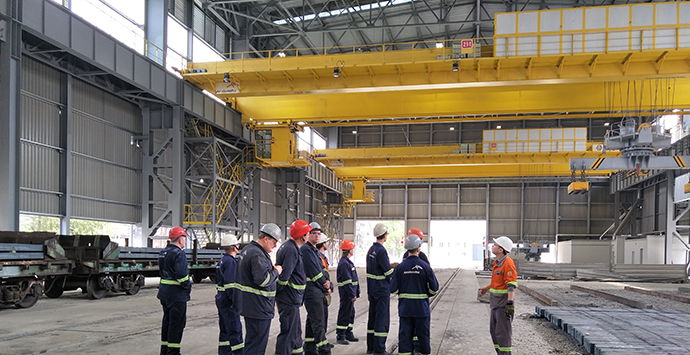
An overhead travelling crane, often simply called an overhead crane or bridge crane, is a type of material handling equipment designed to lift, lower, and transport heavy or bulky loads horizontally within a fixed area. Unlike mobile cranes (such as tower cranes or truck-mounted cranes) that can move from site to site, overhead travelling cranes are permanently installed in a specific location—typically spanning the width of a factory, warehouse, or workshop.
At its core, the crane consists of a bridge (the horizontal beam) that travels along elevated rails running parallel to each other. This bridge supports a hoist—the component that does the actual lifting— which can move back and forth along the length of the bridge. Together, these movements (bridge along the rails and hoist along the bridge) allow the crane to cover a rectangular work area, making it incredibly versatile for indoor operations.
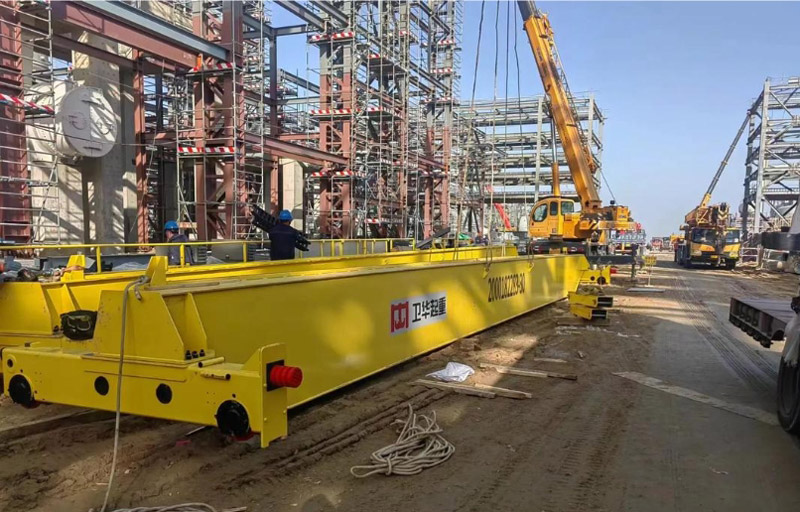
Bridge Girder
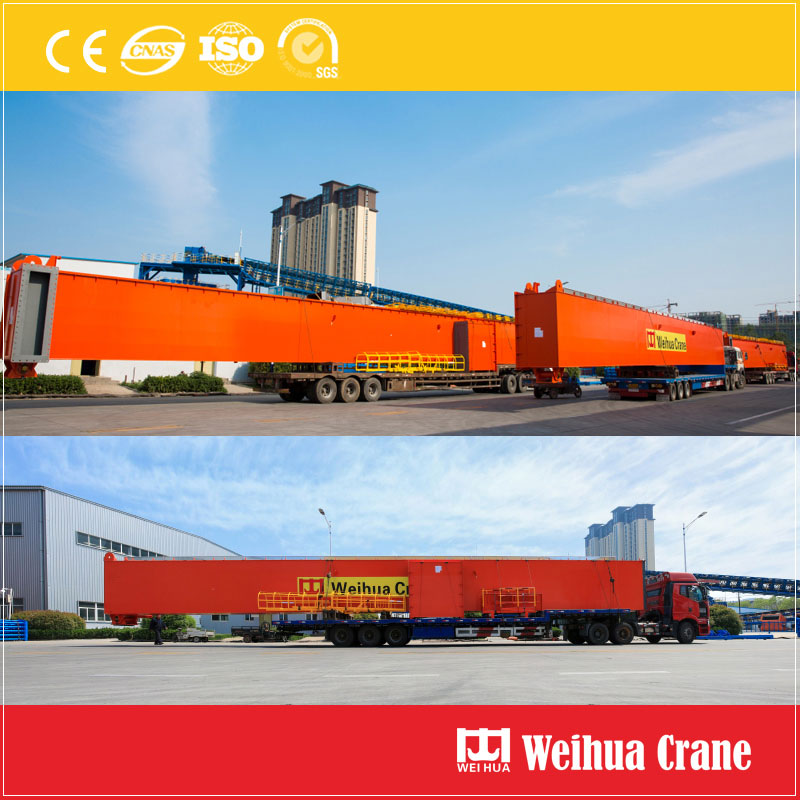
The backbone of the crane, the bridge girder is the horizontal structure that spans the workspace. It’s usually made of high-strength steel to support the weight of the hoist and the loads being lifted. Some cranes have single girders (for lighter loads) while others use double girders (for heavier, more demanding applications).
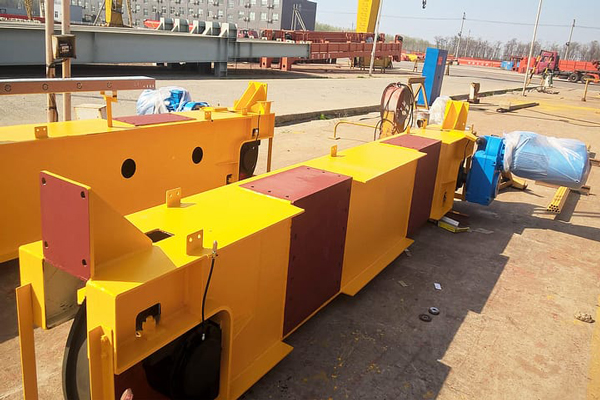
End Trucks
Located at both ends of the bridge girder, end trucks house the wheels that allow the bridge to travel along the runways (the elevated rails). They also contain the motors and gearboxes that power the bridge’s movement.
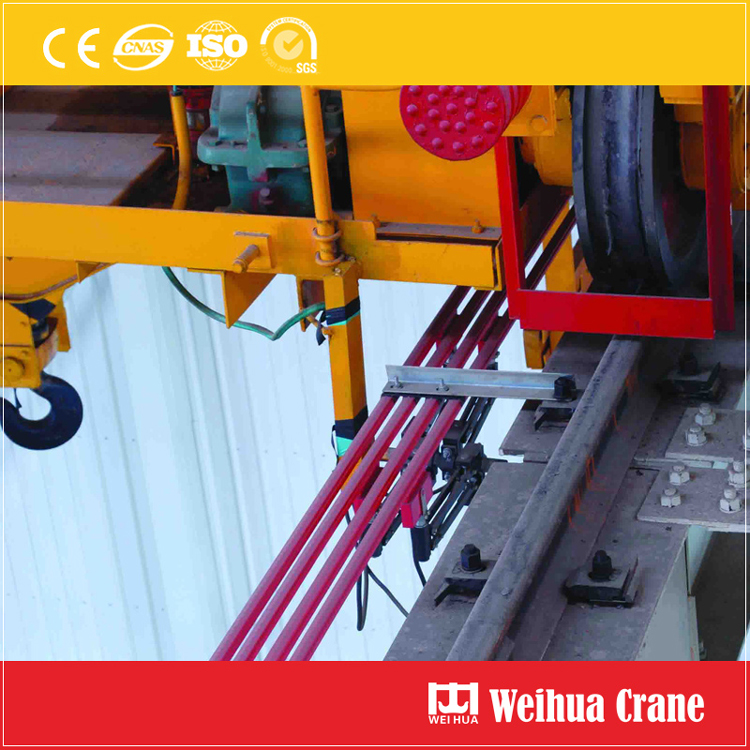
Runway Rails
These are the fixed rails mounted on columns or walls that the end trucks travel along. The runways define the length of the area the crane can cover.

Hoist
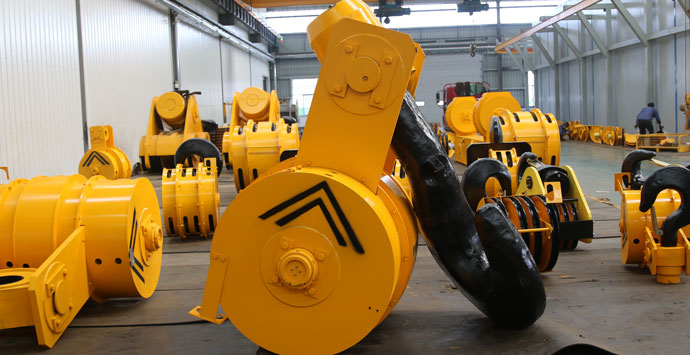
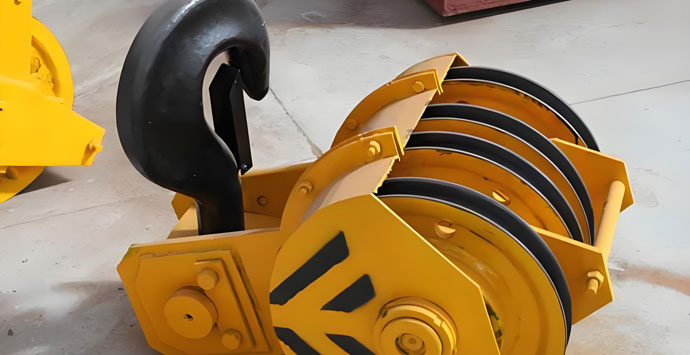
The hoist is the lifting mechanism, composed of a motor, a crane wire rope drum or chain, and a hook. It’s attached to a trolley that moves along the bridge girder. The hoist can be electric (the most common type in industrial settings) or manual (for lighter loads or low-frequency use).
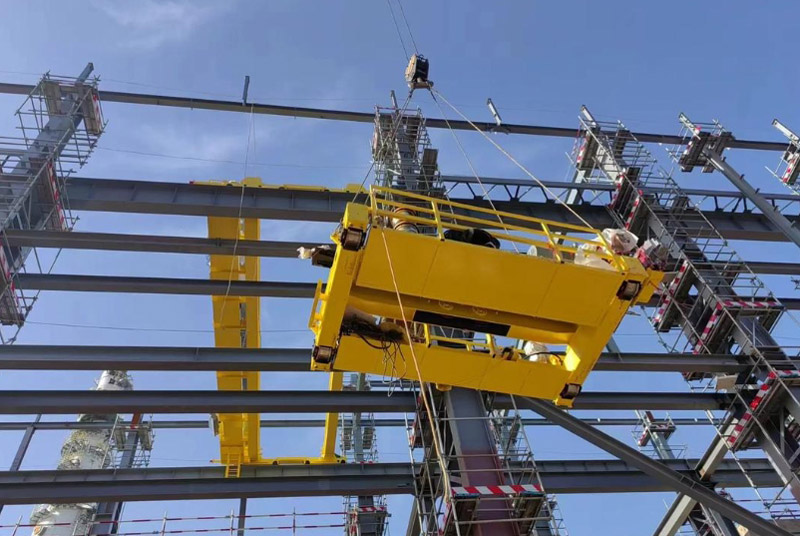
Trolley
The trolley carries the hoist and moves horizontally along the bridge girder. It’s driven by its own motor, allowing precise positioning of the hoist above the load.
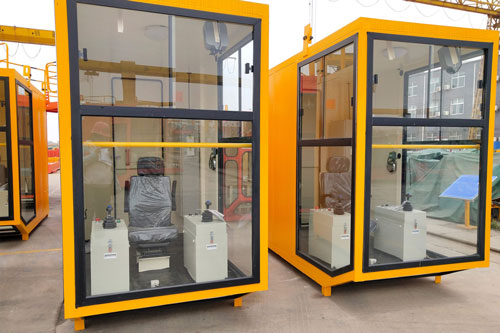
Drivers cab
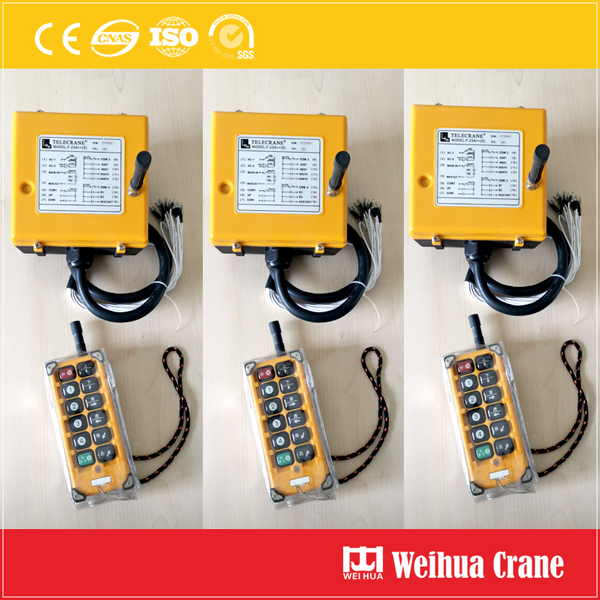
crane radio control
The crane is operated via a control pendant (a handheld device with buttons), a remote control, or a cab mounted on the bridge. The control system regulates the speed and direction of the bridge, trolley, and hoist movements.
The operation of an overhead travelling crane is a coordinated dance between its components, guided by the operator. Here’s a step-by-step breakdown of a typical lifting cycle:

Overhead travelling cranes are the backbone of countless industries, thanks to their ability to handle heavy loads efficiently and safely. Here are some of their most common uses:

Given their size and lifting capacity, safety is paramount when operating an overhead travelling crane. Here are some essential safety guidelines:
An overhead travelling crane may not be the most glamorous piece of equipment, but it’s undoubtedly one of the most important in the industrial world. By enabling the safe and efficient movement of heavy loads, it streamlines production processes, reduces manual labor, and boosts productivity across a wide range of industries.
Whether you’re watching a car being assembled on a factory floor or a container being unloaded at a port, chances are an overhead travelling crane is hard at work behind the scenes. Understanding its design, components, and operation helps us appreciate the engineering marvel that keeps our industrial economies moving.
Share with PDF: Download

We value your feedback! Please complete the form below so that we can tailor our services to your specific needs.



Latest Comments