
Navigation Menu

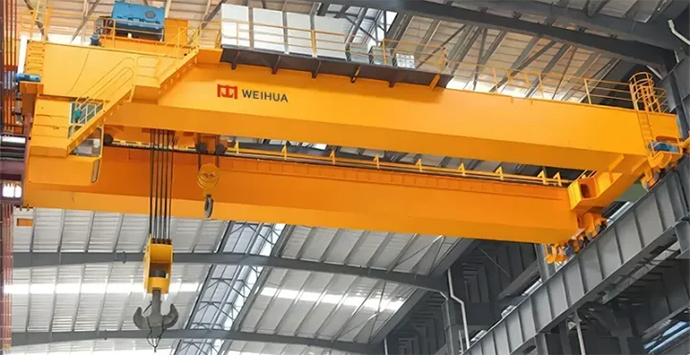
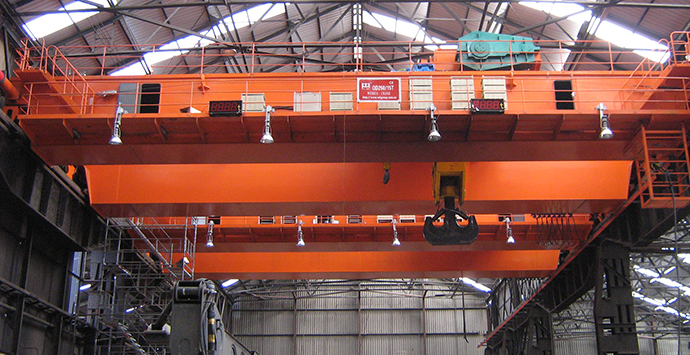
The protection class of metallurgical cranes is a standardized grading system that defines the equipment’s ability to resist external environmental interference, including dust intrusion, water penetration, high-temperature radiation, corrosion, and mechanical damage. It mainly covers two core grading dimensions in industrial applications: IP protection rating for electrical and mechanical components and working duty protection class (FEM/ISO working level) for overall crane structural safety.
IP (Ingress Protection) rating is the most intuitive protection standard for metallurgical crane motors, electrical control systems, cables, and operating mechanisms. Ordinary overhead cranes usually adopt IP44 protection, while metallurgical cranes must use enhanced IP grades to adapt to high-temperature and dusty environments.
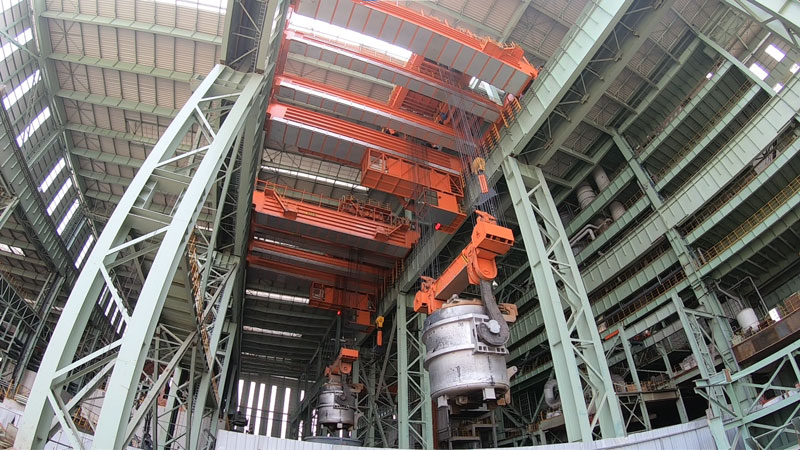
IP54: The basic mandatory protection grade for conventional metallurgical cranes. It effectively prevents large-area dust accumulation and splashing water from all directions, protecting core electrical components from daily industrial environmental damage. Most standard metallurgical overhead cranes for conventional smelting workshops adopt this grade, matched with H-class high-temperature insulated cables to resist heat aging.
IP55: The upgraded protection grade for medium-duty metallurgical equipment. It provides tighter dust prevention and resistance to low-pressure water jet flushing, suitable for workshops with severe dust and frequent equipment cleaning. It is widely used in scrap charging cranes and steel rolling workshop cranes.
IP65: The highest-level dustproof and waterproof grade for heavy-duty metallurgical cranes. It achieves full dust tightness and strong water jet resistance, specially designed for extreme working scenarios such as ladle cranes and casting cranes with ultra-high temperature radiation and severe flue gas pollution.
In addition to IP grading, all electrical equipment of metallurgical cranes supports high-temperature protection. Motors, control cabinets, and sensors adopt H-class insulation materials, which can stably operate in long-term high-temperature environments without insulation breakdown or short circuit. This supporting configuration is an indispensable part of the metallurgical crane protection system beyond standard IP ratings.
Different from ordinary cranes, the protection capability of metallurgical cranes is also reflected in the working level (duty cycle protection class), which is classified as A6, A7, and A8 according to FEM and ISO industrial crane standards. This grade defines the structural safety and fatigue resistance of the crane under long-term high-frequency heavy-load operation, serving as the core structural protection standard for metallurgical cranes.
Based on standard IP and working level protection classes, professional metallurgical cranes are equipped with exclusive targeted protection structures to cope with extreme metallurgical working conditions, forming a complete multi-dimensional protection system:
The main girder, end beam, and trolley bottom of metallurgical cranes are fitted with special heat radiation protection plates and heat insulation layers, which effectively isolate high-temperature heat radiation from molten metal and prevent structural steel deformation and component aging caused by long-term baking. The driver’s cabin is also equipped with integrated heat insulation and heat dissipation devices to ensure stable operation of operators and internal equipment.
Different from the single brake system of ordinary cranes, metallurgical cranes adopt dual or triple brake systems for the hoisting mechanism, including primary electromagnetic brakes and independent secondary mechanical safety brakes. This redundant design ensures reliable braking even if a single brake fails, completely avoiding the risk of molten metal falling. Meanwhile, they are equipped with overload protection, overspeed monitoring, anti-derailment devices, and multi-stage limit switches to achieve full-process operational protection.
The steel wire ropes of metallurgical cranes adopt high-temperature resistant metal core structures, which can resist high-temperature baking and wear without brittle fracture. Key structural components are made of high-strength fatigue-resistant steel, with anti-corrosion and high-temperature oxidation treatment on the surface, adapting to long-term erosion by industrial flue gas and dust.
Many metallurgical enterprises ignore the matching of protection classes in equipment selection, resulting in frequent equipment failures and hidden safety hazards. Using low-grade protection cranes in high-temperature and high-frequency metallurgical scenarios will lead to accelerated aging of electrical components, frequent brake failures, structural fatigue deformation, and shortened equipment service life. In severe cases, it will trigger molten metal leakage and falling accidents, causing huge personnel and property losses.
Conversely, matching the appropriate IP protection grade and working duty class according to actual working conditions can maximize equipment operational stability, reduce maintenance frequency and cost, extend service life, and ensure the continuous and safe operation of metallurgical production lines. For core processes such as molten steel lifting, A8 working level and IP65 high protection configuration are mandatory safety standards in the industry.
The protection class of metallurgical cranes is a comprehensive technical system covering electrical ingress protection, structural fatigue resistance, high-temperature isolation, and mechanical safety redundancy. It is the core technical symbol that distinguishes metallurgical cranes from ordinary industrial cranes. In modern metallurgical industrial production with increasingly strict safety standards, reasonably selecting cranes with matching protection classes, standardizing equipment operation and maintenance, is not only the basis for improving production efficiency but also the bottom line of ensuring workshop safety.
For steel mills and metal processing enterprises, prioritizing protection grade matching rather than simply pursuing low procurement costs is the key to long-term safe and stable production.
We value your feedback! Please complete the form below so that we can tailor our services to your specific needs.


Latest Comments