» 블로그 » Gantry Crane Rail Alignment

Gantry Crane Rail Alignment

2026-06-09

gantry crane rail alignment

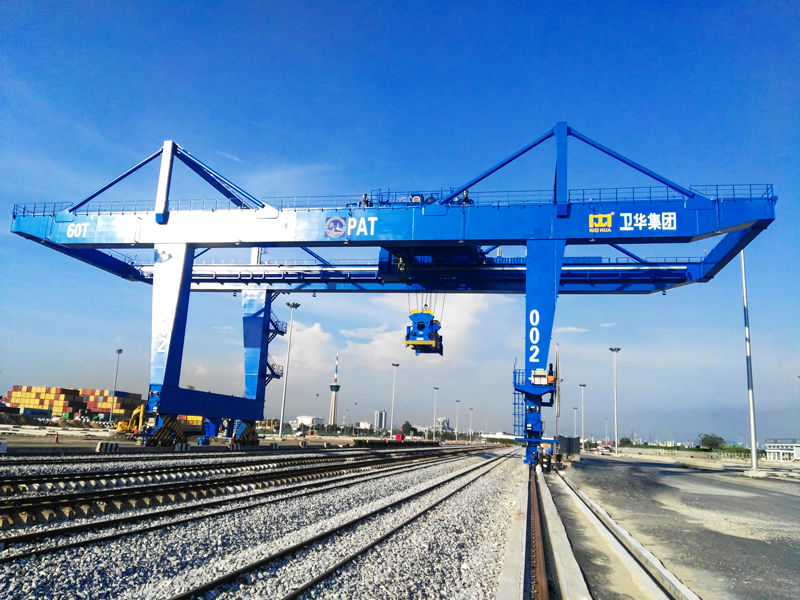
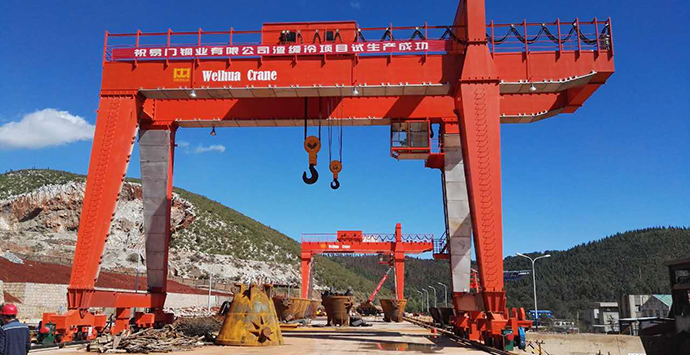
In heavy-duty industrial environments—from shipping yards and construction sites to manufacturing workshops—갠트리 크레인 serve as the backbone of material handling operations. These robust machines rely entirely on stable, accurate rail systems to deliver consistent, high-performance lifting and traveling work. Among all crane maintenance and installation procedures, gantry crane rail alignment stands out as the most critical yet frequently overlooked step. Precise rail alignment is not just a technical formality; it is the foundation of operational safety, equipment durability, and cost-effective production. 이 블로그에서는, we will break down why rail alignment matters, common misalignment issues, industry-standard tolerances, professional calibration methods, and actionable maintenance tips.

Why Gantry Crane Rail Alignment Is Non-Negotiable

Many industrial operators underestimate the impact of minor rail misalignments, dismissing small deviations as harmless. 하지만, gantry cranes operate under heavy load conditions and continuous linear movement, where even tiny rail errors can escalate into severe operational risks and economic losses over time. Proper rail alignment delivers three core benefits for gantry crane systems:

1. Eliminates Safety Hazards

Misaligned rails are the leading cause of gantry crane derailment, wheel slipping, and structural jitter during operation. When rails are uneven, unparallel, or offset at joints, the crane’s traveling wheels bear uneven lateral and vertical pressure, triggering sudden jolts, abnormal shaking, or even partial derailment. These issues pose serious threats to on-site workers, cargo safety, and overall site operational stability. Standardized alignment also ensures the crane runs smoothly without unexpected mechanical failures caused by rail anomalies.

2. Extends Equipment Service Life

Chronic rail misalignment creates persistent friction and structural stress on key crane components, including traveling wheels, 문장, 기어박스, and rail beams. Uneven load distribution leads to accelerated and unilateral wear of wheel treads, frequent damage to bearings, and fatigue cracks on rail surfaces and crane support structures. Precise alignment balances force distribution across all moving parts, drastically reducing component wear, lowering replacement frequency, and extending the overall service life of the gantry crane and rail system.

3. Optimizes Operational Efficiency & Reduces Costs

Cranes running on misaligned rails require extra power to overcome friction and structural resistance, resulting in higher energy consumption. 추가적으로, frequent mechanical failures and unplanned downtime for repairs severely disrupt production schedules and increase maintenance costs. Accurate rail alignment ensures smooth, stable crane travel, improves lifting and traveling efficiency, cuts down energy waste, and minimizes unplanned maintenance downtime for long-term cost savings.

Common Gantry Crane Rail Misalignment Issues & Root Causes

To conduct effective alignment calibration, it is essential to identify typical rail misalignment problems and their underlying causes. Most rail deviations stem from improper installation, foundation settlement, long-term operational wear, and environmental changes.

gantry crane rail alignment

1. Poor Straightness

This refers to horizontal deviations of the rail centerline from the standard baseline. Cumulative errors during rail laying, long-term lateral extrusion from crane operation, or foundation deformation can cause rails to bend or offset. Excessive straightness errors lead to wheel binding and lateral friction during crane travel.

2. Inconsistent Parallelism

The two parallel rails fail to maintain a uniform span distance. Variable rail spacing across different sections causes uneven wheel pressure, leading to unilateral wheel wear and unstable crane operation. This issue is prevalent in long-span gantry crane rail systems due to cumulative installation errors.

3. Uneven Elevation & Longitudinal Inclination

Uneven vertical height between the two rails or excessive longitudinal slope of a single rail creates vertical jitter during crane movement. Foundation settlement, uneven shimming, or long-term load compression are the main culprits. Severe height deviation will cause the crane to tilt slightly during operation, bringing hidden safety risks.

4. Rail Joint Misalignment

Offset, height difference, or unreasonable gap at rail joints is a common on-site problem. Too large a joint gap causes violent impact and noise when wheels pass through; too small a gap fails to reserve space for thermal expansion and contraction, resulting in rail extrusion and deformation. Joint misalignment is one of the main triggers of wheel impact damage.

Industry Standard Tolerances for Gantry Crane Rail Alignment

Professional rail alignment must comply with international and industrial specifications such as CMAA 70/74 and domestic crane installation standards, with clear tolerance ranges for different indicators to ensure operational compliance and safety:

Professional Gantry Crane Rail Alignment Methods & Workflow

Modern rail alignment abandons traditional manual measurement methods with large errors and adopts high-precision instruments for full calibration. The standardized alignment workflow is as follows:

1. Pre-Inspection & Site Preparation

첫 번째, clean the rail surface and foundation to remove debris, 녹, and obstacles that affect measurement. Inspect the overall condition of the rail system, including foundation cracks, settlement, loose anchor bolts, and rail deformation, to eliminate underlying structural problems before alignment.

2. High-Precision Measurement

Adopt professional measuring equipment such as laser trackers, total stations, and precision levels for 3D full-scale measurement of the rail system. Measure key indicators including rail straightness, 병행, elevation, 기간, and joint deviation at multiple points along the rail, and record all data to form a complete measurement report. Laser-based tools ensure millimeter-level measurement accuracy, far exceeding traditional manual ruler measurement.

3. Targeted Calibration & Adjustment

According to the measured deviation data, conduct targeted adjustments: For minor height unevenness, use precision shims under the rail to adjust elevation; for local rail irregularities, perform rail grinding to smooth surface flaws and eliminate joint height differences; for straightness and parallelism deviations, fine-tune the rail position and correct cumulative errors. All adjustments follow the principle of laying from both ends to the middle to avoid secondary cumulative errors.

4. Fastener Reinforcement & Recheck

After alignment adjustment, tighten all anchor bolts and rail fasteners to standard torque values to prevent rail displacement under load. Conduct a full re-measurement of all alignment indicators to confirm all deviations are within the allowable tolerance range, and install end stops at rail ends to prevent crane derailment.

Daily Maintenance Tips to Sustain Rail Alignment Accuracy

Precise rail alignment is not a one-time project but requires long-term daily maintenance to maintain stability. Here are key routine maintenance practices:

최종 생각

Gantry crane rail alignment is a fundamental guarantee for the safe, 안정적인, and efficient operation of crane equipment. It is not only a key process in installation and commissioning but also a core part of daily equipment maintenance. Many industrial losses caused by crane downtime, component damage, and safety accidents can be avoided through standardized precision alignment and scientific daily maintenance.

By strictly following industry tolerance standards, adopting high-precision laser measurement technology, and adhering to regular inspection and maintenance routines, enterprises can maximize the service life of gantry crane rail systems, reduce operational risks and maintenance costs, and achieve stable and efficient industrial material handling operations.

FAQs About Gantry Crane Rail Alignment

To resolve common doubts from on-site operators, maintenance engineers, and project managers, we’ve compiled the most frequently asked questions about gantry crane rail alignment with professional and practical answers below.

Q1: How often should gantry crane rail alignment be checked?

A1: The inspection frequency depends on operating intensity and working conditions. For standard-duty gantry cranes working in normal environments, a full rail alignment inspection every 3–6 months is recommended. For heavy-load, high-frequency operating equipment or cranes working in harsh environments such as ports, outdoor construction sites and dusty factories, inspections should be conducted every 1–3 months. 게다가, a complete alignment calibration must be carried out immediately after foundation settlement, extreme weather impact, long-term shutdown and restart, or accidental collision of the crane.

Q2: What are the typical signs of poor gantry crane rail alignment?

A2: Operators can quickly judge rail misalignment through obvious on-site phenomena. Common symptoms include abnormal shaking and jitter during crane traveling, loud friction or impact noise when the crane moves, unilateral severe wear of crane traveling wheels, frequent wheel slipping, and obvious deviation of the crane’s traveling track. In severe cases, the crane will appear to tilt slightly during lifting operations, and the fasteners and rail pads will loosen frequently. Once these problems occur, rail alignment detection and adjustment are required in a timely manner.

Q3: Can minor rail misalignment be left unadjusted?

A3: No minor misalignment should be ignored. Although tiny deviations do not cause immediate safety accidents, gantry cranes bear cyclic heavy loads and continuous reciprocating movement during operation. Small rail errors will continuously amplify structural stress and friction, gradually leading to accelerated component wear, increased energy consumption, and cumulative rail deformation. Long-term uncorrected minor misalignment will eventually cause derailment risks, structural fatigue damage, and costly downtime maintenance, resulting in greater economic losses.

Q4: What measuring tools are used for professional rail alignment?

A4: Modern professional gantry crane rail alignment abandons traditional manual measuring tools such as steel tapes and level gauges with large errors. Precision measuring equipment including laser trackers, electronic total stations, high-precision digital levels and laser alignment instruments are widely used in formal calibration work. These devices can realize millimeter-level 3D accurate measurement of rail straightness, 병행, elevation difference and span deviation, ensuring the alignment results meet international industry standards such as CMAA 70/74.

Q5: What is the service life extension after standard rail alignment?

A5: Strictly standardized rail alignment and long-term stable maintenance can effectively extend the service life of core crane components and rail systems. On the premise of regular inspection and maintenance, qualified rail alignment can reduce the wear speed of traveling wheels, bearings and gearboxes by more than 40%, and extend the overall service life of gantry crane rail systems by 20%–30%. 그 동안에, it can reduce unplanned maintenance downtime by more than 35%, greatly improving the overall operational efficiency of the equipment.

Q6: Does temperature change affect gantry crane rail alignment?

A6: 예, temperature variation is a key factor affecting rail alignment accuracy. Extreme high or low temperature will cause thermal expansion and cold contraction of steel rails, resulting in temporary rail displacement, joint gap changes and slight straightness deviation. 그러므로, professional rail alignment construction is usually carried out at constant temperature. In daily maintenance, it is necessary to reserve standard thermal expansion gaps at rail joints and check alignment status seasonally to eliminate deviation caused by temperature changes.

이전 기사:
다음 기사:

Get Solution & Price Right Now!

우리는 귀하의 의견을 소중히 여깁니다! 귀하의 특정 요구에 맞게 서비스를 조정할 수 있도록 아래 양식을 작성하십시오..

이름:
* 이메일:
whatsapp / 전화 번호:
프로젝트 위치:
* 메시지:

최신 의견

휴버트 파티노가 말했다.:
친애하는 Weihua 크레인, GPANTEC SAC를 대표하여 인사드립니다., 리마에 위치, 페루. 귀사에서 제작한 12톤 스내치 블록 견적을 요청하고 싶습니다.. 오버헤드 크레인의 제품 참조 코드 또는 일련번호는 다음과 같습니다. 110220.075, 스내치 블록 모델은 12/2t-40M입니다.. 우리가 요청한 스내치 블록의 이미지가 첨부되어 있습니다. 요청 수량은 1개 키트입니다.. 여러분의 따뜻한 관심을 기대합니다. 감사합니다.
라 그레인지 사이드:
친애하는 선생님이나 부인, 우리는 현재 모노레일 트랙에서 작동하는 전기 체인 호이스트용 밀폐형 도체 레일 시스템 공급업체를 찾고 있습니다.. 다음 요구사항에 대한 견적을 제공해 주세요.: Project Scope Quantity: 8 independent lines Length: 80 meters per line Total length: 640 meters Electrical Requirements Supply voltage: 400 VAC Frequency: 50 Hz Number of poles: 4 정격전류: 최저한의 40 A Application Electric chain hoist Safe Working Load (SWL): 2,500 kg One hoist per line Outdoor industrial installation Protection Requirements Minimum protection class: IP43 Preferred protection class: IP54 or higher Please include in your offer Conductor rails Power feed sections Joint assemblies End caps Hangers and support brackets Current collectors Expansion sections if required Complete accessory list Documentation Required Technical datasheets. 전체 시스템의 IP 보호 등급에 대한 서면 확인서. IP43/IP54 요구 사항 준수를 입증하는 테스트 인증서 또는 실험실 보고서. 유사한 크레인 설치 참고자료, 모노레일, 또는 응용 프로그램을 호이스트. 표시도 해주세요: 배달 시간. 제조국. 보증 기간. 인코텀즈. 라인당 및 전체 프로젝트에 대한 가격 분석. 미리 감사드립니다, 세드릭 헛간
HESHAM M FARGHALY 님이 말했습니다.:
Dear Sir Please send your quot. 다음 후크 블록의 경우: 후크 블록 45 tons Application: over head travelling crane Hook block type - four sheaves Hook type: 위조 크레인 후크 . 용량: 45 메트릭 톤 (SWL) 구성: 단일 생크 - swivel Design standard: EN 13001‑3‑5 Material: 단조 합금강 (큐&티) 안전 요인: ≥ 4:1 인증: 안에 / CE / 3.1 material certificate SIMILAR TO ATTACHED DRAWING (info@craneihua.com으로 이메일을 보내겠습니다.) NB. 1-가격: 그물 - 전직 2- 배송 중량 & 치수. 3- 테스트 인증서 4- 원산지 증명서
조셉 아이누는 말했다.:
3톤 오버헤드 크레인의 전기 회로도가 필요합니다. (웨이화) 아니요. 2000266711
유병호가 말했다.:
좋은 오후에요, ~에게, 아래와 같이 견적을 요청하고 싶습니다., 1. 헤비듀티 스틸 휠 2. 크기: 300mm OD x 80mm thickness x 50mm shaft hole 3.Material: 연강 4. 필요 수량: 192ea This requestions is for the investment plan. Please me know your estimate price Regards B.H.YOO

관련 사례

whatsapp

저희에게 연락하십시오

WhatsApp에서 제품 정보 및 따옴표를 얻으려면 버튼을 클릭하십시오..

견적을 얻으십시오
whatsapp
문의