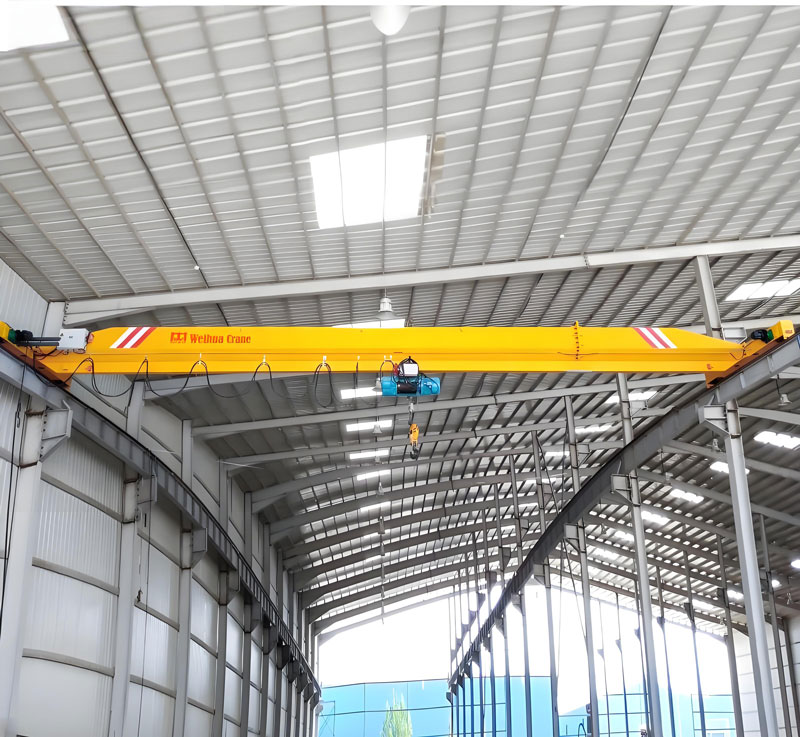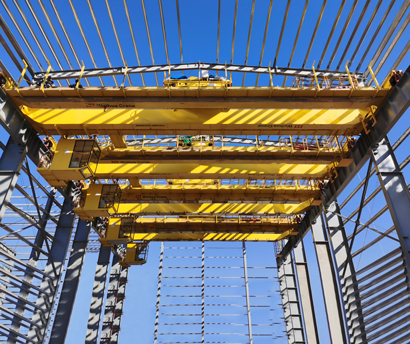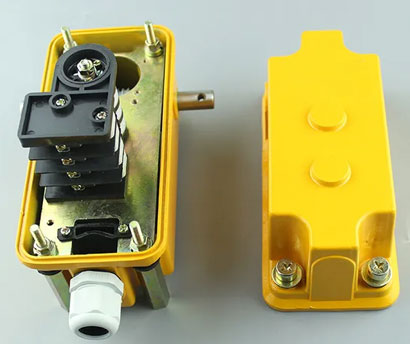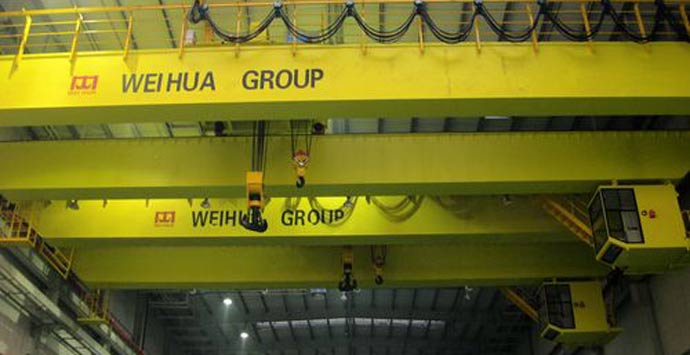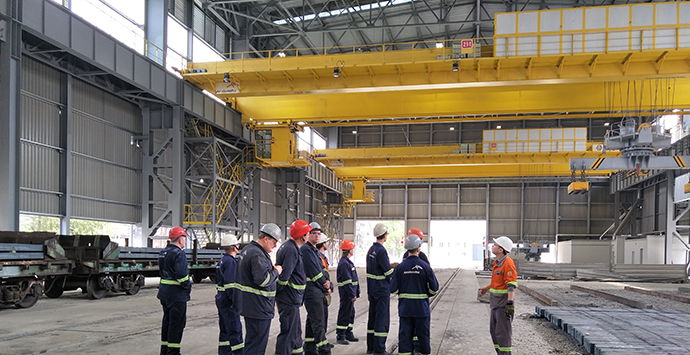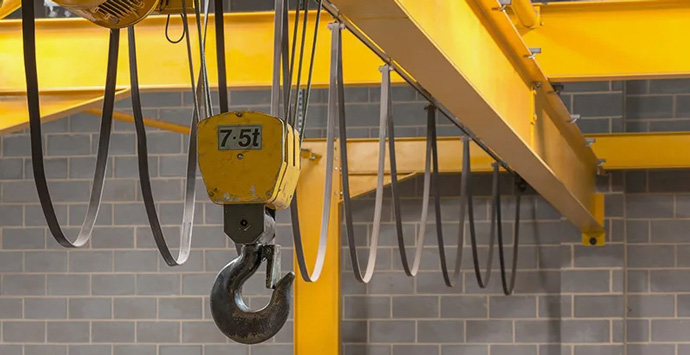
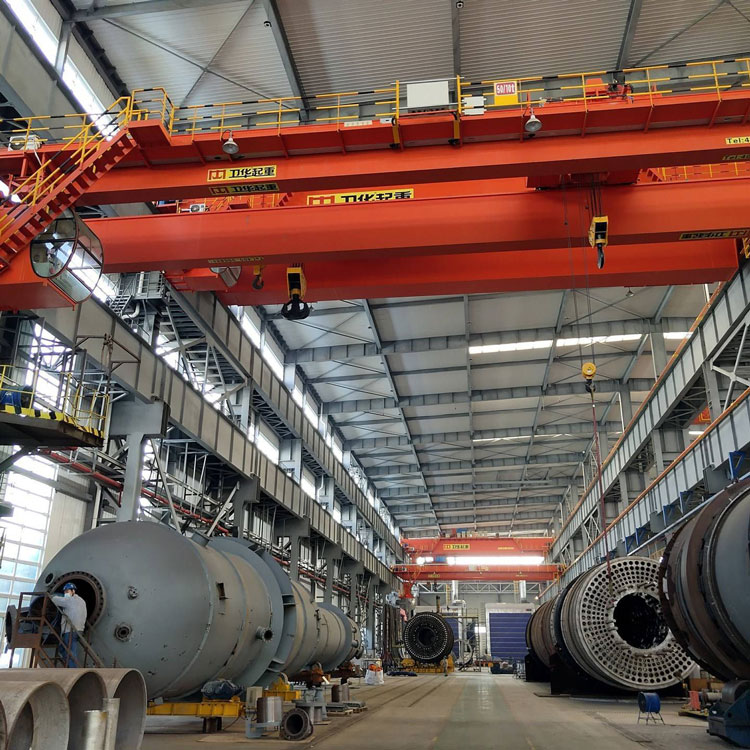
An overhead bridge crane is a heavy-duty material handling equipment designed to lift, 移动, and position large or heavy loads horizontally across a fixed span. Suspended from or mounted on elevated runways (typically along the length of a facility), it consists of a bridge structure that travels along these runways, with a hoist or trolley system that moves perpendicular to the bridge—enabling precise, multi-directional load movement.
Widely used in industrial settings, overhead bridge cranes streamline operations, 减少体力劳动, and enhance safety when handling weights from a few tons to hundreds of tons. They are customizable to fit specific workspace dimensions, 负载要求, 和环境条件, making them indispensable in manufacturing, 后勤, 和重工业.

Overhead bridge cranes are engineered for reliability, 效率, 和安全. Here are their core features:

Single girder overhead bridge crane

Choosing between single girder and double girder overhead bridge cranes depends on your load requirements, workspace, 和预算. Here’s a breakdown:
|
特征
|
Single Girder Overhead Bridge Crane
|
Double Girder Overhead Bridge Crane
|
|
Structure
|
One main girder (beam) supporting the hoist/trolley.
|
Two parallel girders with the hoist/trolley running between them.
|
|
负载容量
|
到 20 吨 (标准); 50 吨 (heavy-duty models).
|
20 吨及以上 (commonly 50–500+ tons).
|
|
跨度长度
|
Ideal for spans up to 30 仪表.
|
Suitable for longer spans (到 50+ 仪表).
|
|
举升高度
|
Moderate (limited by single girder strength).
|
Higher lifting heights (extra clearance due to dual girders).
|
|
成本
|
More affordable (simpler design, lower material use).
|
初始成本较高 (sturdier build, larger components).
|
|
最适合
|
Light to medium loads; small to medium facilities (例如, 研讨会, 仓库).
|
Heavy loads, large spans, or harsh environments (例如, 钢厂, 造船厂).
|

Below is a general parameter table for common overhead bridge crane models. Custom specifications are available based on your needs:
|
型号类型
|
Max Lifting Capacity
|
跨度长度
|
举升高度
|
工作级别 (ISO/FEM)*
|
电源
|
提升速度
|
|
单梁 (标准)
|
1–20吨
|
5–30 m
|
3–12 m
|
A3–A5
|
380伏/三相/50Hz (风俗)
|
0.5–10 m/min
|
|
单梁 (重负)
|
20–50 tons
|
10–25 m
|
5–15 m
|
A5–A6
|
380伏/三相/50Hz (风俗)
|
0.3–8 m/我
|
|
双梁 (标准)
|
20–100 tons
|
10–40 m
|
6–20 m
|
A6–A7
|
380伏/三相/50Hz (风俗)
|
0.2–6 m/min
|
|
双梁 (Ultra-Heavy)
|
100–500+吨
|
15–50+ m
|
8–30 m
|
A7–A8
|
风俗 (diesel/electric)
|
0.1–4 m/min
|
工作级别: Indicates duty cycle (how often the crane operates under load). Higher classes (A7–A8) suit continuous, heavy-use environments.

Overhead bridge cranes are versatile across sectors requiring heavy material handling. Key applications include:


Follow these steps to select the perfect overhead bridge crane for your needs:
Q1: How often should an overhead bridge crane be inspected?
A: Daily visual checks (for wear, leaks, or loose parts) and annual professional inspections are mandatory. Heavy-use cranes (A7–A8) may require quarterly inspections.
Q2: Can overhead bridge cranes be automated?
A: 是的. Modern models can integrate with IoT systems for automated load tracking, scheduled movements, and remote operation—ideal for repetitive tasks.
Q3: What’s the lifespan of an overhead bridge crane?
A: With proper maintenance, single girder cranes last 15–20 years; double girder cranes can operate for 25–30 years or longer.
Q4: How is an overhead bridge crane installed?
A: Installation involves mounting runways to building columns or support structures, positioning the bridge, and integrating the hoist/trolley. Professional installation is recommended for safety.
Q5: What’s the difference between an overhead bridge crane and a gantry crane?
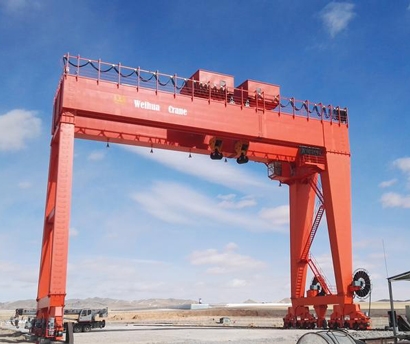
A: Overhead bridge cranes run on elevated runways (attached to a building), while 龙门起重机 have ground-supported legs—making gantries better for outdoor or open spaces.
准备好提高您的物料搬运效率? Contact us for a custom overhead bridge crane solution tailored to your industry and workflow.
以 PDF 形式分享: 下载


我们重视您的反馈! 请填写下面的表格,以便我们根据您的具体需求定制我们的服务.
Steel Coil Handling Overhead Crane For Sale Designed exclusively for the rigorous deman……
发现更多 →
最新评论