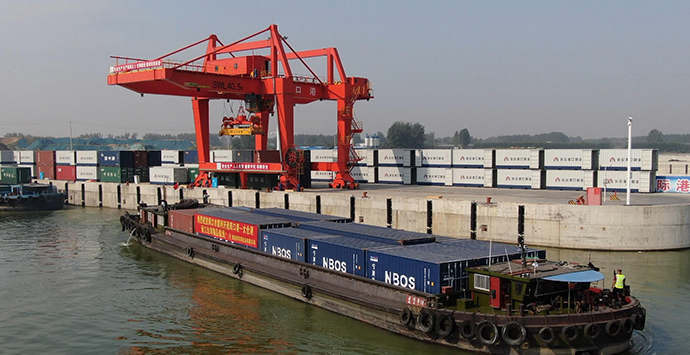
Lifting a shipping container with a crane is a high-stakes task that sits at the intersection of logistics efficiency and workplace safety. Unlike standard lifting jobs, container lifts involve heavy loads, precise alignment, and potential risks to both personnel and valuable cargo—whether you’re moving containers in a warehouse yard, offloading from a cargo vessel, or positioning them for long-term storage. There’s no “one-size-fits-all” approach, but a methodical, safety-first process ensures every lift is successful, damage-free, and compliant with industry standards. In this fully original guide, we’ll walk you through every phase of the process, from pre-lift planning to post-lift checks, share insider insights to avoid common pitfalls, and answer the questions most operators and site managers actually ask.
Pre-Lift Planning: The Foundation of a Safe Crane Lift
The success of any container lift starts long before the crane’s engine turns on. Rushing into operation without proper planning is not just risky—it’s a recipe for costly mistakes, damaged cargo, or worse. Below is a step-by-step breakdown of the pre-lift tasks that set the stage for a smooth operation.
1. Calculate Load Requirements and Limitations
Before selecting a crane or attaching any lifting equipment, you must first define the exact parameters of the load. This step is non-negotiable, as it directly dictates every other decision you’ll make. Here’s what to prioritize:
- ◆ Total Gross Weight: Start with the container’s tare weight (empty weight) and add the weight of its contents to get the gross weight. 例如, a standard 20ft empty container weighs approximately 2,200kg (4,850磅), while a fully loaded 40ft container can reach the ISO maximum of 28,400kg (62,600磅). Never estimate this weight—use a certified scale if the container’s load is unknown, as overloading a crane is one of the most common causes of accidents.
- ◆ Container Dimensions: 长度 (20英尺, 40英尺, 45英尺) and width will determine the type of spreader you need, as well as the crane’s reach. A 40ft container, 例如, requires an adjustable spreader to ensure even weight distribution across its four corner castings.
- ◆ Load Balance: Even if the gross weight is within the crane’s capacity, an unbalanced load can cause the container to tilt mid-lift. If the cargo inside is irregular (例如, 重型机械, unevenly stacked goods), take time to redistribute or secure it with bracing before lifting. A tilted container not only risks slipping but also puts unnecessary stress on the crane’s cables and lifting mechanism.
2. Select the Right Crane and Lifting Gear
Not all cranes are designed to handle shipping containers, and choosing the wrong equipment can lead to inefficiency or danger. The right crane depends on your site’s layout, the container’s size, and how far you need to move the load. Here’s a breakdown of the most reliable options, with original insights on their best uses:
- ◆ Ship-to-Shore (STS) 龙门起重机: These are the workhorses of port operations, designed to lift containers directly from cargo ships. Mounted on rails along the dock, they offer exceptional lifting capacity (到 120 吨) and long reach, making them ideal for high-volume unloading. Their fixed position means they’re not mobile, but they’re unmatched for speed and efficiency in port settings.
- ◆ Rubber-Tyred Gantry (RTG) 起重机: For yard operations, RTG cranes are a flexible choice. Equipped with rubber tires, they can move freely across paved surfaces, eliminating the need for rails. They’re perfect for medium-sized yards where containers need to be stacked (usually 3–4 high) or moved short distances. Many modern RTGs are electric-powered, reducing fuel costs and emissions.
- ◆ Truck-Mounted Cranes: When you need to lift containers in remote locations (例如, 建筑工地, rural warehouses), truck cranes are the go-to. They’re mobile, can be transported to any site with a road, and offer enough capacity (30–60 tons) for most standard containers. The key advantage here is versatility—they can lift containers from the ground, 卡车, or even uneven terrain (with proper stabilization).
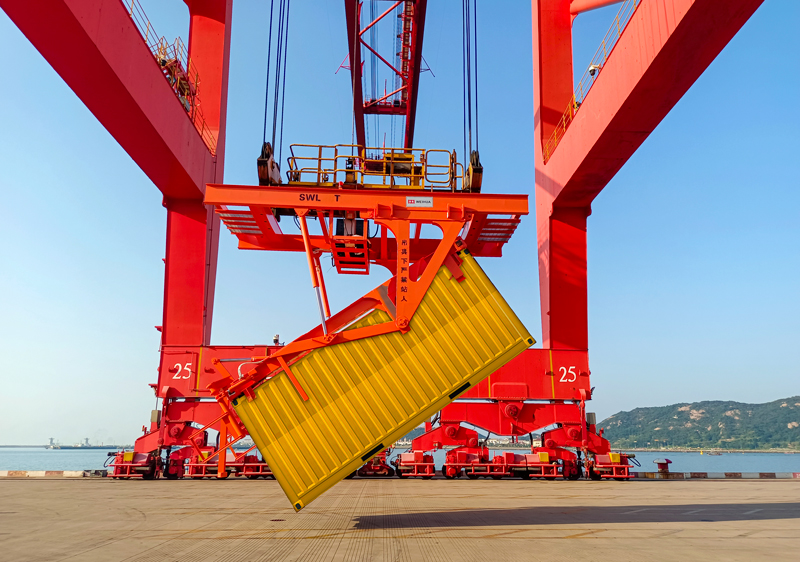
No matter which crane you choose, a container spreader is non-negotiable. This specialized tool attaches to the crane’s hook and uses four twist locks to secure the container’s corner castings—this is the only way to ensure the container stays stable during lifting. Look for a spreader that’s adjustable (to fit 20ft, 40英尺, and 45ft containers) and has a safety lock feature to prevent accidental disengagement.
3. Inspect Equipment and Site for Safety
Even the best equipment can fail if it’s not properly inspected. Before starting the lift, conduct a thorough check of both the crane and the work area to eliminate risks. Here’s a checklist you won’t find in generic guides:
- ◆ Crane Inspection: Check the crane’s cables for fraying, 纠结, or rust—even a small defect can snap under heavy load. 测试刹车, hydraulic system, 和安全装置 (load moment limiter, height limiter) to ensure they’re functioning correctly. 还, verify that the crane’s base is level and stable—use jacks or stabilizers if the ground is uneven.
- ◆ Spreader and Twist Locks: Inspect the spreader for cracks, bent parts, or worn components. Test each twist lock by engaging and disengaging it—they should lock firmly into the container’s corner castings without resistance. If a twist lock is stuck or loose, replace it immediately; a faulty lock is the leading cause of container slips.
- ◆ Work Area Preparation: Clear the lifting zone of all obstacles, including debris, 车辆, and loose tools. Set up a safety perimeter using barriers and warning signs—this zone should extend at least 10 仪表 (33 脚) from the crane and container to keep unauthorized personnel away. 还, check for overhead hazards like power lines—maintain a minimum distance of 6 仪表 (20 脚) to avoid electrical shock.
4. Assemble Your Qualified Team
A crane lift is not a one-person job. You need a team of trained, certified professionals to ensure every step goes smoothly. Here’s the roles you need (and why they matter):
- ◆ Certified Crane Operator: Only someone with a valid crane operator’s license should handle the controls. They must be familiar with the specific crane model and have experience lifting containers—this is not a job for general equipment operators.
- ◆ Signal Person: A dedicated signal person stands in a clear line of sight with both the operator and the container. They use standardized hand signals or a two-way radio to guide the operator—miscommunication here can lead to catastrophic errors.
- ◆ Site Safety Officer: This person monitors the entire operation, checks for safety violations, and stops the lift if any risks arise. They should have first aid training and be prepared to respond to emergencies.
What types of container cranes are there?
1. Ship-to-Shore Container Crane (STS)
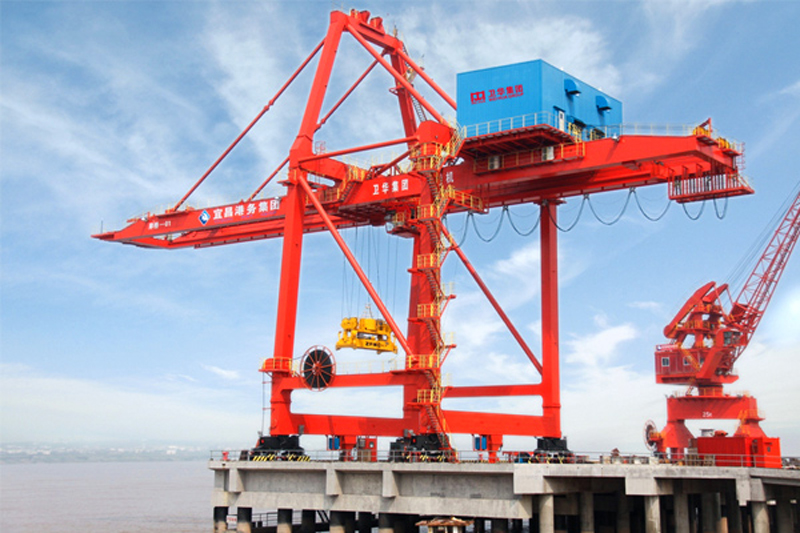
Ship-to-Shore Container Crane (STS)
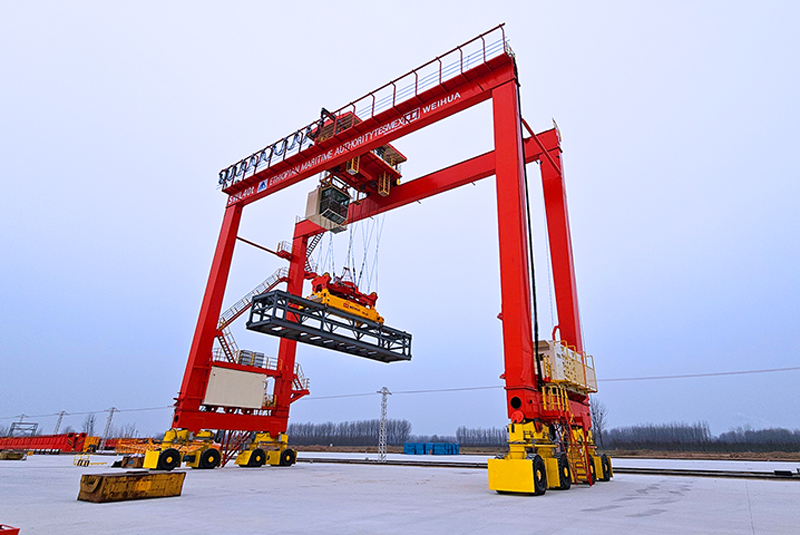
2. RTG Container Crane

RTG Container Crane
3. RMG Container Crane
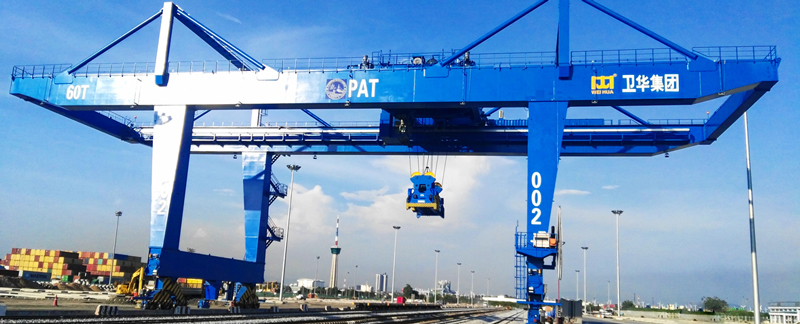
RMG Container Crane
4. Container Portal Crane
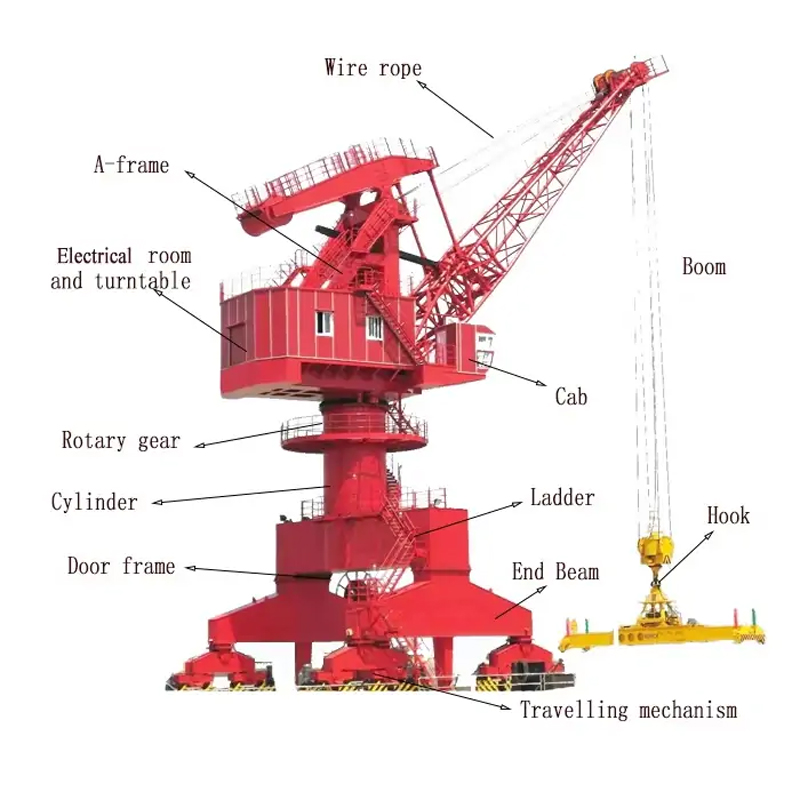
Container Portal Crane
5. Container Straddle Carrier
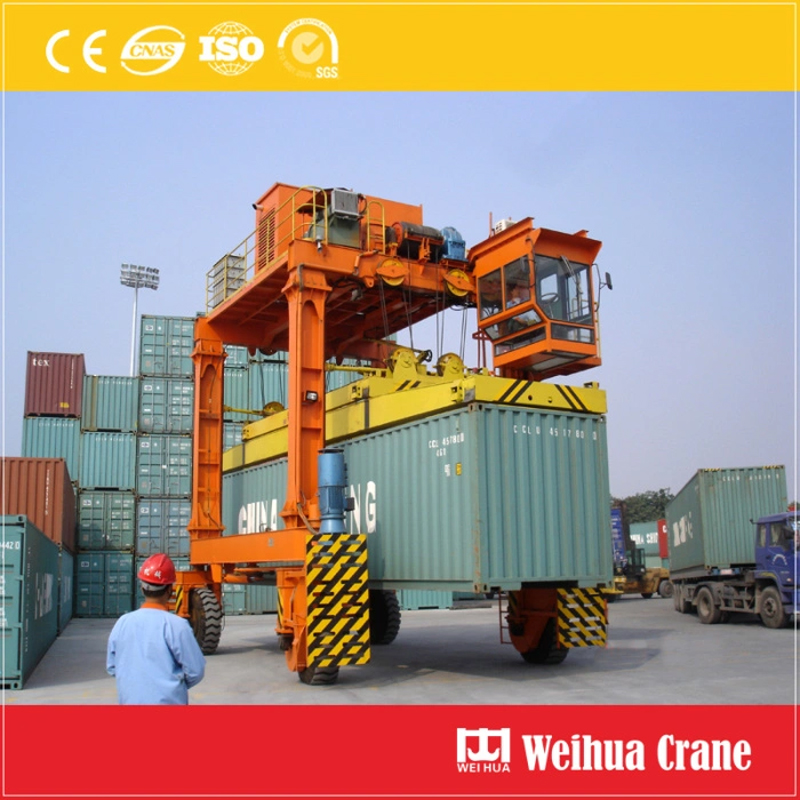
Container Straddle Carrier
Step-by-Step Guide to Lifting a Shipping Container with a Crane
With pre-lift planning complete, it’s time to execute the lift. Follow these steps closely—each one is designed to minimize risk and ensure precision.
步 1: Position the Crane for Optimal Stability
Move the crane to a position directly above the container, ensuring the boom is aligned with the container’s center of gravity. If you’re using a truck crane, extend the stabilizers fully to distribute the crane’s weight evenly across the ground—this prevents tipping. The operator should confirm the crane is level using the built-in level indicator; even a slight tilt can cause the container to swing during lifting.
步 2: Attach the Spreader to the Crane
Lower the crane’s hook and attach the spreader, ensuring the connection is secure. Double-check the hook’s safety latch to prevent the spreader from slipping. Adjust the spreader’s length to match the container’s size (例如, extend it for a 40ft container, retract it for a 20ft container) and ensure it’s centered over the container’s corner castings.
步 3: Secure the Spreader to the Container
Lower the spreader until the twist locks align with the container’s corner castings. Engage the twist locks—you’ll hear a distinct “click” when each lock is fully secured. The signal person should walk around the container to verify that all four twist locks are engaged; never rely solely on the operator’s view from the crane cab.
步 4: Conduct a Test Lift (Non-Negotiable)
Before lifting the container to its final height, perform a test lift to catch any issues. Lift the container 20–30cm (8–12 inches) off the ground and pause for 10–15 seconds. During this pause, the team should check:
- ◆ Is the container level? If it’s tilting, stop the lift, lower the container, and adjust the spreader or check the cargo balance.
- ◆ Are the twist locks holding? Look for any movement or slipping between the spreader and the container.
- ◆ Is the crane stable? Check for any swaying, settling, or unusual noises from the crane’s mechanism.
If any issues are found, lower the container immediately and resolve them before proceeding. Skipping the test lift is the most common mistake made by inexperienced teams—and it’s the most avoidable.
步 5: Lift the Container Smoothly
Once the test lift is successful, lift the container slowly and steadily. Avoid sudden movements (例如, jerking the crane upward or sideways) as this can cause the container to swing. The operator should lift the container to a height just enough to clear any obstacles (例如, the ground, other containers, 车辆)—the higher you lift it, the greater the risk of swinging.
步 6: Move the Container to Its Target Location
With the container lifted, move the crane slowly to the target location. The signal person should guide the operator, ensuring the container stays clear of obstacles and personnel. Keep the container as low as possible during movement to minimize swing—if the container starts to swing, stop the crane and let it settle before continuing.
步 7: Lower the Container Gently
Once the container is above the target location (例如, a stack, truck bed, or foundation), lower it slowly and evenly. Align the container with the desired position—use guides if necessary to ensure it’s straight. Lower the container until it touches the surface, then pause to confirm it’s stable before releasing the twist locks.
步 8: Disconnect the Spreader and Conduct Post-Lift Checks
Disengage the twist locks and lift the spreader slowly away from the container. Once the spreader is clear, lower it to a safe position. The team should then inspect the container for damage (例如, 凹痕, bent corner castings) and the spreader for wear or damage. 最后, secure the container (例如, lock it, stack it properly) and clear the work area.
Insider Safety Tips (Not Found in Generic Guides)
Safety is more than just following steps—it’s about anticipating risks and making smart decisions. Here are exclusive tips from experienced crane operators and safety experts:
- ◆ Avoid Lifting in Extreme Weather: High winds (超过 25 km/h / 15 mph) can cause the container to swing uncontrollably, even with a secure spreader. Rain or ice can make the crane’s controls slippery and the ground unstable. If weather conditions worsen mid-lift, lower the container immediately and stop operations.
- ◆ Never Lift Over Personnel: Even if the container is secured, a sudden equipment failure can happen. Always keep the lifting zone clear of people—this includes the signal person, who should stand at a safe distance while guiding the operator.
- ◆ Don’t Cut Corners on Maintenance: Regular maintenance is cheaper than repairing damage or dealing with accidents. Schedule weekly inspections of the crane, spreader, and twist locks, and replace worn parts immediately. Keep a log of all inspections and maintenance to stay compliant with industry standards.
- ◆ Train Your Team Regularly: Even experienced teams need refresher training. Conduct monthly safety drills to practice emergency procedures (例如, container slippage, crane failure) and ensure everyone on the team is familiar with the latest safety protocols.
常见错误 (And How to Avoid Them)
Even the most experienced teams can make mistakes—but knowing what to watch for can save you time, 钱, and safety risks. Here are the most common errors and how to prevent them:
- ◆ Estimating Load Weight: Never guess the gross weight of a container. Use a certified scale or check the container’s load manifest to get an accurate weight. Overloading a crane can cause it to fail, leading to serious injury or damage.
- ◆ Using a Damaged Spreader: A cracked or worn spreader can fail mid-lift. Always inspect the spreader before use, and replace it if you notice any damage. Don’t try to “make do” with a faulty spreader—this is a risk not worth taking.
- ◆ Ignoring the Center of Gravity: An unbalanced load can cause the container to tilt, even if the gross weight is within the crane’s capacity. Take time to redistribute cargo or use bracing to ensure the load is balanced before lifting.
- ◆ Poor Communication: Miscommunication between the operator and signal person is a leading cause of accidents. Use standardized hand signals or a two-way radio, and ensure both parties confirm each instruction before proceeding.
常见问题解答 (Answered by Industry Experts)
Q1: Can I use a standard crane (without a spreader) to lift a shipping container?
A1: No. Standard cranes lack the twist locks needed to secure the container’s corner castings, which means the container will slip during lifting. A container spreader is mandatory for safe lifting—there’s no substitute for this specialized equipment.
Q2: What’s the maximum height a crane can stack shipping containers?
A2: This depends on the crane type and container weight. RTG cranes can typically stack 3–4 containers high (around 12 仪表 / 40 脚), while STS gantry cranes in ports can stack up to 8–10 containers high (around 30 仪表 / 100 脚). Always check the crane’s specifications before stacking—overstacking can cause the bottom containers to collapse.
Q3: Do I need a license to operate a crane for container lifts?
A3: 是的. In most countries, crane operators must hold a valid license issued by a recognized authority. This license requires passing written and practical exams to demonstrate knowledge of crane operation and safety. The signal person and safety officer should also have relevant training and certifications.
Q4: How long does a typical container lift take?
A4: A standard lift (prep + 举起 + 移动 + 降低) takes 5–10 minutes for experienced teams. This can vary depending on the crane type, distance moved, and any unexpected issues (例如, unbalanced load, equipment checks). Rushing the process increases the risk of mistakes—always prioritize safety over speed.
最后的想法
Lifting a shipping container with a crane is a task that requires respect—for the equipment, the load, and the people involved. There’s no shortcut to safety, and every step of the process matters, from pre-lift planning to post-lift checks. By following the original, practical guidance in this guide, you’ll be able to execute lifts that are safe, 高效的, and damage-free.
记住: The goal isn’t just to move a container—it’s to move it without risking injury, 损害, or delays. If you’re ever unsure about a step, consult a certified crane professional or safety expert. Cutting corners might save time in the short term, but it will cost you far more in the long run.







最新评论