
Navigačné menu

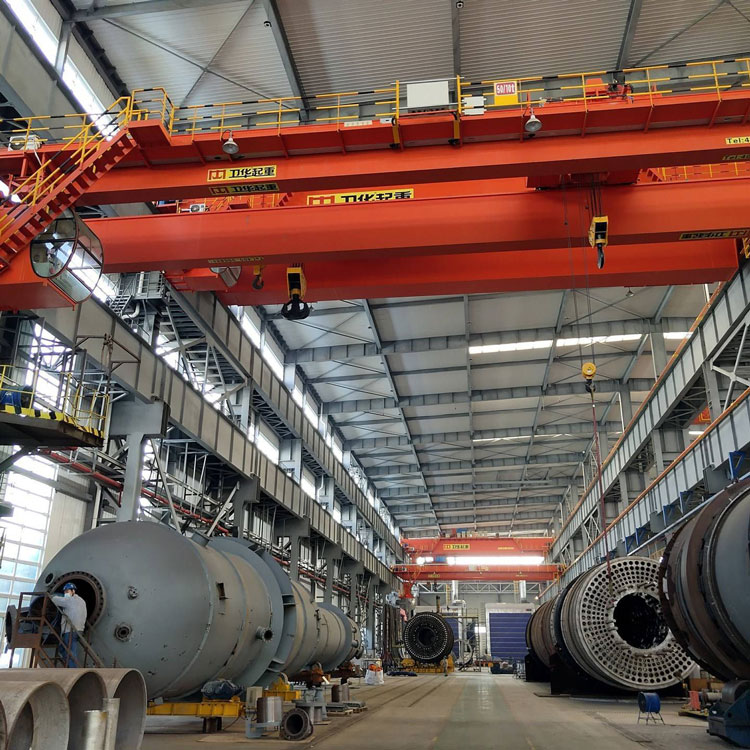

An overhead bridge crane is a heavy-duty material handling equipment designed to lift, move, and position large or heavy loads horizontally across a fixed span.

An overhead bridge crane is a heavy-duty material handling equipment designed to lift, move, and position large or heavy loads horizontally across a fixed span. Suspended from or mounted on elevated runways (typically along the length of a facility), it consists of a bridge structure that travels along these runways, with a hoist or trolley system that moves perpendicular to the bridge—enabling precise, multi-directional load movement.
Widely used in industrial settings, overhead bridge cranes streamline operations, reduce manual labor, and enhance safety when handling weights from a few tons to hundreds of tons. They are customizable to fit specific workspace dimensions, load requirements, and environmental conditions, making them indispensable in manufacturing, logistiky, and heavy industries.

Overhead bridge cranes are engineered for reliability, efektívnosť, a bezpečnosť. Here are their core features:
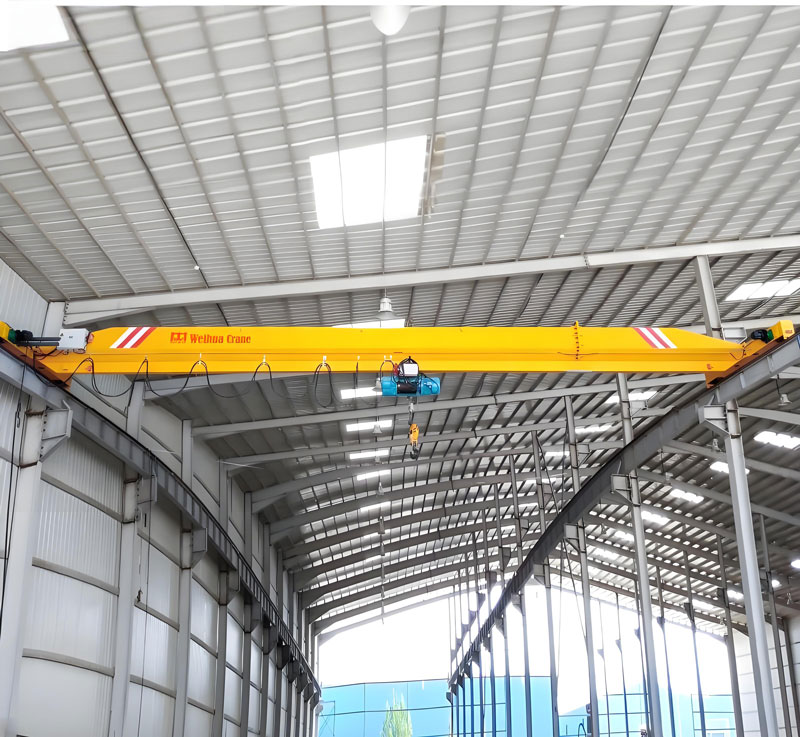
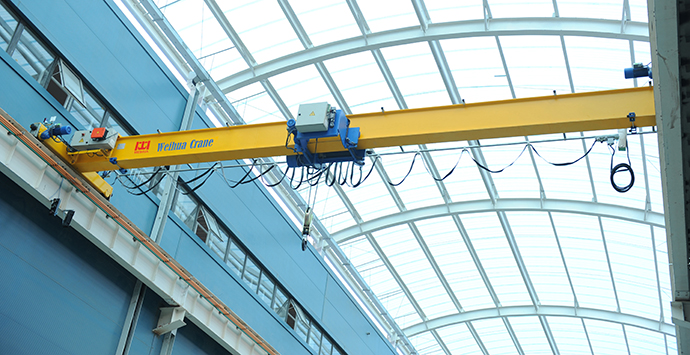
Single girder overhead bridge crane

Choosing between single girder and double girder overhead bridge cranes depends on your load requirements, workspace, and budget. Here’s a breakdown:
|
Feature
|
Single Girder Overhead Bridge Crane
|
Double Girder Overhead Bridge Crane
|
|
Structure
|
One main girder (beam) supporting the hoist/trolley.
|
Two parallel girders with the hoist/trolley running between them.
|
|
Kapacita zaťaženia
|
Up to 20 ton (štandardná); 50 ton (heavy-duty models).
|
20 tons and above (commonly 50–500+ tons).
|
|
Span Length
|
Ideal for spans up to 30 meters.
|
Suitable for longer spans (up to 50+ meters).
|
|
Výška zdvihu
|
Moderate (limited by single girder strength).
|
Higher lifting heights (extra clearance due to dual girders).
|
|
Cost
|
More affordable (simpler design, lower material use).
|
Higher initial cost (sturdier build, larger components).
|
|
Best For
|
Light to medium loads; small to medium facilities (napr., workshops, sklady).
|
Heavy loads, large spans, or harsh environments (napr., steel mills, shipyards).
|

Below is a general parameter table for common overhead bridge crane models. Custom specifications are available based on your needs:
|
Model Type
|
Max Lifting Capacity
|
Span Length
|
Výška zdvihu
|
Robotnícka trieda (ISO/FEM)*
|
Napájanie
|
Hoist Speed
|
|
Single Girder (Standard)
|
1– 20 ton
|
5–30 m
|
3–12 m
|
A3–A5
|
380V/3Ph/50Hz (custom)
|
0.5–10 m/min
|
|
Single Girder (Heavy-Duty)
|
20–50 tons
|
10–25 m
|
5–15 m
|
A5–A6
|
380V/3Ph/50Hz (custom)
|
0.3–8 m/min
|
|
Double Girder (Standard)
|
20–100 tons
|
10–40 m
|
6–20 m
|
A6–A7
|
380V/3Ph/50Hz (custom)
|
0.2–6 m/min
|
|
Double Girder (Ultra-Heavy)
|
100–500+ tons
|
15–50+ m
|
8–30 m
|
A7–A8
|
Custom (diesel/electric)
|
0.1–4 m/min
|
Robotnícka trieda: Indicates duty cycle (how often the crane operates under load). Higher classes (A7–A8) suit continuous, heavy-use environments.

Overhead bridge cranes are versatile across sectors requiring heavy material handling. Key applications include:
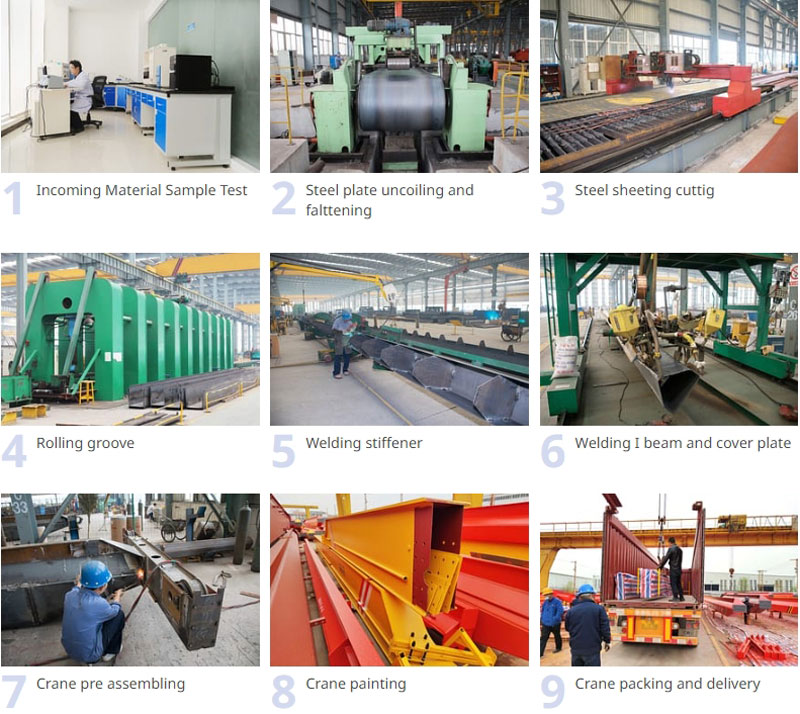
Follow these steps to select the perfect overhead bridge crane for your needs:
Q1: How often should an overhead bridge crane be inspected?
A: Daily visual checks (for wear, leaks, or loose parts) and annual professional inspections are mandatory. Heavy-use cranes (A7–A8) may require quarterly inspections.
Q2: Can overhead bridge cranes be automated?
A: Yes. Modern models can integrate with IoT systems for automated load tracking, scheduled movements, and remote operation—ideal for repetitive tasks.
Q3: What’s the lifespan of an overhead bridge crane?
A: With proper maintenance, single girder cranes last 15–20 years; double girder cranes can operate for 25–30 years or longer.
Q4: How is an overhead bridge crane installed?
A: Installation involves mounting runways to building columns or support structures, positioning the bridge, and integrating the hoist/trolley. Professional installation is recommended for safety.
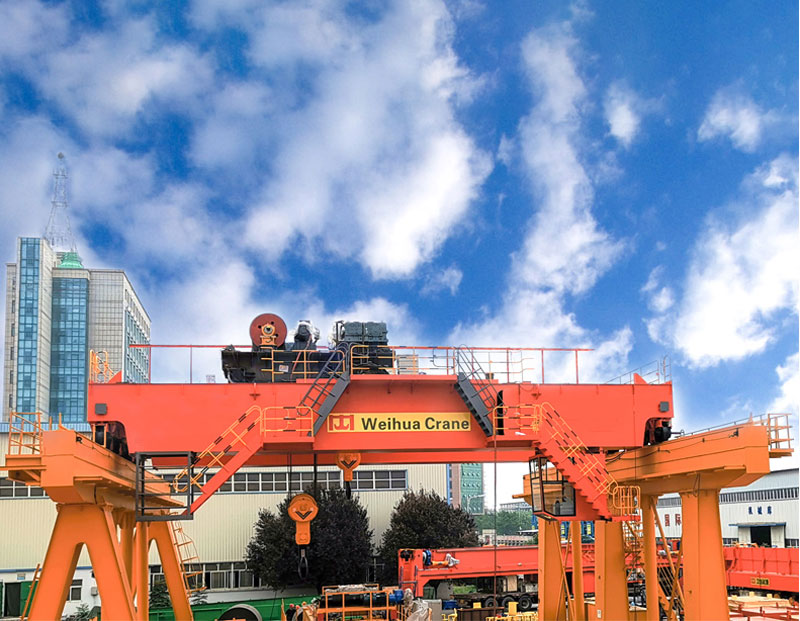
Q5: What’s the difference between an overhead bridge crane and a gantry crane?
A: Overhead bridge cranes run on elevated runways (attached to a building), while portálové žeriavy have ground-supported legs—making gantries better for outdoor or open spaces.
Ready to enhance your material handling efficiency? Contact us for a custom overhead bridge crane solution tailored to your industry and workflow.
Zdieľať pomocou PDF: Stiahnuť
Ceníme si vašu spätnú väzbu! Vyplňte prosím nižšie uvedený formulár, aby sme mohli naše služby prispôsobiť vašim špecifickým potrebám.
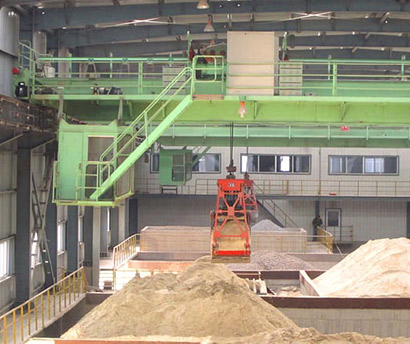
As a core equipment in bulk material handling scenarios, the grab overhead crane is spec……
Objavte viac →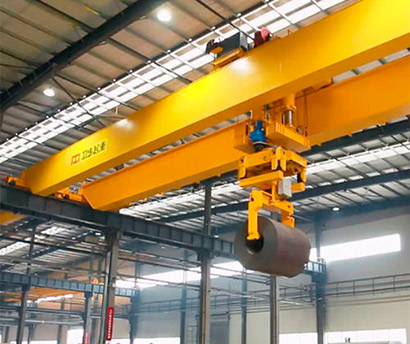
Designed specifically for the rigorous demands of metal processing, automotive manufact……
Objavte viac →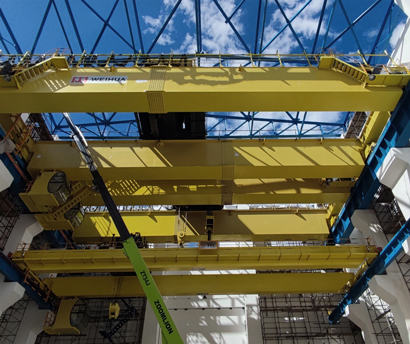
The 50 MT Double Girder Electric Overhead Traveling (EOT) Crane is a heavy-duty materia……
Objavte viac →

Kliknutím na tlačidlo získate informácie o produkte a cenové ponuky na WhatsApp.
ZÍSKAJTE CENU

Najnovšie komentáre