
Menu nawigacyjne

If you’re involved in industrial operations, produkcja, or warehouse management, you know that overhead cranes are the workhorses of material handling. But even the most robust crane won’t perform optimally—let alone safely—if its span isn’t calculated correctly. Overhead crane span calculation is more than just a technical detail; it’s the foundation of safe, wydajny, and cost-effective lifting operations. Get it wrong, and you risk equipment damage, operational delays, safety hazards, or even structural failure. Get it right, and you’ll maximize productivity, extend crane lifespan, and ensure compliance with industry standards.
W tym przewodniku, we’ll break down everything you need to know about overhead crane span calculation: what it is, why it matters, the key factors that influence it, a step-by-step calculation process, common mistakes to avoid, and real-world insights to help you apply this knowledge in your facility.
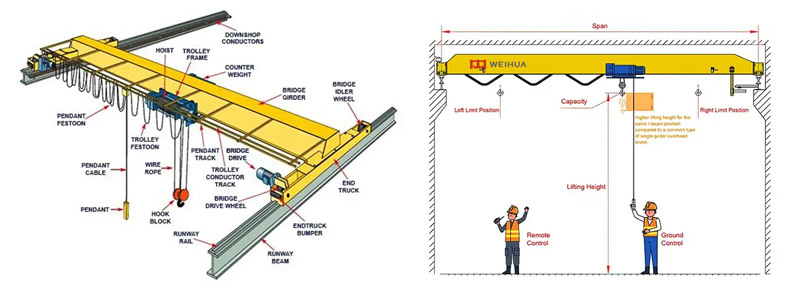
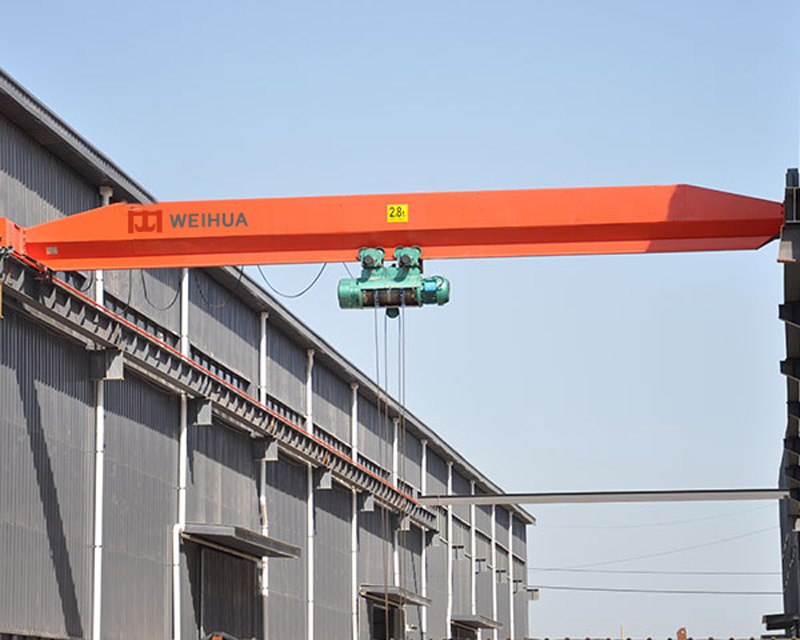
Pierwszy, let’s clarify the basics: the overhead crane span is defined as the horizontal distance between the centerlines of the two rails that the crane’s bridge travels along. In simpler terms, it’s the “width” of the crane’s operating area—how far the bridge can span across your facility. This measurement is critical because it directly determines the crane’s reach, the area it can cover, and how well it can handle loads across your workspace.
It’s important to note that the crane span is not the same as the factory or workshop span (the total width of your facility from wall to wall). Instead, the two are closely linked, and the crane span is typically calculated based on the workshop span, along with other critical factors like safety clearances and operational needs.
You might be tempted to cut corners with span calculation, but doing so can have serious consequences. Here’s why precision is non-negotiable:
Overhead crane span calculation isn’t a one-size-fits-all process. Several factors influence the final measurement, and you’ll need to account for all of them to get an accurate result. Let’s break them down:
The most fundamental factor is the width of your facility (workshop span, L). According to GB/T 790-1995, the crane span (S) is directly related to the workshop span by the formula: S = L – b, where b = b1 + b2 (the difference between the workshop span and crane span). The value of b depends on the crane’s rated lifting capacity and whether there’s a pedestrian safety walkway along the crane’s travel path:
The maximum weight of the loads you’ll be lifting (pojemność znamionowa) and their dimensions directly impact span calculation. Heavier loads require stronger crane structures, which may limit the maximum feasible span. Na przykład, a 100t crane will have a different optimal span than a 10t crane—larger loads often require shorter spans to maintain stability. Dodatkowo, if you need to lift oversized loads that extend beyond the crane’s hook, you’ll need to factor in extra clearance to avoid collisions.
Safety clearances are non-negotiable and must be included in your calculation. Należą do nich:
Failing to account for these clearances can lead to dangerous collisions and non-compliance with safety standards.
The crane’s span must match the track’s capabilities. Larger spans require heavier-duty rails and stronger track foundations to prevent deflection (pochylenie się) of the crane’s main beam. For spans exceeding 30m, a double girder design is recommended to enhance stability. Dodatkowo, the track’s alignment (straightness and levelness) becomes more critical with larger spans—poor alignment can cause uneven wear on the crane’s wheels and increase the risk of breakdowns.
To avoid custom fabrication costs, it’s best to use standard crane span series whenever possible. Common standard spans (per GB/T 790-1995 and industry practices) range from 7m to 34.5m, depending on the rated capacity. Na przykład, for cranes with a rated capacity ≤50t (with a walkway), standard spans include 7m, 10M, 13M, 16M, and so on. Using standard spans reduces lead times and maintenance costs, as replacement parts are more readily available.
Now that we’ve covered the key factors, let’s walk through a practical, step-by-step process to calculate your overhead crane span. We’ll use a real-world example to make it easier to follow.
Suppose you have a workshop with a span (L) of 24m, and you need to install an overhead crane with a rated lifting capacity of 30t (≤50t) and a pedestrian walkway along the crane’s travel path. Let’s calculate the optimal crane span (S).
Pierwszy, measure the total width of your workshop from the inner edge of one wall to the inner edge of the opposite wall. In our example, L = 24m (24000mm).
Using the GB/T 790-1995 standard: since the rated capacity is 30t (≤50t) and there’s a walkway, b = 2000mm (2M).
Use the formula S = L – b to calculate the crane span:
S = 24m – 2m = 22m
Check that the calculated span (22M) provides enough clearance between the crane and the workshop walls. In our example, the workshop span is 24m, so the clearance on each side is (24m – 22m)/2 = 1m—well above the recommended 0.5m minimum. This ensures the crane can operate safely without colliding with the walls.
Refer to the standard span series for cranes with a rated capacity ≤50t (with walkway). The standard spans include 22m, which matches our calculation. This means we can use a standard crane, avoiding custom fabrication costs.
Wreszcie, confirm that the 22m span is suitable for the 30t load. For a 30t crane, a 22m span is well within the safe range (standard spans for ≤50t cranes go up to 34m). Dodatkowo, ensure the track and foundation can support the crane’s weight and the load—for a 22m span, a single or double girder design may be used, depending on the specific load requirements and facility constraints.
Even experienced professionals can make mistakes when calculating crane spans. Here are the most common pitfalls to watch out for:
The biggest mistake is skipping safety clearances to “save space.” This leads to collisions, uszkodzenie sprzętu, and safety hazards. Always factor in clearances for walls, columns, sprzęt, and workers.
Many people assume a larger span is better, but this increases costs and reduces stability. Only size the span to cover the necessary work area—no more, no less.
If you calculate the span based on a lower load weight than you actually need, the crane may not be able to handle heavier loads safely. Always use the maximum rated load for your calculation.
Failing to follow standards like GB/T 790-1995 or international guidelines can lead to non-compliance, fines, and unsafe operations. Always reference the relevant standards for your region and application.
A large span requires a strong track and foundation. If your facility’s foundation can’t support the crane’s weight, you’ll face structural issues down the line. Consult a structural engineer to validate track and foundation capabilities.

To further illustrate how span calculation works in practice, let’s look at a heavy-duty application: a 100t gantry crane (rodzaj suwnicy) used in a bridge precast yard. The crane needs to lift 30m precast box girders, which are wide and heavy. Here’s how the span was calculated:
The final span was 30m, which allowed the crane to lift and move the 30m box girders safely, with enough clearance to avoid collisions. The crane used a double girder truss design to handle the heavy load and large span, and the track was reinforced to prevent deflection.
Overhead crane span calculation is a critical step in ensuring safe, wydajny, and cost-effective material handling. By understanding the key factors (workshop dimensions, wymagania dotyczące obciążenia, safety clearances, and industry standards) and following a step-by-step process, you can avoid common mistakes and select the optimal span for your facility.
Pamiętać: there’s no “one-size-fits-all” span. Every facility and application is unique, so take the time to measure accurately, reference industry standards, and consult with crane design professionals if needed. A well-calculated span will not only keep your operations running smoothly but also protect your workers, sprzęt, and bottom line.
Do you have questions about overhead crane span calculation for your specific application? Let us know in the comments below—we’re here to help!
Cenimy twoją opinię! Wypełnij poniższy formularz, abyśmy mogli dostosować nasze usługi do twoich konkretnych potrzeb.


Kliknij przycisk, aby uzyskać informacje o produkcie i cytaty na WhatsApp.
Zdobądź wycenę
Najnowsze komentarze