
탐색 메뉴

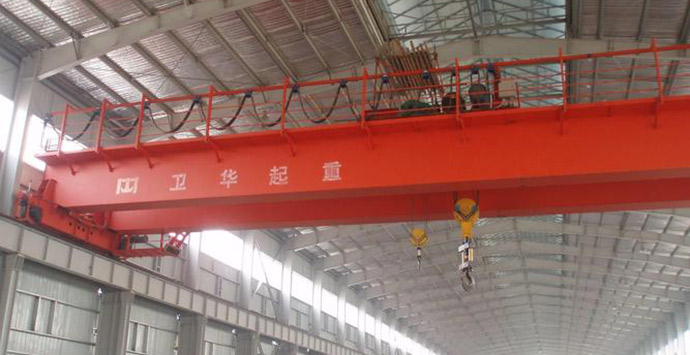
빠르게 변화하는 현대 제조 및 물류 세계에서, material handling is no longer just about moving heavy loads—it’s about doing so efficiently, 안전하게, and with unprecedented precision. Enter smart overhead crane technology, a game-changing innovation that’s revolutionizing how industries approach lifting operations. From automated workflows to real-time data monitoring, this technology is redefining the standards of industrial productivity. Let’s dive into what makes smart overhead cranes a must-have for forward-thinking businesses.
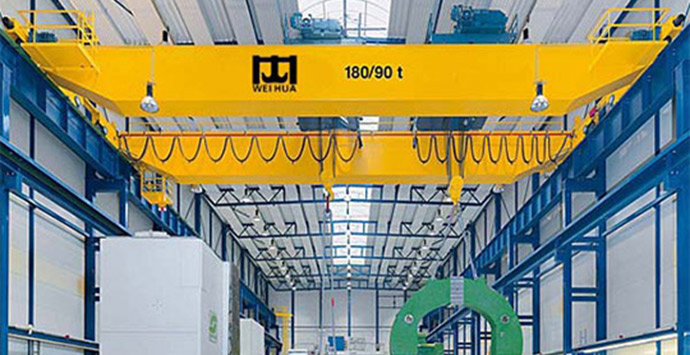
At its core, a smart overhead crane is an intelligent lifting system that integrates advanced sensors, automation controls, data analytics, and connectivity to operate with minimal human intervention—or even autonomously. Unlike traditional cranes that rely entirely on manual operation, smart cranes can perceive their environment, make data-driven decisions, and execute tasks with consistent accuracy.
According to technical specifications, a smart overhead crane system typically consists of five key layers: basic crane function layer, sensor layer, signal collection and execution layer, control layer, and human-machine interaction layer. This multi-layered architecture enables functions like automatic positioning, load monitoring, path optimization, and remote management—all critical for modern industrial needs.
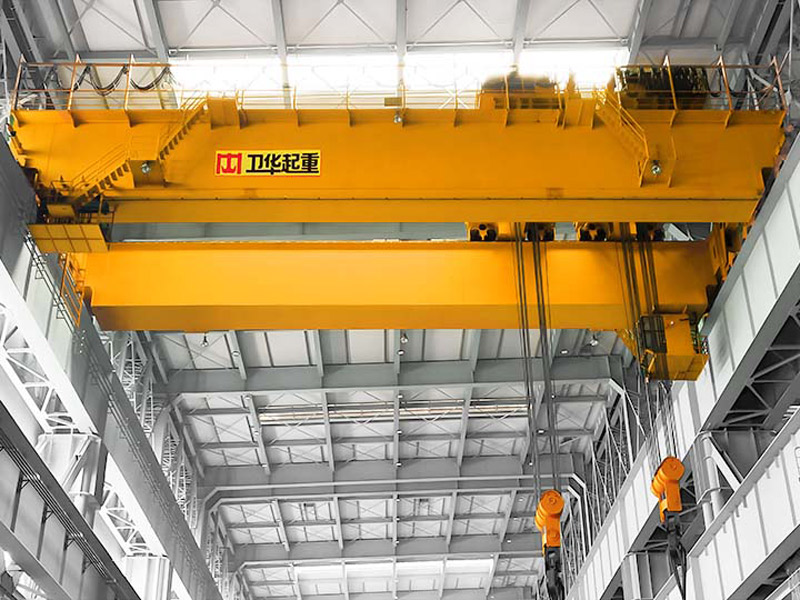
Smart overhead cranes wouldn’t be possible without a suite of cutting-edge technologies working in harmony. Here are the most pivotal ones:
Accurate positioning is the foundation of smart crane operation. Modern systems integrate long travel, cross travel, and hoisting positioning modules, with a positioning accuracy deviation of no more than 50mm if not specified by design. Laser ranging, encoders, and 3D visual recognition technologies ensure that loads are moved to exact locations, eliminating errors caused by human judgment.
Load sway is a major safety hazard and efficiency drain in traditional crane operations. Smart cranes solve this with advanced anti-sway technology, which uses algorithms and real-time swing angle feedback to stabilize loads during movement. This not only improves safety but also speeds up cycle times by reducing the need for slow, cautious operation.
Sensors are the “eyes and ears” of smart cranes. They collect data on load weight, crane status, 환경 조건 (such as obstacles), and material information. Combined with AI, this data enables features like automatic material identification (via barcodes or RFID), obstacle avoidance, 예측 유지 관리. 예를 들어, AI can analyze vibration data to detect potential mechanical failures before they occur.
Smart cranes support both semi-automatic and fully automatic operation modes. Operators can control cranes remotely via a console that displays real-time positioning data, load status, and safety alerts. In fully automated mode, cranes can receive tasks from a central control system, plan optimal paths, and complete material handling cycles without human intervention—ideal for 24/7 operations in smart factories.
1. 향상된 안전
2. 효율성 향상 & Productivity
3. 비용 절감
4. Scalability & 사용자 정의
Smart overhead cranes are already making an impact in various industries:
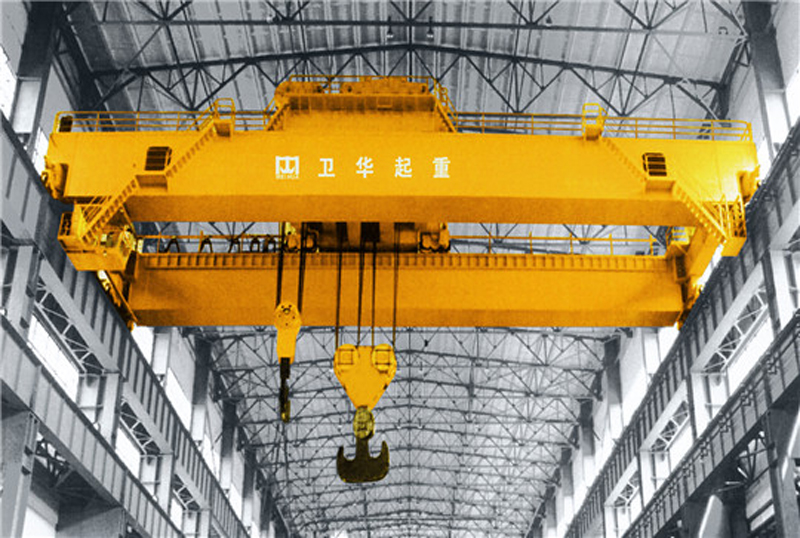
The future of smart overhead crane technology looks even more promising, with several key trends on the horizon:
Smart overhead crane technology is not just a trend—it’s a fundamental shift in how industries handle material lifting and logistics. By combining precision, 오토메이션, and data-driven insights, these 오버헤드 크레인 enhance safety, boost efficiency, and reduce costs, making them indispensable for businesses aiming to stay competitive in the era of Industry 4.0.
Whether you’re looking to retrofit existing cranes or invest in new systems, the benefits of smart overhead crane technology are clear. As the technology continues to evolve, it will open up even more possibilities for innovation in industrial operations.
우리는 귀하의 의견을 소중히 여깁니다! 귀하의 특정 요구에 맞게 서비스를 조정할 수 있도록 아래 양식을 작성하십시오..



최신 의견