
Menu di navigazione

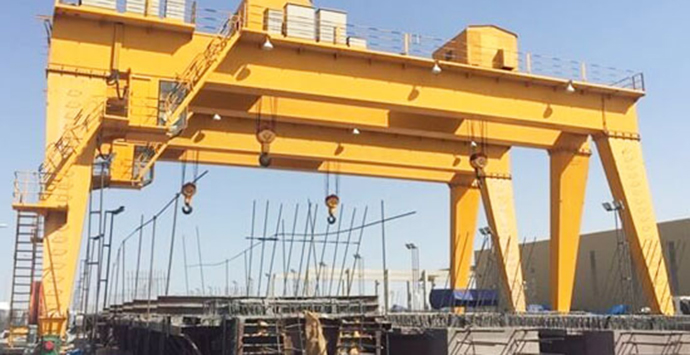
If you’ve ever visited a port, cantiere, or large manufacturing facility, you’ve likely seen a gantry crane in action—towering structures that lift and move heavy loads with precision and efficiency. But have you ever wondered, “How does a gantry crane work?” This comprehensive guide breaks down the gantry crane’s core components, working principles, tipi, and applications, helping you understand why it’s an indispensable tool in industries worldwide. Whether you’re an industry professional, a curious learner, or someone researching heavy lifting equipment, this article covers everything you need to know about how gantry cranes operate.
Primo, let’s clarify what a gantry crane is. A gantry crane is a type of heavy-duty lifting equipment characterized by a bridge-like structure (called a gantry) supported by two or more vertical legs. A differenza delle gru a ponte, which are fixed to a building’s ceiling or walls, gantry cranes are freestanding and can move along tracks or wheels, making them ideal for outdoor or open-area operations where fixed structures are unavailable. They range in size from small shop cranes used to lift automobile engines to massive ship-to-shore cranes that handle shipping containers at ports—all operating on the same basic principles but scaled for different tasks.
Gantry cranes are also commonly referred to as portal cranes, with the “portal” referring to the empty space straddled by the gantry structure. This design allows them to straddle large objects, workspaces, or entire shipping containers, making them versatile for a wide range of lifting needs.
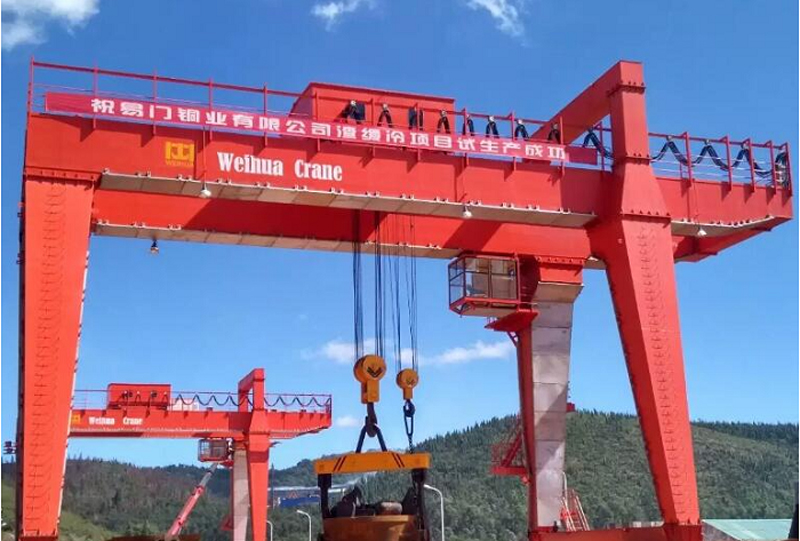
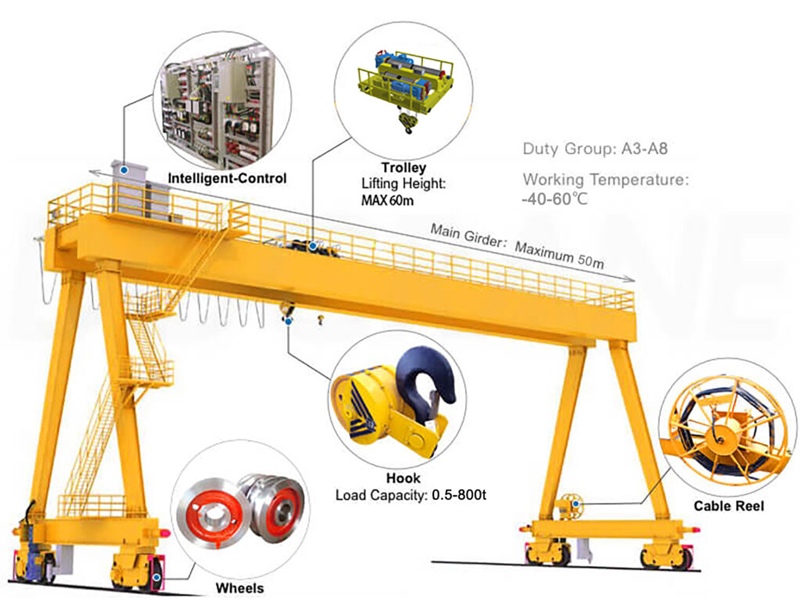
To understand how a gantry crane works, you first need to familiarize yourself with its core components. Each part plays a critical role in the crane’s ability to lift, mossa, and position heavy loads safely. Here are the essential components:
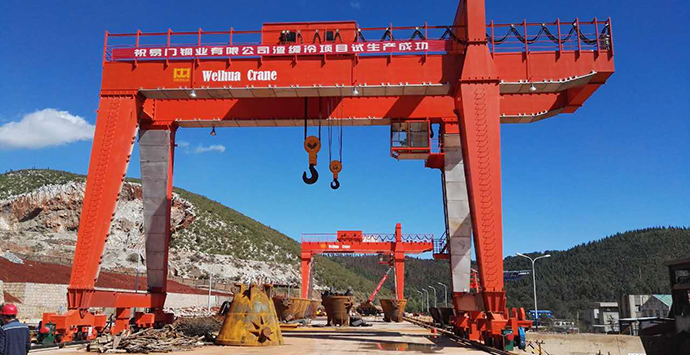
The gantry frame is the crane’s backbone, consisting of a horizontal beam (ponte) and vertical support legs. The bridge spans the area where loads are lifted, while the legs provide stability and support the entire structure. The frame is typically made of high-strength steel (either box-type or truss design) to withstand heavy weights and harsh industrial conditions. Some gantry cranes have a single leg (semi-gantry cranes), while others have two legs (full gantry cranes) for maximum stability—common in heavy-duty applications like port operations or shipbuilding.
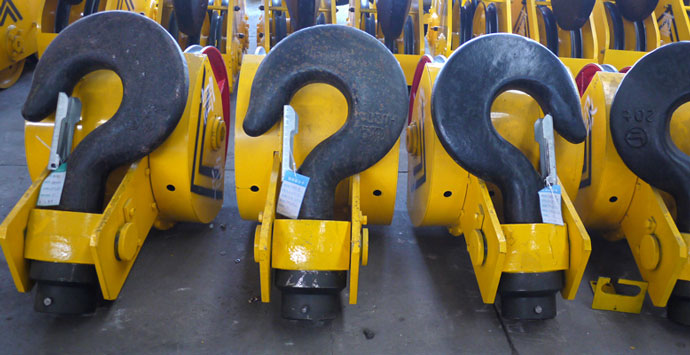
The hoisting mechanism is the “lifting heart” of the gantry crane. It consists of an electric motor, riduttore, tamburo, steel cables, pulegge, and a hook or spreader (for containers). The motor drives the drum, which winds or unwinds the steel cables to raise or lower the load. Pulleys are used to amplify the lifting force, allowing the crane to handle much heavier loads than the motor alone could manage. Per gru per container, a spreader is attached to the hook to span and lock containers securely during movement. Safety features like dual braking systems (electromagnetic and mechanical) prevent the load from slipping or falling when the crane is stationary.
The trolley is a movable platform mounted on the gantry bridge. It carries the hoisting mechanism and moves horizontally along the bridge’s length (movimento laterale, or Y-axis direction). This allows the crane to position the load precisely over different points within the bridge’s span. The trolley is driven by a small motor and runs on wheels along rails attached to the bridge. Modern trolleys often use variable frequency drive (VFD) technology for smooth, precise movement—critical for delicate or high-precision lifting tasks like shipbuilding or aerospace component handling.
The traveling mechanism allows the entire gantry crane to move along the ground. Most gantry cranes run on rails installed on the ground (track-mounted), while others use rubber tires for greater mobility (tire-mounted). The mechanism includes motors, riduttori, and wheels that drive the crane forward or backward (movimento longitudinale, or X-axis direction), expanding the crane’s working range beyond the bridge’s span. Per esempio, ship-to-shore gantry cranes operate along two rails (waterside and landside) spaced according to the crane’s size, allowing them to load and unload container ships efficiently.
The control system is how operators manage the gantry crane’s movements. Most modern gantry cranes have an operator cab mounted on the bridge or trolley, providing a panoramic view of the work area. The cab is equipped with levers, pulsanti, or a touchscreen to control the hoisting, carrello, and traveling mechanisms. Some advanced cranes also support remote control or automated operation (via PLC programming), reducing human error and improving efficiency. Safety controls like emergency stop buttons, sensori di sovraccarico, and travel limit sensors are also integrated to protect operators, the crane, e il carico.
Now that you know the key components, let’s break down the step-by-step process of how a gantry crane works. The operation relies on three coordinated movements—vertical (sollevamento), horizontal (carrello), and longitudinal (viaggiare)—to move loads safely and precisely through three-dimensional space (X, Y, and Z axes).
Primo, the operator uses the traveling mechanism to move the entire gantry crane along its rails (or tires) to the location of the load. Questo movimento longitudinale (X-axis) allows the crane to reach different areas of the work site—for example, moving from a storage yard to a shipping container or from a construction pile to a building foundation. During movement, safety lights and sirens may activate to alert nearby workers of the crane’s motion.
Once the crane is in the correct general area, the operator moves the trolley along the bridge (movimento laterale, Y-axis) to align the hoisting hook directly above the load. Precision is key here—especially for heavy or awkwardly shaped loads—to avoid swinging or instability. Modern trolleys with VFD technology allow for smooth, slow movement to ensure perfect alignment.
Con il gancio allineato, the operator activates the hoisting mechanism. The electric motor drives the drum, which unwinds the steel cables to lower the hook (or spreader) to the load. Once the hook is attached securely (utilizzando le imbracature, catene, or a container spreader), il motore inverte, winding the cables to lift the load vertically (Z-axis). The pulleys amplify the lifting force, allowing the crane to handle loads ranging from a few hundred pounds to thousands of tons. The braking system engages to hold the load in place once it reaches the desired height, preventing slippage even if power is cut off.
Once the load is lifted, the operator uses the trolley and traveling mechanisms to move it to the target location. The trolley moves the load along the bridge (Y-axis), while the traveling mechanism moves the entire crane (X-axis)—these movements can be combined to move the load diagonally. The operator maintains control of the load’s height (Z-axis) to avoid obstacles like other equipment, edifici, or workers. For automated cranes, pre-programmed paths ensure precise movement without manual intervention.
When the load reaches the target location, the operator slowly lowers it using the hoisting mechanism. The drum unwinds the cables gradually, and the braking system ensures smooth, controlled descent. Once the load is safely placed on the ground, camion, or other surface, the operator detaches the hook and prepares for the next lift. Some cranes also feature energy feedback systems during lowering operations to reduce energy consumption.
While all gantry cranes operate on the same basic principles, different types are designed for specific applications. Here are the most common types and how their working mechanisms vary:
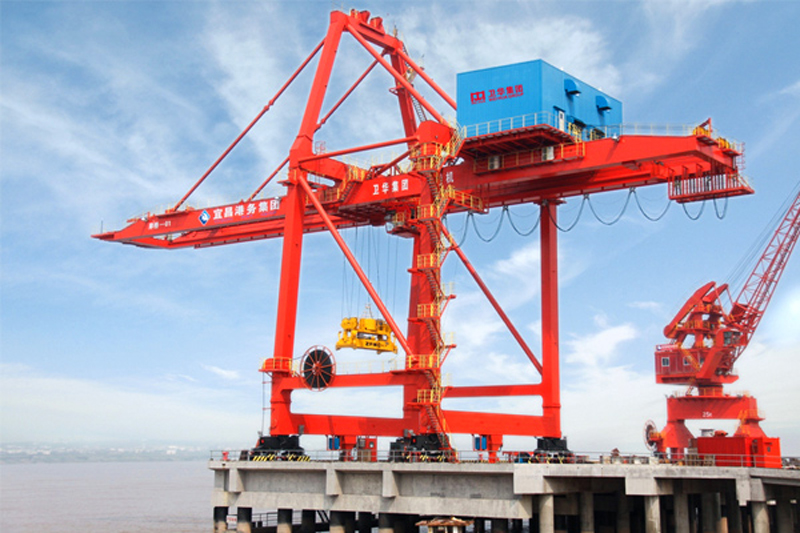
Da nave a riva (STS) Gru a portale
Found at container ports, STS gantry cranes are massive, multi-story structures used to load and unload containers from ships. They operate along two rails (waterside and landside) and have a long boom that extends over the ship’s deck. Their hoisting mechanisms are designed to handle heavy containers (fino a 100+ tonnellate), and their trolley systems move quickly to maximize throughput. Many STS cranes are automated, with sensors and cameras to guide container placement precisely.
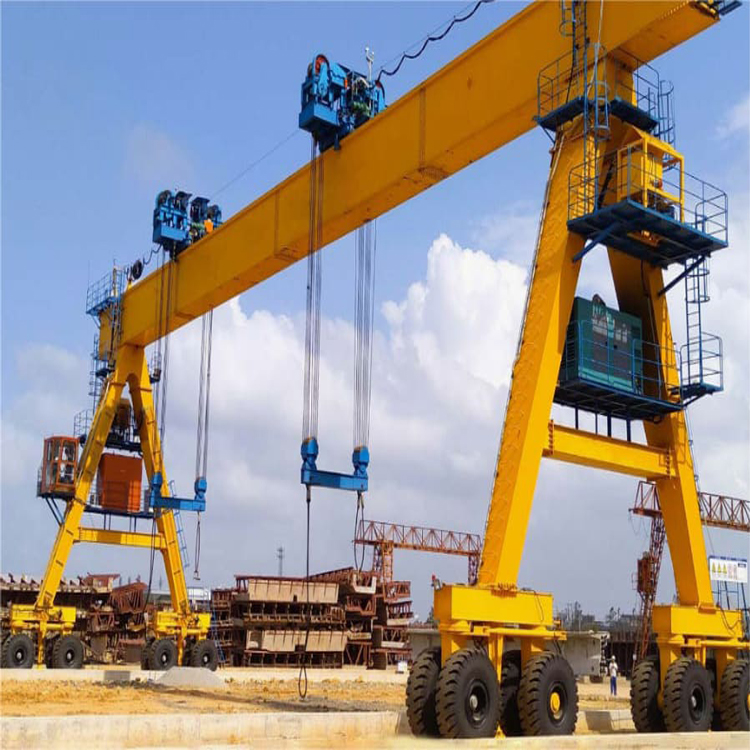
RTG cranes use rubber tires instead of rails, making them highly mobile. They are commonly used in container yards to stack containers (fino a 3-4 layers high and 6 rows wide). Unlike track-mounted cranes, RTGs can move freely between different yard areas, making them ideal for flexible operations. Their traveling mechanism uses tire-driven motors, and they often feature steering systems that allow 90-degree turns for easy maneuvering.
Gantry cranes are also classified by their beam design. Truss gantry cranes have a lattice-like beam structure, which is lightweight yet strong—ideal for long spans (fino a 42 metri) and outdoor use, as they resist wind better. Box-beam gantry cranes have a solid, box-shaped beam, offering greater stability and load capacity (fino a 80+ tonnellate) for heavy-duty applications like manufacturing or construction. Both types use the same hoisting, carrello, and traveling mechanisms but differ in structural strength and weight efficiency.
Gru semi-cavalletto
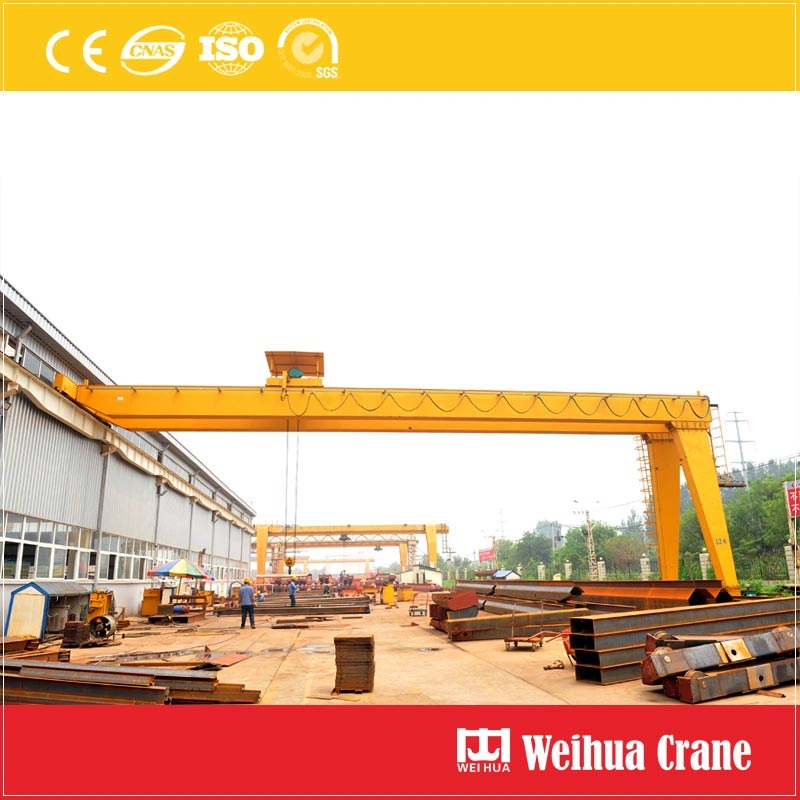
Semi-gantry cranes have one leg supported by the ground (on rails or tires) and the other leg supported by a building or structure. They are ideal for tight spaces where a full gantry crane cannot fit, such as indoor warehouses or manufacturing facilities. Their working mechanism is similar to full gantry cranes but with a smaller footprint, making them suitable for light to medium-duty lifting (1-20 tonnellate).
Safety is paramount in gantry crane operation, and modern cranes are equipped with multiple features to prevent accidents. These features work alongside the core components to ensure safe, reliable operation:
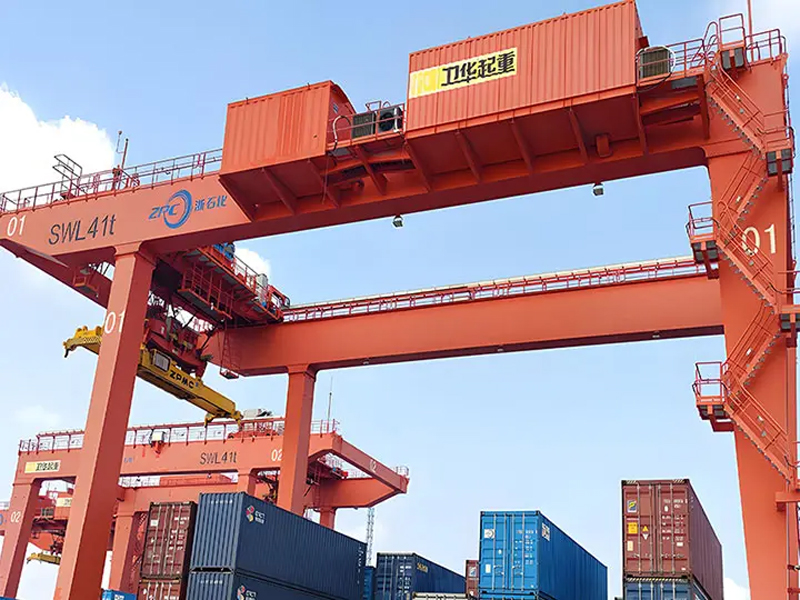
Gantry cranes are versatile and used across numerous industries, thanks to their ability to handle heavy loads in open or hard-to-reach areas. Le applicazioni comuni includono:
Each application leverages the gantry crane’s core strengths—versatility, capacità di sollevamento, and mobility—to solve unique heavy-lifting challenges. By adapting to different environments and load requirements, gantry cranes remain a cornerstone of modern industrial operations, driving efficiency and safety across sectors.
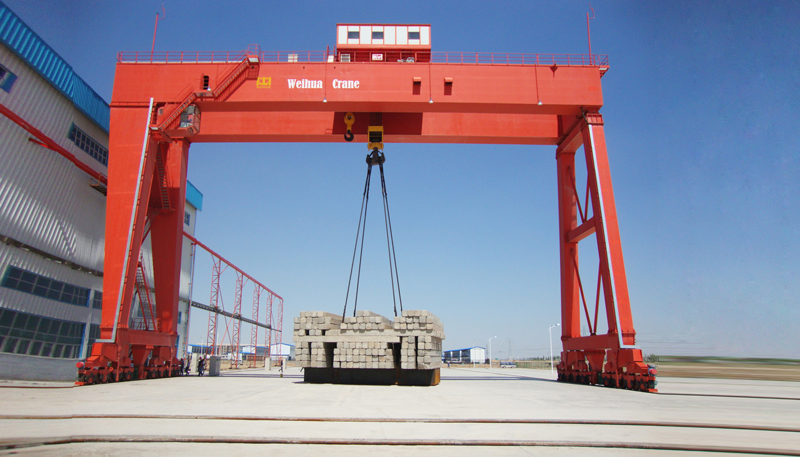
Gantry cranes stand out from other lifting equipment due to their unique combination of flexibility, energia, e adattabilità. Unlike fixed overhead cranes, they can be deployed in open areas without relying on building structures, making them ideal for outdoor operations like ports and construction sites. Their ability to move along rails or tires expands their working range, while their modular design allows for customization to fit specific industry needs—from small shop cranes to massive shipyard cranes.
Inoltre, advancements in technology have made modern gantry cranes more efficient and safe than ever before. Automated operation, telecomando, and smart safety systems reduce human error, lower operational costs, and improve productivity. As industries continue to handle heavier loads and demand greater precision, gantry cranes will remain an indispensable tool for years to come.
Al suo centro, a gantry crane works by combining three coordinated movements—hoisting (vertical), carrello (lateral), e viaggiare (longitudinal)—powered by key components like the gantry frame, meccanismo di sollevamento, e sistema di controllo. From positioning the crane to lifting and moving loads, each step relies on precise coordination between these components to ensure safe, funzionamento efficiente.
Whether you’re watching a ship-to-shore crane unload containers at a port or a small gantry crane lifting engine parts in a workshop, the basic working principle remains the same: using mechanical power and structural stability to move heavy loads with precision. Understanding how gantry cranes work helps you appreciate their role in powering global industries and the engineering ingenuity behind these impressive machines.
If you’re in the market for a gantry crane or need more information on selecting the right type for your application, consider factors like load capacity, lunghezza della campata, mobility (track or tire-mounted), and control system preferences. With the right gantry crane, you can streamline operations, improve safety, and handle even the most challenging lifting tasks with ease.
Apprezziamo il tuo feedback! Completa il modulo sottostante in modo da poter personalizzare i nostri servizi alle tue esigenze specifiche.


Fai clic sul pulsante per ottenere informazioni sul prodotto e citazioni su WhatsApp.
Ottieni una citazione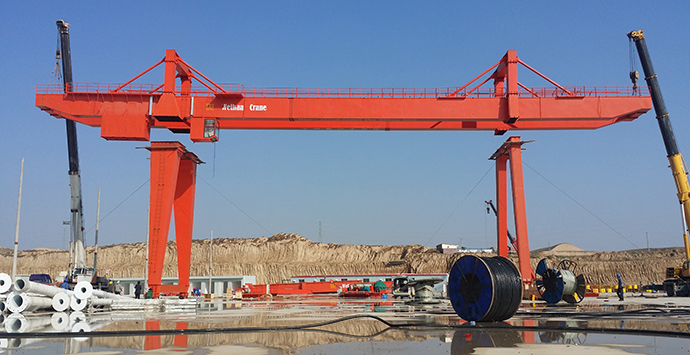
Ultimi commenti