
Navigation Menu

This guide specifies the standard installation procedures, safety requirements, and commissioning steps for double girder gantry cranes. It applies to industrial outdoor and indoor double girder gantry cranes used for material handling in factories, ports, and construction sites. All installation work must be performed by certified professional technicians in strict accordance with manufacturer specifications and national crane safety standards. Unauthorized modification of installation procedures is prohibited to avoid equipment failure, structural damage, or safety accidents.
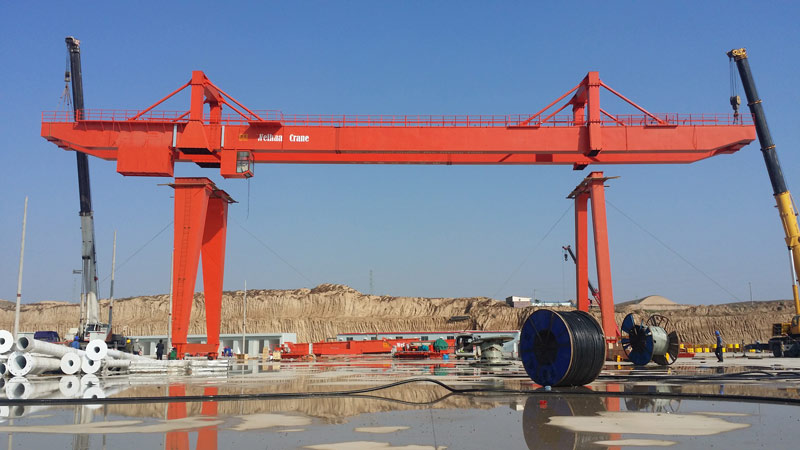
Double girder gantry crane installation guide
First, inspect the installation site to ensure the ground foundation meets the load-bearing requirements of the double girder gantry crane. Check the flatness, hardness, and levelness of the foundation, and confirm there is no subsidence, crack, or uneven settlement. Verify the installation spacing, track center distance, and overall dimension of the site match the crane’s design parameters. Clean up obstacles on the installation route and working area to ensure sufficient space for hoisting, assembly, and subsequent operation.
Install the crane running rails strictly according to the design drawings. Fix the rails on the foundation embedded parts, adjust the rail levelness, straightness, and gauge deviation to meet standard requirements. After installation, conduct a comprehensive inspection: check rail connection firmness, weld quality, and end clearance; ensure no deformation or dislocation of the rails. Record all inspection data for subsequent acceptance reference.
Unpack all crane components including double main girders, supporting legs, end carriages, traveling wheels, hoist trolley, electrical control system, fasteners, and safety accessories. Carefully check each part for manufacturing defects, deformation, rust, or damage, and verify the quantity and model of components are consistent with the delivery list. Prepare professional installation tools, hoisting equipment (auxiliary cranes, slings, shackles), measuring instruments (laser level, torque wrench, tape measure), and safety protection supplies.
Set up warning zones and safety barriers around the installation site, and post safety warning signs. All construction personnel must wear safety helmets, safety belts, and other protective equipment. Conduct pre-installation safety technical disclosure to clarify operation specifications, risk points, and emergency disposal measures. Confirm the power supply of the site is stable and grounded reliably to ensure safe electrical operation.
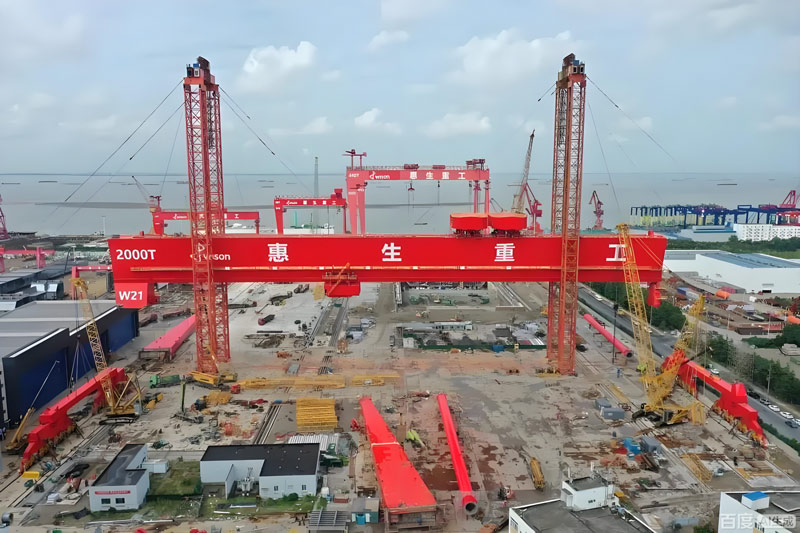
Double girder gantry crane installation guide
Complete partial pre-assembly of components on the flat ground to reduce high-altitude operation risks. Assemble the two main girders as a whole structure according to the assembly marks, fasten all connecting bolts with a torque wrench to reach the specified torque value. Install the walking platform, handrails, and trolley running track on the main girders, and check the flatness and firmness of the track surface. Then assemble the supporting legs and end carriages into integrated parts respectively.
Use qualified auxiliary hoisting equipment to lift the assembled supporting leg and end carriage assemblies vertically, and place them accurately on the reserved installation position of the running rails. Adjust the verticality, levelness, and spacing of the supporting legs strictly, fix the traveling wheel boxes on the rails, and ensure the wheels are completely attached to the rail surface without deviation or suspension. Temporarily fix all connecting parts to prevent displacement during subsequent girder installation.
Adopt integral hoisting method for the assembled double main girders. Hang the slings at the designated lifting points of the girders to ensure uniform stress and balance during hoisting, and avoid tilting or structural deformation. Slowly lift the main girder assembly to the design height, align the connecting holes with the top of the supporting legs accurately, and carry out butt joint installation. After precise alignment, install and tighten all high-strength bolts in sequence, and use a laser level to recheck the levelness and span deviation of the main girders to ensure compliance with design standards.
Place the assembled hoist trolley stably on the trolley track of the double main girders, adjust the trolley wheel gap and running parallelism to ensure flexible and jitter-free movement. Install the lifting mechanism, steel wire rope, pulley block, and hook group in strict accordance with the mechanical assembly drawings. Check the winding direction and tightness of the steel wire rope to ensure no strand disorder, extrusion, or wear. Install buffer devices, limit stoppers, and anti-derailment devices at both ends of the trolley track.
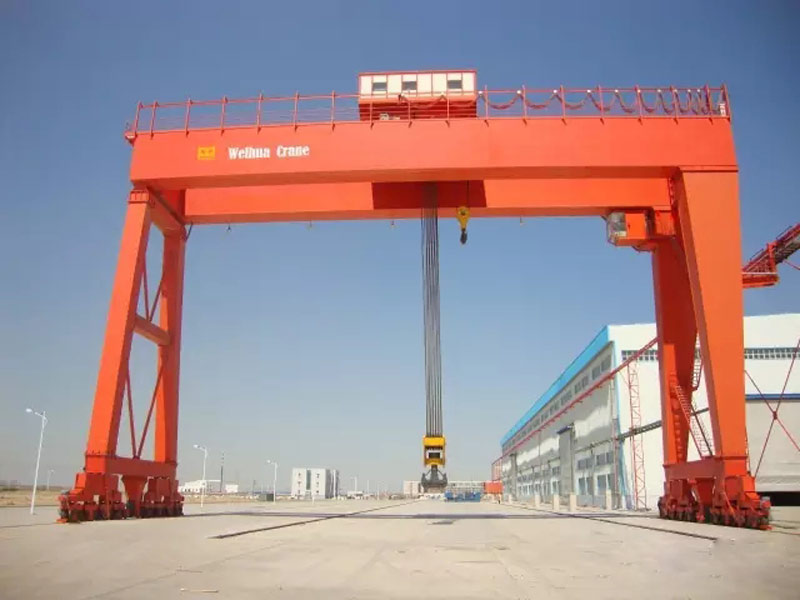
Double girder gantry crane installation guide
Install the main electrical control cabinet, trolley control box, resistance box, and operating device (pendant control or cab control) at the designated positions. Fix all electrical boxes firmly with shock absorption measures to prevent vibration damage during crane operation. Install travel limit switches, lifting height limit switches, overload limiters, and other safety electrical accessories, and ensure all sensor components are installed accurately and fixed reliably.
Lay cables strictly in accordance with the electrical wiring diagram, arrange cables neatly, and fix them with cable clamps to avoid dragging, extrusion, and friction damage. Connect L1, L2, L3 power lines, neutral line N, and protection grounding line PE correctly, and tighten all copper wire terminals firmly to ensure good electrical contact. Complete the grounding connection of the crane metal structure, and test the grounding resistance to ensure it meets safety standards, preventing electric leakage accidents.
After wiring completion, conduct a comprehensive circuit inspection. Check for wrong wiring, missing connection, virtual connection, and short circuit risks. Verify the phase sequence of the power supply to ensure the walking and lifting directions of the crane are consistent with the control operation. Inspect the insulation performance of all circuits to ensure no insulation damage or electric leakage hidden dangers.
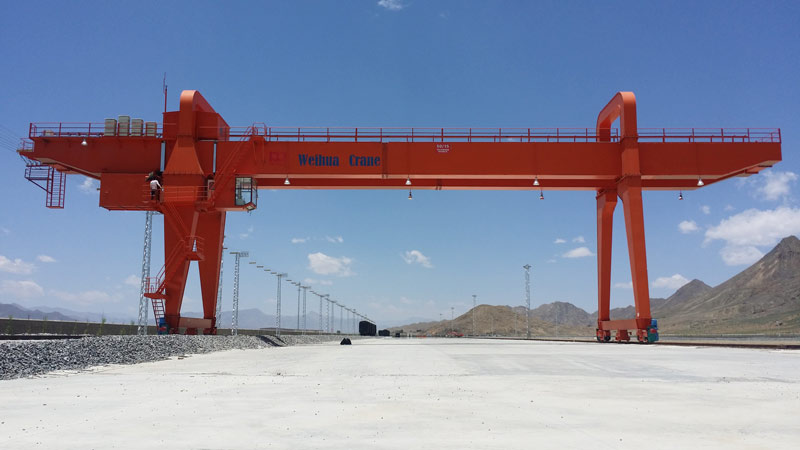
Double girder gantry crane installation guide
Switch on the power after confirming all mechanical and electrical installations are qualified. Conduct no-load operation debugging: operate the crane’s longitudinal traveling, trolley transverse traveling, and lifting mechanism respectively. Check whether each mechanism runs smoothly without abnormal noise, jitter, or stuck phenomenon. Test the sensitivity and reliability of all limit switches, buffer devices, and safety protection functions, and adjust the limit stroke to the standard range.
After qualified no-load debugging, carry out graded load tests according to standard procedures, including 25%, 50%, 75%, 100%, and 125% rated load tests. During the test, check the structural deformation of the main girders and supporting legs, the operating stability of each transmission mechanism, the braking performance of the brake system, and the accuracy of the overload protection device. Record all test data, and adjust and calibrate unqualified items until they meet the standard requirements.
Inspect the overall operation coordination of the crane, confirm the synchronous operation of each mechanism, accurate control response, and reliable braking. Check the tightness of all connecting bolts, the lubrication state of transmission parts, and the integrity of safety accessories. Eliminate all installation defects and hidden troubles to ensure the crane’s overall performance meets design and safety operation standards.

Sort out all installation records, inspection data, test reports, and component qualification certificates to form a complete acceptance document. Conduct final acceptance jointly by the construction team, supervision party, and user party. The crane can only be put into formal operation after passing the overall acceptance and obtaining the crane use qualification certificate.
Operators must receive professional training and hold valid certificates before taking up their posts. Strictly abide by the crane operating specifications, prohibit overload operation, oblique pulling, and random limit operation. Conduct daily inspection and regular maintenance of the crane’s mechanical structure, electrical system, and safety devices to ensure long-term stable and safe operation of the equipment.
After installation and commissioning, lubricate all rotating and transmission parts comprehensively. Check and fasten all loose fasteners again. Clean the equipment surface, sort out installation tools and residual materials on site, and complete site cleaning and finishing work.

Weihua Factory
We value your feedback! Please complete the form below so that we can tailor our services to your specific needs.


Latest Comments