
Navigationsmenü

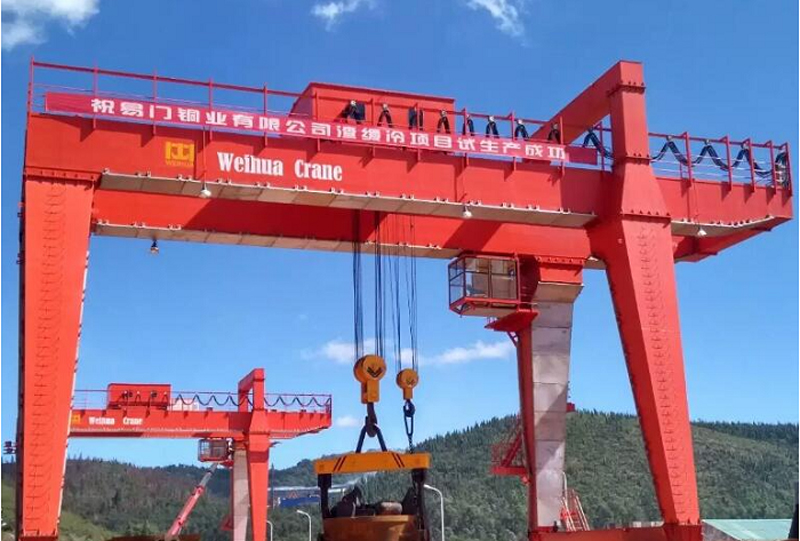
If you work in industries like logistics, Konstruktion, port operations, oder Fertigung, you’ve likely encountered a gantry crane—one of the most versatile and essential heavy-lifting equipment. But what exactly is a gantry crane, and what are the different types available? This guide breaks down the gantry crane definition, explores its various types, and highlights their unique uses, helping you understand which one fits your specific needs. Whether you’re researching equipment for a project or optimizing your operations, this article covers all the essentials about gantry cranes.
A gantry crane (also known as a portal crane) is a type of large lifting equipment characterized by a bridge-like structure (called a gantry) supported by two or more rigid legs that rest on the ground or on rails. Unlike overhead cranes, which are mounted to the ceiling or walls of a building, gantry cranes are freestanding, making them ideal for outdoor and open-space operations where fixed overhead support is unavailable.
The core components of a gantry crane include a horizontal main beam (Träger), supporting legs, a trolley, a hoisting mechanism, and an electrical control system. These components work together to enable three-directional movement: the entire crane travels along the ground (via rails or wheels), the trolley moves along the main beam, and the hoist lifts and lowers loads. This flexibility allows gantry cranes to cover a large rectangular workspace, making them indispensable for handling heavy, bulky, or oversized items.
Gantry cranes are known for their high site utilization, wide operating range, strong adaptability, and versatility—traits that make them widely used in ports, Güterbahnhöfe, Baustellen, and manufacturing facilities worldwide. They can handle loads ranging from small engine parts (a few hundred kilograms) to massive containers and industrial equipment (several hundred tons), depending on the type and design.
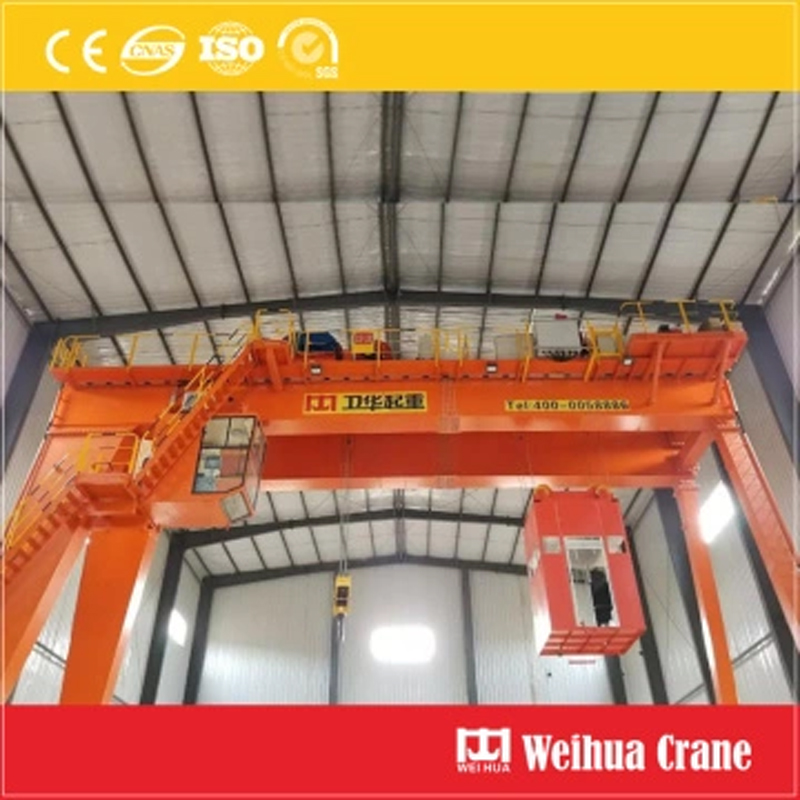
Gantry cranes are not a one-size-fits-all solution. They are classified based on several factors, including their structure, main beam design, mobility, and intended application. Below are the most common types of gantry cranes, each with distinct features and use cases to meet different industry needs.
Full Gantry Crane
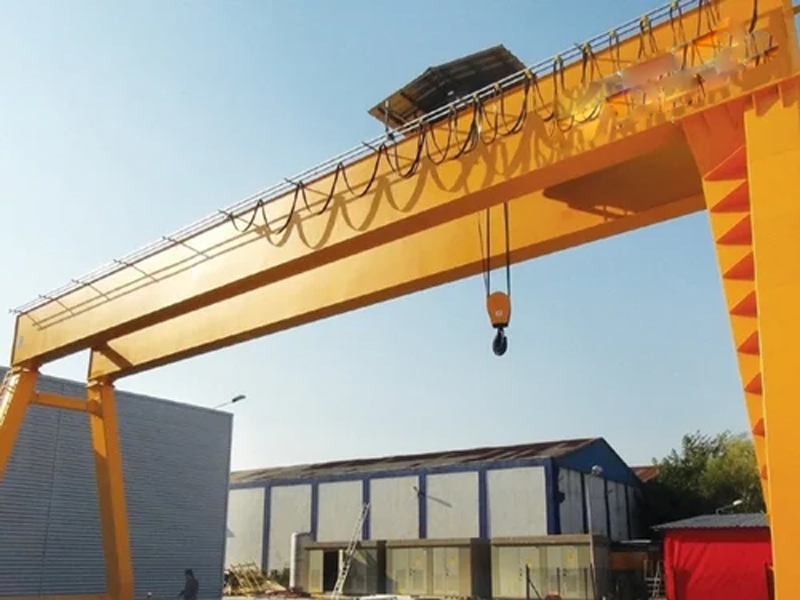
The full gantry crane is the most standard and widely used type. It features two symmetrical, sturdy legs that run on rails or tracks, with no overhang on the main beam—meaning the trolley moves entirely within the main span of the gantry. This design provides excellent stability and load-bearing capacity, making it ideal for heavy-duty operations and large-span work areas.
Full gantry cranes are commonly found in ports, rail freight yards, and heavy manufacturing facilities. They are used to handle large containers, Stahlträger, ship engines, and other heavy cargo. Depending on the main beam design, full gantry cranes can be further divided into single-girder and double-girder models: single-girder full gantry cranes are simpler and more cost-effective for lighter loads (bis zu 50 Tonnen), while double-girder models offer higher stiffness and capacity for heavy-duty tasks (über 50 Tonnen).
semi-gantry crane
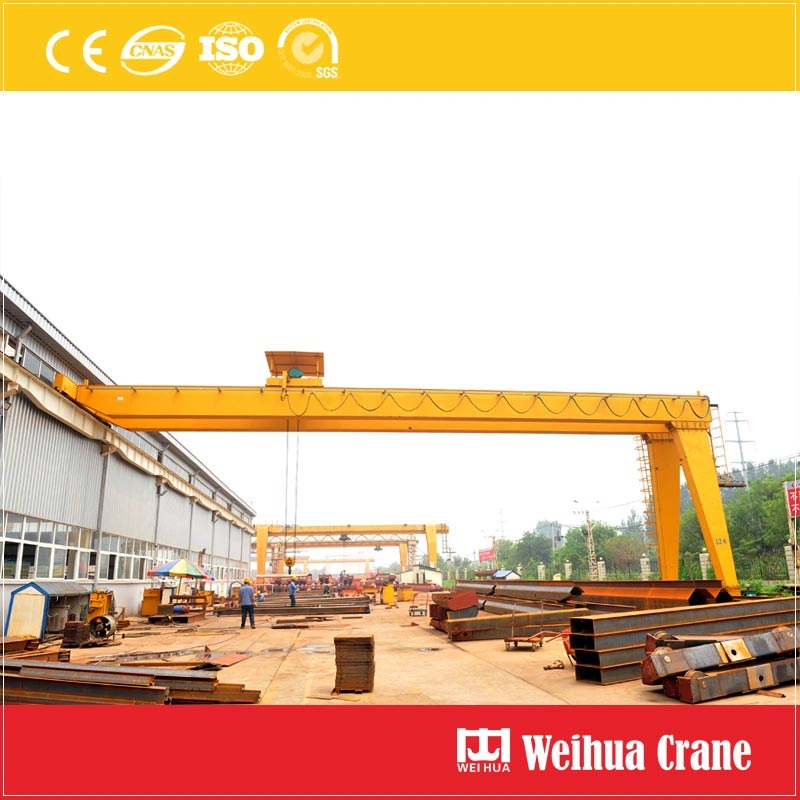
A semi-gantry crane (or half-gantry crane) differs from the full gantry crane in that one leg runs on rails, while the other side is attached to a building, wall, or existing structure. This design is perfect for environments with limited space, as it saves ground area and can operate in tight quarters where a full gantry crane would not fit.
Semi-gantry cranes are commonly used in factories, Lagerhäuser, and small outdoor yards. They are ideal for light to medium-duty lifting tasks (1 ton zu 20 Tonnen), such as moving machinery parts, Rohstoffe, or finished goods within a facility. Like full gantry cranes, they are available in single-girder and double-girder configurations, depending on the load requirements.
Cantilever gantry cranes are designed with one or two overhanging beams (cantilevers) extending beyond the supporting legs. This design allows the crane to reach loads outside the main span, making it ideal for loading and unloading trucks, Züge, or ships without moving the entire crane structure.
There are two main subtypes: single-cantilever and double-cantilever gantry cranes. Double-cantilever models are the most common, as they offer balanced stress distribution and maximize the use of available space. Single-cantilever models are often chosen when site constraints (such as nearby buildings or obstacles) limit the crane’s reach on one side. Cantilever gantry cranes are widely used in ports, Eisenbahnhöfe, and construction sites for handling long or bulky items like steel rails or concrete beams.
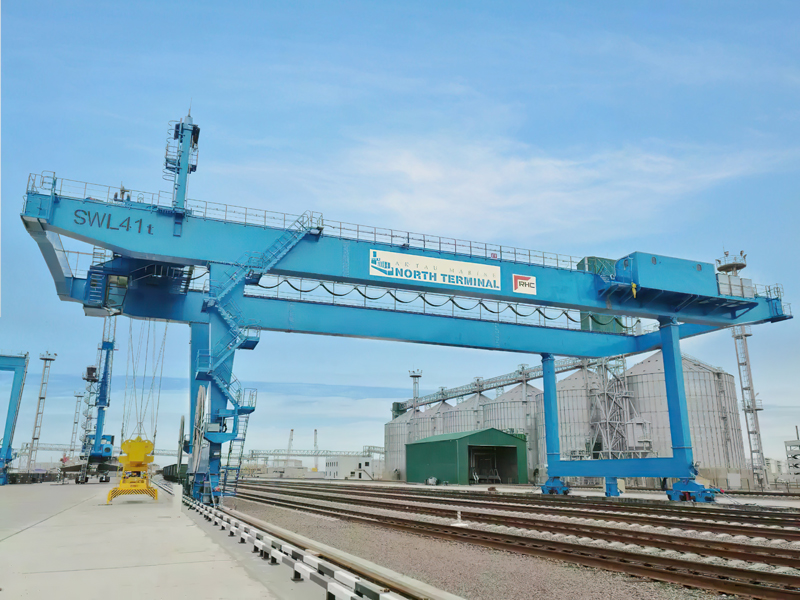
Schienenmontierter Portalkran (RMG Crane)
Rail-mounted gantry cranes (RMG cranes) are designed to travel along fixed rails installed on the ground. This type of gantry crane offers precise movement and high efficiency, making it ideal for large-scale operations where consistent, repetitive lifting is required—such as container terminals and intermodal yards.
RMG cranes are often used to stack and move containers, with lifting capacities ranging from 20 Tonnen zu über 100 Tonnen. They can cover multiple container positions along the rail, enabling fast and efficient loading and unloading of cargo ships or trains. Their fixed rail system ensures stability, even when handling heavy loads, and they can be automated for 24/7 operation in busy ports.
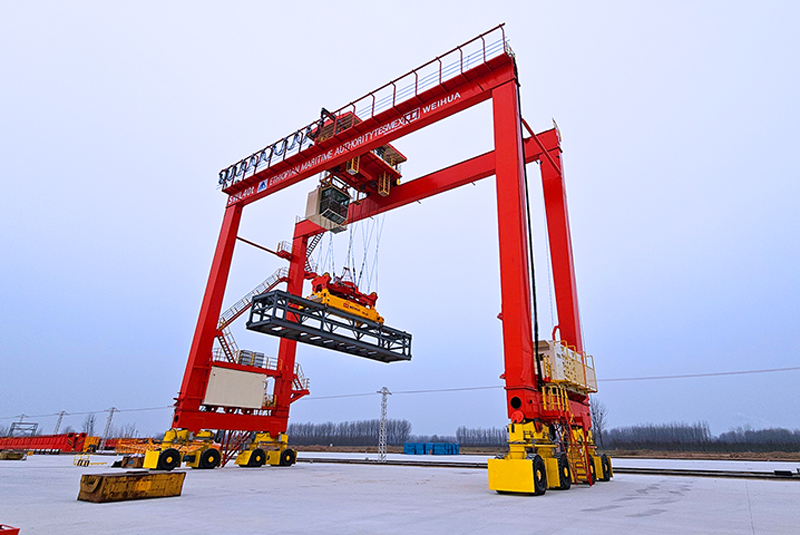
Rubber-Tyred Gantry Crane (RTG-Kran)
Unlike rail-mounted models, rubber-tyred gantry cranes (RTG cranes) are equipped with rubber wheels instead of rails, making them highly mobile and flexible. They can move freely across outdoor yards, Ports, or construction sites without the need for fixed rail infrastructure.
RTG cranes are commonly used in container yards, Produktionsstätten, and construction sites where mobility is key. They are ideal for stacking containers, moving heavy machinery, and handling bulk cargo like coal or ore (when equipped with a grab bucket). Their rubber tires reduce damage to the ground surface and allow them to maneuver around obstacles, making them a versatile choice for dynamic work environments.
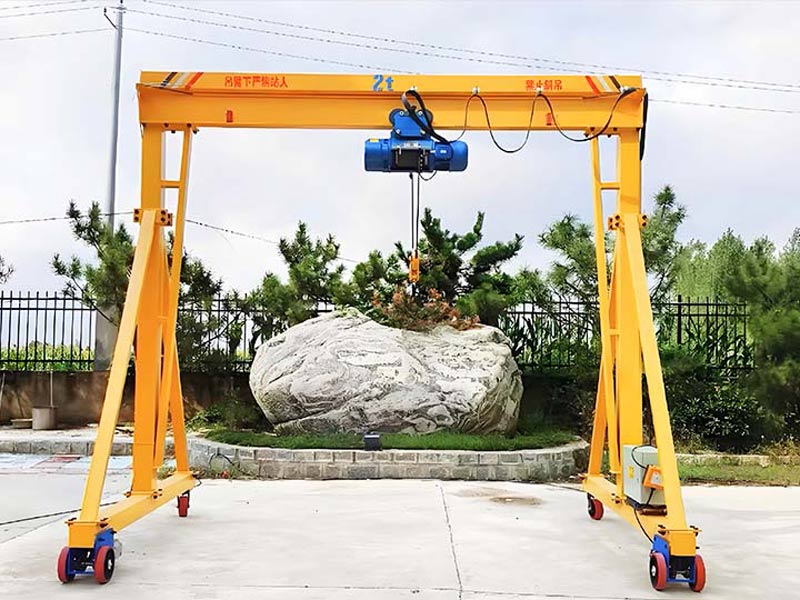
Portable gantry cranes are small, leicht, and movable—designed for light-duty lifting tasks (0.25 Tonnen zu 10 Tonnen) in workshops, garages, or small job sites. They feature a collapsible or adjustable frame, making them easy to transport and store when not in use.
These cranes are commonly used in automotive repair (to lift engines), HVAC installation, fine art moving, and small manufacturing operations. They can be equipped with manual or electric hoists and are available in adjustable (telescoping) Modelle, allowing users to modify the height and span to fit different workspaces. Portable gantry cranes are cost-effective and ideal for businesses that need occasional lifting support without investing in large, permanent equipment.
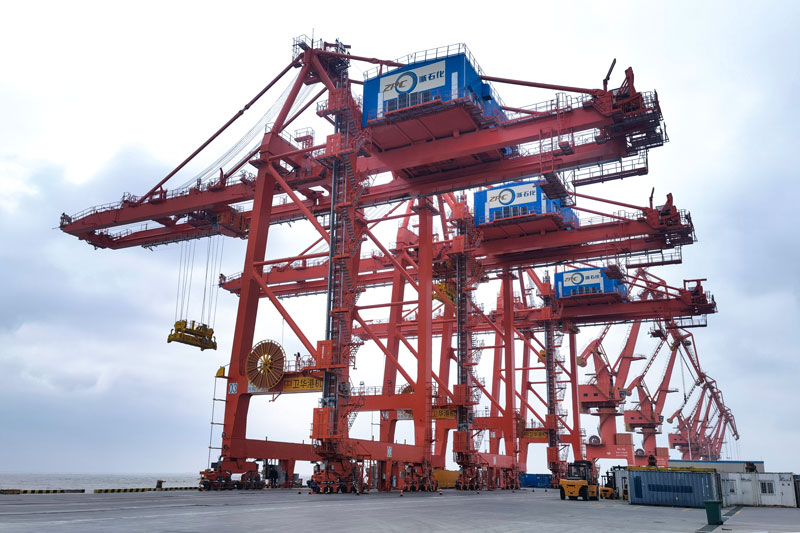
Schiff an Land (STS) Garankran
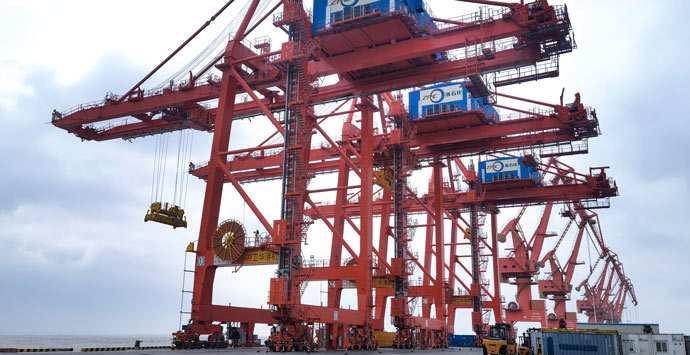
In addition to the standard types, there are specialized gantry cranes designed for specific industries or tasks: Explosion-Proof Gantry Crane: Used in hazardous environments (such as chemical plants or oil refineries) where flammable or explosive materials are present. They are designed with spark-resistant components to prevent accidents.Ship-to-Shore (STS) Garankran: A large, multi-story gantry crane used in container terminals to load and unload containers from cargo ships. They operate along two rails (waterside and landside) and are essential for global shipping operations.Truss Beam Gantry Crane: Features a truss-style main beam (welded from angle steel or I-beams) that is lightweight and wind-resistant. Ideal for outdoor sites with lower safety requirements and smaller lifting capacities.Box Beam Gantry Crane: Uses a box-shaped main beam (welded from steel plates) for high stiffness and safety. Used for large-tonnage and ultra-large-tonnage lifting tasks (bis zu 1,200 Tonnen), such as shipbuilding or heavy construction.
A gantry crane is a freestanding lifting device with a gantry structure supported by legs, designed for outdoor and open-space operations. Its versatility and adaptability make it a cornerstone of industries like ports, Konstruktion, Herstellung, und Logistik. The type of gantry crane you choose depends on your load capacity, workspace size, Mobilitätsbedürfnisse, and industry requirements—from small portable models for light tasks to large rail-mounted or ship-to-shore cranes for heavy-duty operations.
Understanding the gantry crane definition and types is crucial for selecting the right equipment, optimizing efficiency, and ensuring safety in your operations. Whether you need a portable crane for a small workshop or a heavy-duty RTG crane for a container terminal, there is a gantry crane designed to meet your specific needs.
If you’re looking to learn more about gantry crane specifications, Wartung, or cost, stay tuned for our upcoming guides. For personalized recommendations, consult a trusted crane manufacturer to find the perfect gantry crane for your project.
Wir schätzen Ihr Feedback! Bitte füllen Sie das folgende Formular aus, damit wir unsere Dienste auf Ihre spezifischen Anforderungen anpassen können.


Klicken Sie auf die Schaltfläche, um Produktinformationen und Angebote auf WhatsApp zu erhalten.
Holen Sie sich Zitat
Neueste Kommentare