» 博客 » What is a portal crane?

What is a portal crane?

2026-07-16

What Exactly Is a Portal Crane?

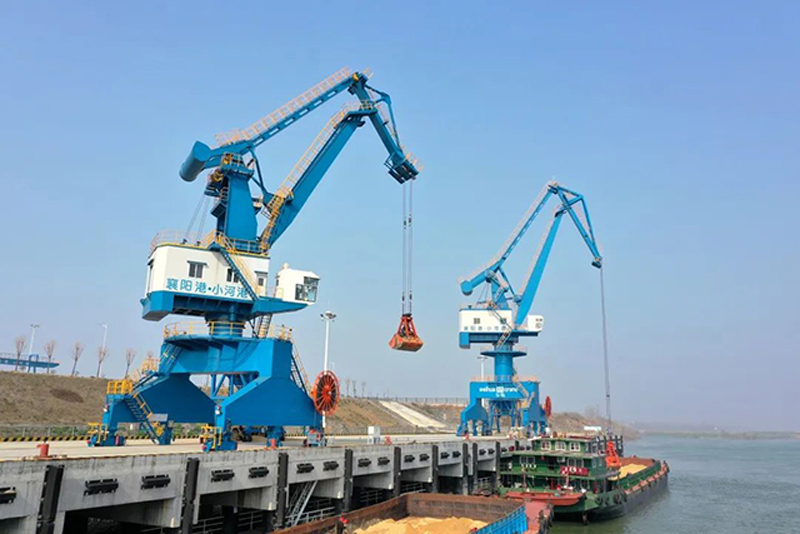
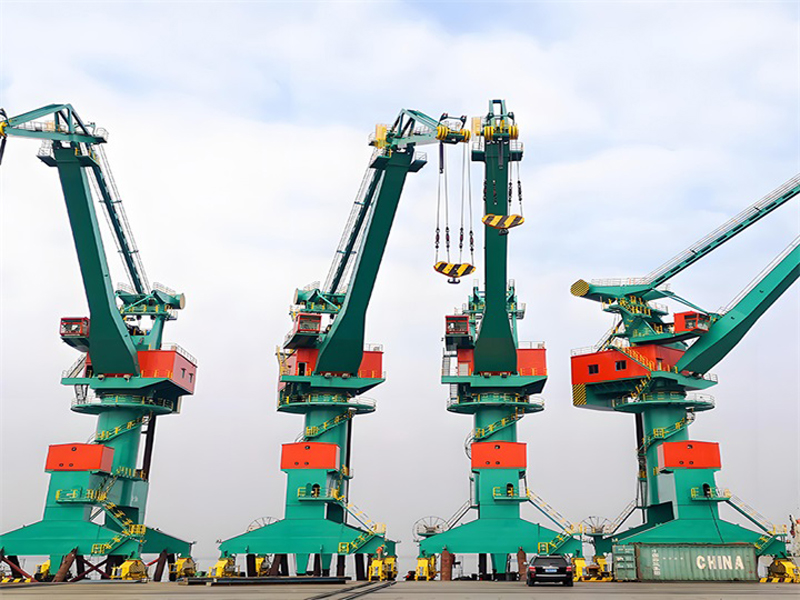
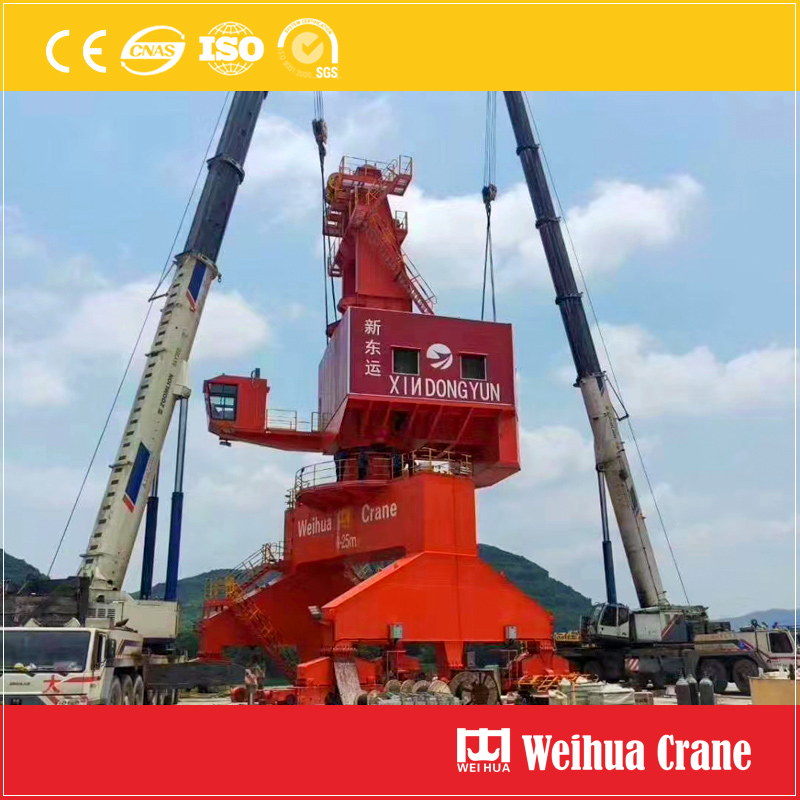
A portal crane (also known as a port portal jib crane) is a rail-mounted, full-circle rotating jib crane exclusively designed for port and waterfront operations. It features a prominent portal base (four-leg portal frame) that spans over shore railway tracks or truck passages, allowing land transport vehicles to pass directly beneath the crane without hindrance.

What is a portal crane?

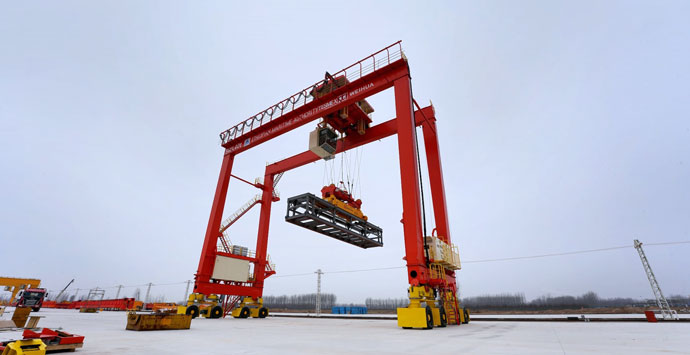
Different from gantry cranes (which move horizontally with a straight girder) and container gantry cranes, the most typical feature of a portal crane is its rotational jib mechanism. Its upper lifting structure can rotate 360 自由度, matching the loading and unloading needs of docked ships. It is mainly used for lifting bulk cargo, general groceries, and small containers between ships and shore terminals, and is the most classic and widely used crane in inland and coastal ports.

Core Components of a Portal Crane

The complete structure of a portal crane is divided into a lower portal traveling mechanism and an upper rotating lifting mechanism. Each core component undertakes independent and collaborative work to ensure efficient and safe cargo handling:

What is a portal crane?

How Does a Portal Crane Work?

Portal cranes rely on three core collaborative actions to complete ship-shore cargo loading and unloading, with a highly mature and efficient working flow. 第一的, according to the berthing position of the ship and the distribution of cargo, the crane travels along the dock rails to lock the optimal working position. 第二, the upper platform rotates and the jib luffs to adjust the working radius, aiming the lifting hook at the target cargo on the ship.

最后, the hoist system lifts the cargo stably, and the rotary and luffing structures cooperate to transfer the cargo from the ship deck to the shore transport vehicle, or complete reverse loading work. The combination of walking, 旋转, luffing and lifting enables the portal crane to cover fan-shaped and rectangular working areas along the wharf, perfectly adapting to the irregular cargo distribution of docked ships.

What is a portal crane?

Common Types of Portal Cranes

Portal cranes are mainly classified by structural form and working performance, and the mainstream types in the market are as follows:

1. Fixed Portal Cranes

This type of crane is fixed on the dock foundation without a traveling function. It has a simple structure, low cost and stable performance, and is suitable for small fixed terminals, single cargo berths and inland river shallow-water docks with fixed working ranges.

2. Mobile Rail-Mounted Portal Cranes

The most widely used standard portal crane. It can move freely along the dock rails, with a large adjustable working range and strong flexibility. It is suitable for medium and large ports with frequent ship berthing and diverse cargo types, and can handle bulk cargo, groceries and light container goods efficiently.

3. Single-Jib & Double-Jib Portal Cranes

Single-jib portal cranes are lightweight and flexible, suitable for small-tonnage cargo handling. Double-jib models have higher lifting efficiency and larger load capacity, which can realize alternate operation of double hooks, and are mostly used for large coastal ports with high cargo throughput.

Key Industrial Applications

As special port-specific lifting equipment, portal cranes are highly targeted in application scenarios, focusing on waterfront ship-shore handling operations:

Core Advantages of Portal Cranes

FAQ About Portal Cranes

Q1: What is the biggest difference between a portal crane and a gantry crane?

A1: This is the most confusing point for most people. Portal cranes are rotating jib cranes for port ship-shore handling, with 360° rotary and luffing functions, specially for dock ship cargo. Gantry cranes are straight-beam linear moving cranes, mainly used for factory workshops, yard stacking and inland cargo handling, without large-range rotation function. Their working principles, structures and application scenarios are completely different.

Q2: What is the usual lifting tonnage of a portal crane?

A2: Conventional portal cranes for general port use have a lifting capacity of 5 吨 50 吨, which meets the handling needs of most bulk cargo and groceries. Customized large-tonnage models for heavy port operations can reach 80–100 tons, used for super-heavy equipment and large steel component handling.

Q3: Can portal cranes be used indoors?

A3: Rarely. Portal cranes are large-scale outdoor professional port equipment with tall fuselage, large rotating working range and wind-resistant and corrosion-resistant structural design, which is completely tailored for open-air dock environments. Indoor workshops mostly use overhead cranes and small gantry cranes instead of portal cranes.

Q4: What are the main working limitations of portal cranes?

A4: Portal cranes are only suitable for waterfront ship-berthing scenarios and cannot be used for inland large-area yard stacking. 此外, they need to stop working in extreme weather such as strong winds above level 6, heavy rain and typhoons to prevent equipment tilting and cargo falling accidents.

Q5: How to maintain a portal crane regularly?

A5: Daily maintenance includes checking the tightness of steel wires, the flexibility of rotation and luffing mechanisms, and the sensitivity of safety limit devices. Regular anti-corrosion treatment is required for the steel structure to resist seawater erosion. Professional overall inspection and lubrication of transmission parts shall be carried out every 6 months to ensure stable operation.

Q6: Why are portal cranes still widely used despite container cranes?

A6: Container cranes are only suitable for standard container handling, while portal cranes have stronger versatility. They can handle bulk cargo, groceries, steel and special-shaped goods that container cranes cannot adapt to, and are the essential core equipment for mixed cargo ports and inland river terminals.

最后的想法

As a professional and classic port machinery, portal cranes occupy an irreplaceable position in waterfront cargo handling. Its unique rotary luffing structure and ship-shore matching working mode make it the preferred equipment for bulk and general cargo transportation in various ports around the world. Understanding its structural characteristics and application scenarios can help us better recognize the efficient operation logic of modern port logistics systems.

上一篇文章:
下一篇文章:

Get Solution & Price Right Now!

我们重视您的反馈! 请填写下面的表格,以便我们根据您的具体需求定制我们的服务.

姓名:
* 电子邮件:
WhatsApp / 电话号码:
项目地点:
* 信息:

最新评论

里卡多·阿吉拉尔·赛义德:
对于起重机翻新项目, 我们需要在您的网站上安装空调装置,我们找到了这个解决方案. 制冷量: 2.5 千瓦 7.0 千瓦 (8,500 一个 24,000 BTU/小时) 制热量 (选修的): 2.0 千瓦 6.0 KW Fuente de alimentación: 24在华盛顿 / 110维 / 230维 / 415维, 50/60 赫兹 (明确要求) 冰箱: R410A或生态R134a
说:
容量 50 TON AKS ARALIK 40 仪表 12 METRE KANCA ALTI RAY BOYU 250 仪表, 2 门式起重机数量
休伯特·帕蒂诺·赛义德:
亲爱的卫华起重机, 代表 GPANTEC SAC 致以问候, 位于利马, 秘鲁. 我们想索取你们制造的 12 吨抓举滑车的报价. 桥式起重机的产品参考代码或序列号是 110220.075, 抓举块型号为12/2t-40M. 附上我们要求的抓举块的图像. 要求的数量是一套. 我们期待您的关注. 真挚地.
拉格朗日赛义德:
亲爱的先生或女士, 我们目前正在寻找一家供应商,为单轨轨道上运行的环链电动葫芦提供封闭式滑触线系统. 请提供以下要求的报价: Project Scope Quantity: 8 independent lines Length: 80 meters per line Total length: 640 meters Electrical Requirements Supply voltage: 400 VAC Frequency: 50 Hz Number of poles: 4 额定电流: 最低限度 40 A Application Electric chain hoist Safe Working Load (SWL): 2,500 kg One hoist per line Outdoor industrial installation Protection Requirements Minimum protection class: IP43 Preferred protection class: IP54 or higher Please include in your offer Conductor rails Power feed sections Joint assemblies End caps Hangers and support brackets Current collectors Expansion sections if required Complete accessory list Documentation Required Technical datasheets. 整个系统 IP 防护等级的书面确认. 证明符合 IP43/IP54 要求的测试证书或实验室报告. 同类起重机安装参考, 单轨铁路, 或提升应用. 还请注明: 交货时间. 制造国. 保修期. 国际贸易术语解释通则. 每条生产线和整个项目的价格细目. 提前致谢, 塞德里克谷仓
赫沙姆·M·法加利 赛义德:
Dear Sir Please send your quot. 对于以下钩块: 钩块 45 tons Application: over head travelling crane Hook block type - four sheaves Hook type: 锻造起重机吊钩 . 容量: 45 公吨 (SWL) 配置: 单柄 - swivel Design standard: EN 13001‑3‑5 Material: 合金钢锻造 (问&t) 安全系数: ≥ 4:1 认证: 在 / CE / 3.1 material certificate SIMILAR TO ATTACHED DRAWING (我会将其发送至电子邮件 info@craneihua.com) 注意:. 1-价格: 网 - 上班前 2- 装运重量 & 方面. 3- 测试证书 4- 原产地证书

相关案例

WhatsApp

联系我们

单击按钮即可在 WhatsApp 上获取产品信息和报价.

获取报价
WhatsApp
询价