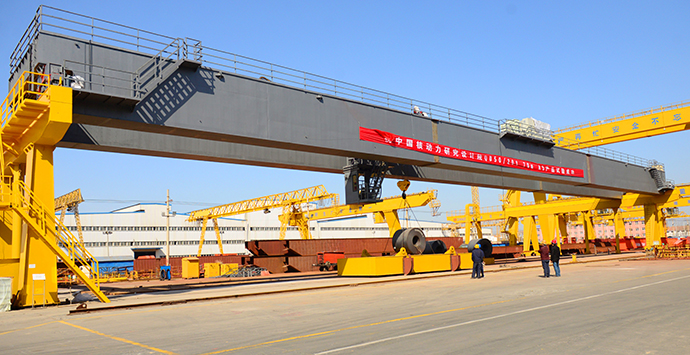
如何選擇門式旋臂起重機?
2026-07-21
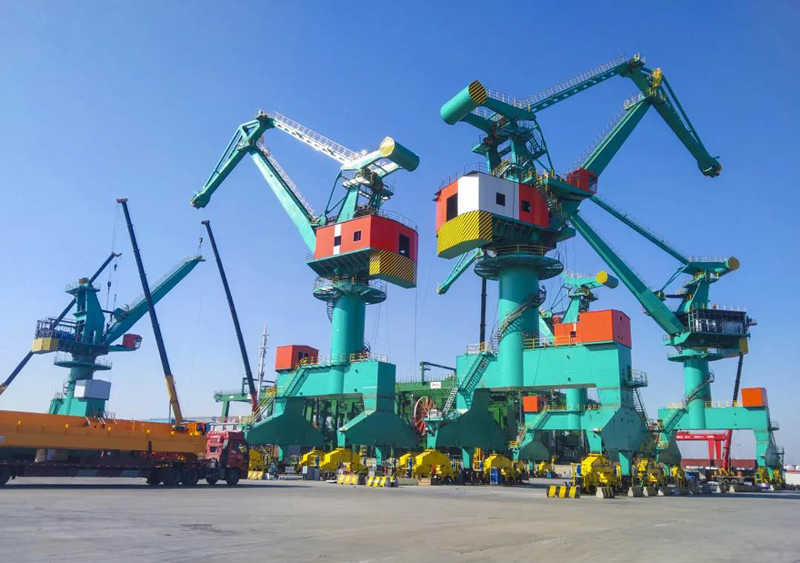
Selecting the right portal jib crane is crucial to the continuity and cost-effectiveness of port operations; it not only ensures efficient cargo handling but also represents a major portion of the total equipment investment. Variations in tonnage, structural design, and duty classification can lead to significant differences—often several-fold—in long-term operating costs.

Port operations face two major concerns: loading and unloading speeds failing to keep pace with vessel schedules, and equipment breakdowns leaving berths idle. Portal jib cranes have become standard equipment primarily due to three irreplaceable advantages:
- 1. High space utilization: Vehicles can pass or cargo can be stacked beneath the portal frame, making them particularly suitable for narrow wharf aprons.
- 2. All-weather operation: Their steel structure and A7/A8 duty-cycle design enable them to withstand harsh environments, including salt spray and high humidity.
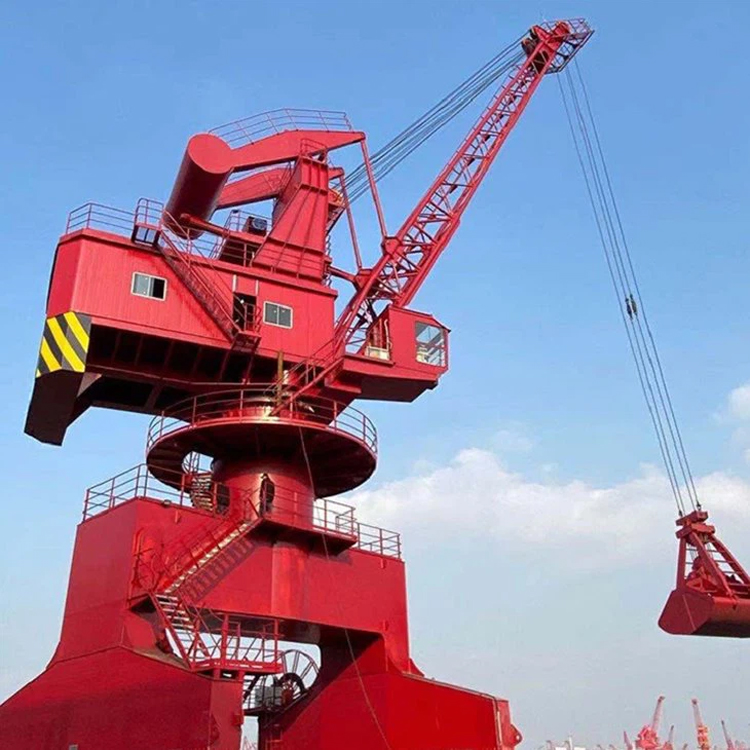
- 3. 多功能性: By swapping spreaders, they can handle various types of cargo—such as containers and bulk goods—including integration with grabs for unloading bulk grain.
Mainstream models typically offer lifting heights of 10–60 meters and a rail gauge exceeding 4 儀表, meeting the requirements of most berths. 然而, bulk cargo terminals must pay special attention to grab compatibility, as these scenarios often require customized solutions.
Three Major Design Features of Portal Jib Cranes
Unlike standard bridge cranes, the unique structure of portal jib cranes dictates the boundaries of their applicability:
- 1. Slewing bearing design: 360° full-circle rotation combined with a luffing mechanism creates a fan-shaped operating area—a capability beyond the reach of fixed cranes.
- 2. Gantry load-bearing structure: Four legs provide stable support; however, the compatibility between the rail gauge and the wharf’s load-bearing capacity must be considered. Common rail gauges range from 4 到 10 儀表.
- 3. Dynamic wind resistance: Operations in open-air environments must account for the impact of sudden gusts; the wind resistance requirement during operation is a wind speed of no less than 20 多發性硬化症.
These characteristics make it particularly well-suited for ship loading and unloading; however, its massive structure can lead to inefficiency during warehouse operations—in such cases, bridge cranes are often more economical.

How do you select a portal jib crane based on different operational requirements?
The equipment type can be quickly determined based on the primary types of cargo handled. The following table compares two typical solutions:
|
Portal grab crane |
Container portal jib crane |
| Applicable Cargo Types |
散貨 (coal/grain) |
容器 |
| Key parameters |
抓斗容量 / Anti-Sway Performance |
Spreader rotation accuracy / rapid leveling |
| Energy consumption characteristics |
High lifting frequency |
Frequent lateral movements |
For break-bulk cargo scenarios, particular attention should be paid to:
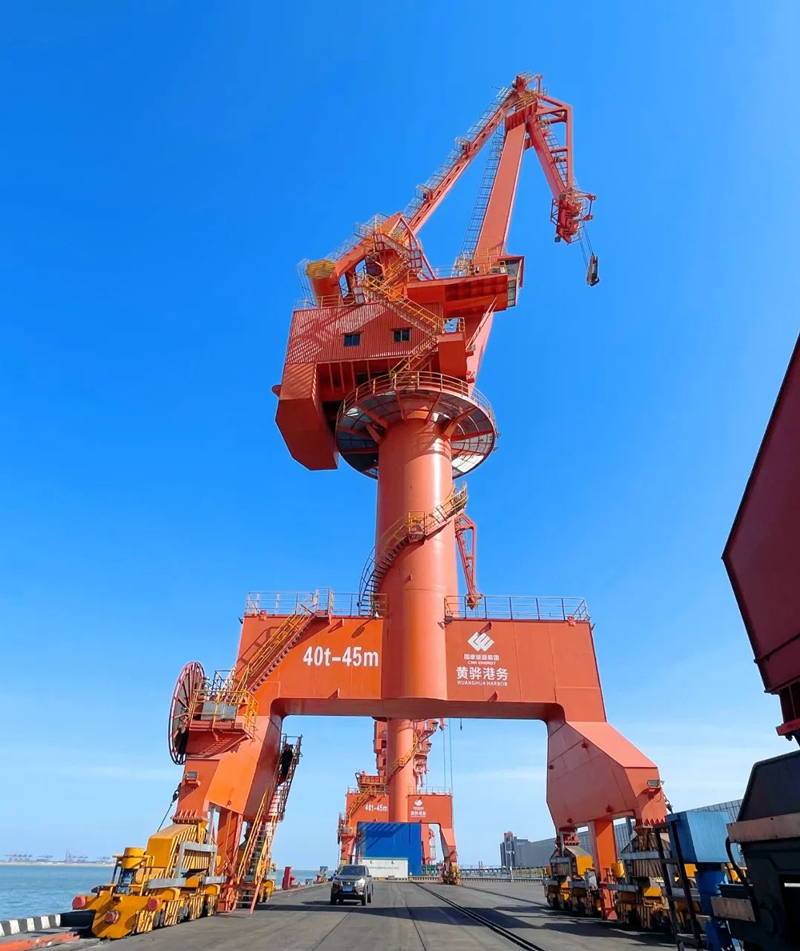
- 1. The matching of the grab bucket to the hoisting mechanism—for instance, 40-ton class equipment is typically equipped with a 15–20 m³ grab bucket.
- 2. Anti-sway technology reduces material spillage, and electromagnetic braking offers a faster response than mechanical braking.
- 3. The application of wear-resistant steel plates at the contact points of the grab bucket can extend its service life by three to five times.

For container scenarios, however, attention should be paid to the following:
- 1. The rotational accuracy of the spreader shall be ≤±5°; otherwise, the container alignment speed will be affected.
- 2. Variable-frequency control saves over 20% more energy than traditional resistance-based speed control.
- 3. Twin-box spreaders can increase operational efficiency by 30%, but require a widened mast.
Routine Maintenance of Portal Jib Cranes
Many malfunctions stem from neglecting basic maintenance:
- 1. Lubrication interval: The slewing bearing must be lubricated every 500 hours using molybdenum disulfide grease.
- 2. Wire rope maintenance: Inspect for broken wires weekly; a 6-strand rope must be replaced if broken wires reach 10%.
- 3. Track maintenance: Check track gauge deviation monthly; deviations exceeding ±15 mm will affect the operation of the gantry crane.
Having a set of professional crane maintenance tools can significantly reduce troubleshooting and repair time; 例如, a detachable jack is three times more efficient than a traditional hoist when replacing wheels.
最新評論