» 部落格 » 龍門起重機軌道對準

龍門起重機軌道對準

2026-06-09

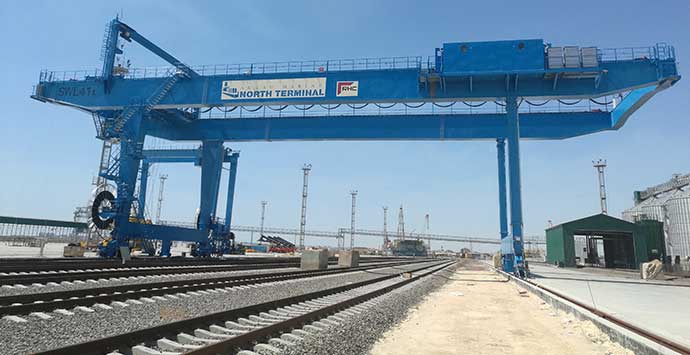
門式起重機軌道對準

In heavy-duty industrial environments—from shipping yards and construction sites to manufacturing workshops—龍門起重機 serve as the backbone of material handling operations. These robust machines rely entirely on stable, accurate rail systems to deliver consistent, high-performance lifting and traveling work. Among all crane maintenance and installation procedures, gantry crane rail alignment stands out as the most critical yet frequently overlooked step. Precise rail alignment is not just a technical formality; it is the foundation of operational safety, equipment durability, and cost-effective production. 在這個博客中, we will break down why rail alignment matters, common misalignment issues, industry-standard tolerances, professional calibration methods, and actionable maintenance tips.

Why Gantry Crane Rail Alignment Is Non-Negotiable

Many industrial operators underestimate the impact of minor rail misalignments, dismissing small deviations as harmless. 然而, gantry cranes operate under heavy load conditions and continuous linear movement, where even tiny rail errors can escalate into severe operational risks and economic losses over time. Proper rail alignment delivers three core benefits for gantry crane systems:

1. Eliminates Safety Hazards

Misaligned rails are the leading cause of gantry crane derailment, wheel slipping, and structural jitter during operation. When rails are uneven, unparallel, or offset at joints, the crane’s traveling wheels bear uneven lateral and vertical pressure, triggering sudden jolts, abnormal shaking, or even partial derailment. These issues pose serious threats to on-site workers, cargo safety, and overall site operational stability. Standardized alignment also ensures the crane runs smoothly without unexpected mechanical failures caused by rail anomalies.

2. Extends Equipment Service Life

Chronic rail misalignment creates persistent friction and structural stress on key crane components, including traveling wheels, 軸承, 變速箱, and rail beams. Uneven load distribution leads to accelerated and unilateral wear of wheel treads, frequent damage to bearings, and fatigue cracks on rail surfaces and crane support structures. Precise alignment balances force distribution across all moving parts, drastically reducing component wear, lowering replacement frequency, and extending the overall service life of the gantry crane and rail system.

3. Optimizes Operational Efficiency & Reduces Costs

Cranes running on misaligned rails require extra power to overcome friction and structural resistance, resulting in higher energy consumption. 此外, frequent mechanical failures and unplanned downtime for repairs severely disrupt production schedules and increase maintenance costs. Accurate rail alignment ensures smooth, stable crane travel, improves lifting and traveling efficiency, cuts down energy waste, and minimizes unplanned maintenance downtime for long-term cost savings.

Common Gantry Crane Rail Misalignment Issues & Root Causes

To conduct effective alignment calibration, it is essential to identify typical rail misalignment problems and their underlying causes. Most rail deviations stem from improper installation, foundation settlement, long-term operational wear, and environmental changes.

門式起重機軌道對準

1. Poor Straightness

This refers to horizontal deviations of the rail centerline from the standard baseline. Cumulative errors during rail laying, long-term lateral extrusion from crane operation, or foundation deformation can cause rails to bend or offset. Excessive straightness errors lead to wheel binding and lateral friction during crane travel.

2. Inconsistent Parallelism

The two parallel rails fail to maintain a uniform span distance. Variable rail spacing across different sections causes uneven wheel pressure, leading to unilateral wheel wear and unstable crane operation. This issue is prevalent in long-span gantry crane rail systems due to cumulative installation errors.

3. Uneven Elevation & Longitudinal Inclination

Uneven vertical height between the two rails or excessive longitudinal slope of a single rail creates vertical jitter during crane movement. Foundation settlement, uneven shimming, or long-term load compression are the main culprits. Severe height deviation will cause the crane to tilt slightly during operation, bringing hidden safety risks.

4. Rail Joint Misalignment

Offset, height difference, or unreasonable gap at rail joints is a common on-site problem. Too large a joint gap causes violent impact and noise when wheels pass through; too small a gap fails to reserve space for thermal expansion and contraction, resulting in rail extrusion and deformation. Joint misalignment is one of the main triggers of wheel impact damage.

Industry Standard Tolerances for Gantry Crane Rail Alignment

Professional rail alignment must comply with international and industrial specifications such as CMAA 70/74 and domestic crane installation standards, with clear tolerance ranges for different indicators to ensure operational compliance and safety:

Professional Gantry Crane Rail Alignment Methods & Workflow

Modern rail alignment abandons traditional manual measurement methods with large errors and adopts high-precision instruments for full calibration. The standardized alignment workflow is as follows:

1. Pre-Inspection & Site Preparation

第一的, clean the rail surface and foundation to remove debris, 銹, and obstacles that affect measurement. Inspect the overall condition of the rail system, including foundation cracks, settlement, loose anchor bolts, and rail deformation, to eliminate underlying structural problems before alignment.

2. High-Precision Measurement

Adopt professional measuring equipment such as laser trackers, total stations, and precision levels for 3D full-scale measurement of the rail system. Measure key indicators including rail straightness, 平行性, elevation, 跨度, and joint deviation at multiple points along the rail, and record all data to form a complete measurement report. Laser-based tools ensure millimeter-level measurement accuracy, far exceeding traditional manual ruler measurement.

3. Targeted Calibration & Adjustment

According to the measured deviation data, conduct targeted adjustments: For minor height unevenness, use precision shims under the rail to adjust elevation; for local rail irregularities, perform rail grinding to smooth surface flaws and eliminate joint height differences; for straightness and parallelism deviations, fine-tune the rail position and correct cumulative errors. All adjustments follow the principle of laying from both ends to the middle to avoid secondary cumulative errors.

4. Fastener Reinforcement & Recheck

After alignment adjustment, tighten all anchor bolts and rail fasteners to standard torque values to prevent rail displacement under load. Conduct a full re-measurement of all alignment indicators to confirm all deviations are within the allowable tolerance range, and install end stops at rail ends to prevent crane derailment.

Daily Maintenance Tips to Sustain Rail Alignment Accuracy

Precise rail alignment is not a one-time project but requires long-term daily maintenance to maintain stability. Here are key routine maintenance practices:

最後的想法

Gantry crane rail alignment is a fundamental guarantee for the safe, 穩定的, and efficient operation of crane equipment. It is not only a key process in installation and commissioning but also a core part of daily equipment maintenance. Many industrial losses caused by crane downtime, component damage, and safety accidents can be avoided through standardized precision alignment and scientific daily maintenance.

By strictly following industry tolerance standards, adopting high-precision laser measurement technology, and adhering to regular inspection and maintenance routines, enterprises can maximize the service life of gantry crane rail systems, reduce operational risks and maintenance costs, and achieve stable and efficient industrial material handling operations.

FAQs About Gantry Crane Rail Alignment

To resolve common doubts from on-site operators, maintenance engineers, and project managers, we’ve compiled the most frequently asked questions about gantry crane rail alignment with professional and practical answers below.

Q1: How often should gantry crane rail alignment be checked?

A1: The inspection frequency depends on operating intensity and working conditions. For standard-duty gantry cranes working in normal environments, a full rail alignment inspection every 3–6 months is recommended. For heavy-load, high-frequency operating equipment or cranes working in harsh environments such as ports, outdoor construction sites and dusty factories, inspections should be conducted every 1–3 months. 此外, a complete alignment calibration must be carried out immediately after foundation settlement, extreme weather impact, long-term shutdown and restart, or accidental collision of the crane.

Q2: What are the typical signs of poor gantry crane rail alignment?

A2: Operators can quickly judge rail misalignment through obvious on-site phenomena. Common symptoms include abnormal shaking and jitter during crane traveling, loud friction or impact noise when the crane moves, unilateral severe wear of crane traveling wheels, frequent wheel slipping, and obvious deviation of the crane’s traveling track. In severe cases, the crane will appear to tilt slightly during lifting operations, and the fasteners and rail pads will loosen frequently. Once these problems occur, rail alignment detection and adjustment are required in a timely manner.

第三季度: Can minor rail misalignment be left unadjusted?

A3: No minor misalignment should be ignored. Although tiny deviations do not cause immediate safety accidents, gantry cranes bear cyclic heavy loads and continuous reciprocating movement during operation. Small rail errors will continuously amplify structural stress and friction, gradually leading to accelerated component wear, increased energy consumption, and cumulative rail deformation. Long-term uncorrected minor misalignment will eventually cause derailment risks, structural fatigue damage, and costly downtime maintenance, resulting in greater economic losses.

第四季度: What measuring tools are used for professional rail alignment?

A4: Modern professional gantry crane rail alignment abandons traditional manual measuring tools such as steel tapes and level gauges with large errors. Precision measuring equipment including laser trackers, electronic total stations, high-precision digital levels and laser alignment instruments are widely used in formal calibration work. These devices can realize millimeter-level 3D accurate measurement of rail straightness, 平行性, elevation difference and span deviation, ensuring the alignment results meet international industry standards such as CMAA 70/74.

Q5: What is the service life extension after standard rail alignment?

A5: Strictly standardized rail alignment and long-term stable maintenance can effectively extend the service life of core crane components and rail systems. On the premise of regular inspection and maintenance, qualified rail alignment can reduce the wear speed of traveling wheels, bearings and gearboxes by more than 40%, and extend the overall service life of gantry crane rail systems by 20%–30%. 同時, it can reduce unplanned maintenance downtime by more than 35%, greatly improving the overall operational efficiency of the equipment.

Q6: Does temperature change affect gantry crane rail alignment?

A6: 是的, temperature variation is a key factor affecting rail alignment accuracy. Extreme high or low temperature will cause thermal expansion and cold contraction of steel rails, resulting in temporary rail displacement, joint gap changes and slight straightness deviation. 所以, professional rail alignment construction is usually carried out at constant temperature. In daily maintenance, it is necessary to reserve standard thermal expansion gaps at rail joints and check alignment status seasonally to eliminate deviation caused by temperature changes.

上一篇文章:
下一篇文章:

Get Solution & Price Right Now!

我們重視您的反饋! 請填寫下面的表格,以便我們可以根據您的特定需求來量身定制服務.

姓名:
* 電子郵件:
WhatsApp / 電話號碼:
項目位置:
* 訊息:

最新評論

Hubert Patino Said:
Dear Weihua Cranes, greetings on behalf of GPANTEC SAC, located in Lima, 秘魯. We would like to request a quote for a 12-ton snatch block manufactured by you. The product reference code or serial number for the overhead crane is 110220.075, and the snatch block model is 12/2t-40M. An image of the snatch block we are requesting is attached. 要求的數量是一套. 我們期待您的關注. 真摯地.
拉格朗日賽義德:
親愛的先生或女士, 我們目前正在尋找一家供應商,為單軌軌道上運行的環鏈電動葫蘆提供封閉式滑觸線系統. 請提供以下要求的報價: Project Scope Quantity: 8 independent lines Length: 80 meters per line Total length: 640 meters Electrical Requirements Supply voltage: 400 VAC Frequency: 50 Hz Number of poles: 4 額定電流: 最低限度 40 A Application Electric chain hoist Safe Working Load (SWL): 2,500 kg One hoist per line Outdoor industrial installation Protection Requirements Minimum protection class: IP43 Preferred protection class: IP54 or higher Please include in your offer Conductor rails Power feed sections Joint assemblies End caps Hangers and support brackets Current collectors Expansion sections if required Complete accessory list Documentation Required Technical datasheets. 整個系統 IP 防護等級的書面確認. 證明符合 IP43/IP54 要求的測試證書或實驗室報告. 同類起重機安裝參考, 單軌鐵路, 或提升應用. 也請註明: 交貨時間. 製造國. 保固期. 不動. 每條生產線和整個專案的價格細目. 先致謝, 塞德里克穀倉
赫沙姆·M·法加利 賽義德:
Dear Sir Please send your quot. 對於以下鉤塊: 鉤塊 45 tons Application: over head travelling crane Hook block type - four sheaves Hook type: 鍛造起重機吊鉤 . 容量: 45 公噸 (SWL) 配置: 單柄 - swivel Design standard: EN 13001‑3‑5 Material: 合金鋼鍛造 (問&時間) 安全係數: ≥ 4:1 認證: 在 / CE / 3.1 material certificate SIMILAR TO ATTACHED DRAWING (我會將其發送至電子郵件 info@craneihua.com) 注意:. 1-價格: 網 - 上班前 2- 裝運重量 & 方面. 3- 測試證書 4- 原產地證書
約瑟夫·艾諾·賽義德:
我需要3噸橋式起重機的電路圖 (衛華) 不. 2000266711
劉秉浩 賽義德:
午安, 親愛的, 我想向您詢問以下報價, 1. 重型鋼輪 2. 尺寸: 300mm OD x 80mm thickness x 50mm shaft hole 3.Material: 低碳鋼 4. 所需數量: 192ea This requestions is for the investment plan. Please me know your estimate price Regards B.H.YOO

相關案例

WhatsApp

聯繫我們

單擊按鈕以獲取產品信息和引號.

獲取報價
WhatsApp
詢問