
Меню навигации

А портальный кран (также известный как портальный консольный кран) представляет собой рельсовый, полноповоротный поворотный стреловой кран, предназначенный исключительно для работы в портах и на набережной.. Он имеет выдающуюся портальную базу. (четырехопорная портальная рама) который проходит над береговыми железнодорожными путями или проездами для грузовых автомобилей, позволяя наземным транспортным средствам беспрепятственно проходить непосредственно под краном.
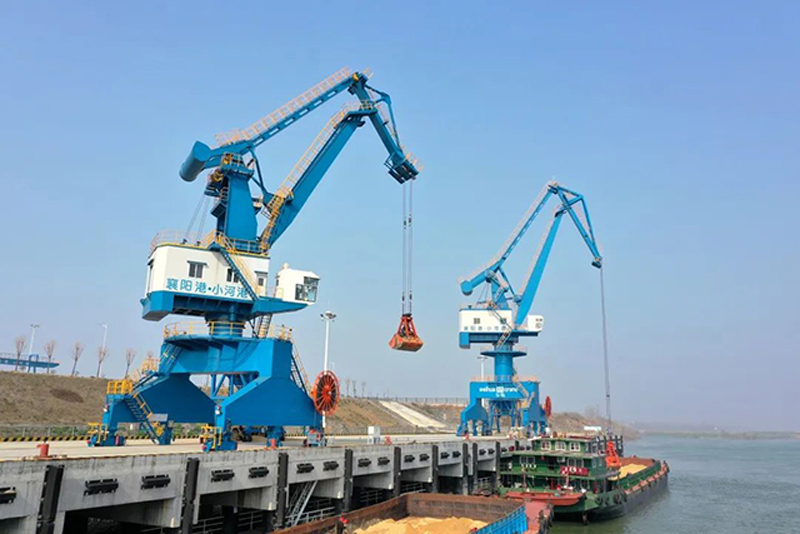
Отличие от козловых кранов (которые движутся горизонтально с прямой балкой) и контейнерные козловые краны, Наиболее типичной особенностью портального крана является механизм поворотной стрелы.. Его верхняя подъемная конструкция может вращаться. 360 градусов свободно, соответствие потребностям погрузки и разгрузки пришвартованных судов. В основном используется для подъема сыпучих грузов., общие продукты, и небольшие контейнеры между судами и береговыми терминалами, и является самым классическим и широко используемым краном во внутренних и прибрежных портах..
Полная конструкция портального крана разделена на нижний портальный механизм перемещения и верхний вращающийся подъемный механизм.. Каждый основной компонент выполняет независимую и совместную работу для обеспечения эффективной и безопасной обработки грузов.:
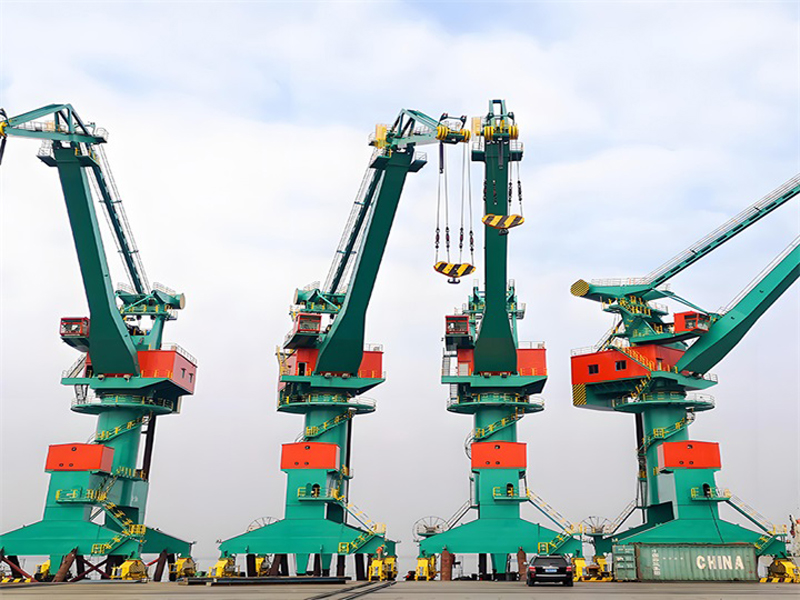
Портальные краны полагаются на три основных совместных действия для выполнения погрузки и разгрузки груза на берегу., с очень зрелым и эффективным рабочим процессом. Первый, в зависимости от места стоянки судна и распределения груза, кран перемещается по доковым рельсам, фиксируя оптимальное рабочее положение. Второй, верхняя платформа вращается, а стрела поднимается по шкаторине для регулировки рабочего радиуса, наведение подъемного крюка на целевой груз на корабле.
Окончательно, подъемная система стабильно поднимает груз, а поворотные и подъемные конструкции взаимодействуют для передачи груза с палубы корабля на береговое транспортное средство., или завершить работу по обратной погрузке. Сочетание ходьбы, ротация, регулировка вылета стрелы и подъем позволяет портальному крану перекрывать веерообразные и прямоугольные рабочие зоны вдоль причала., идеально адаптируется к неравномерному распределению грузов на пришвартованных судах.
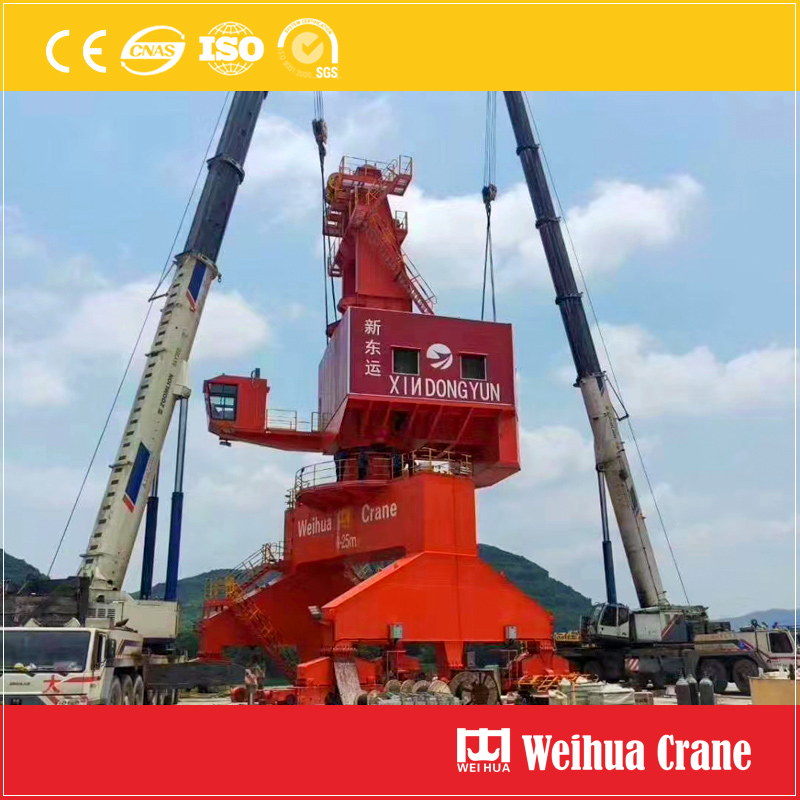
Портальные краны в основном классифицируются по конструктивной форме и рабочим характеристикам., и основные типы на рынке следующие::
1. Стационарные портальные краны
Этот тип крана фиксируется на фундаменте дока без функции перемещения.. Имеет простую структуру, низкая стоимость и стабильная производительность, и подходит для небольших фиксированных терминалов, одиночные грузовые причалы и внутренние речные мелководные доки с фиксированными рабочими зонами.
2. Мобильные портальные краны на рельсовом ходу
Самый широко используемый стандартный портальный кран.. Он может свободно перемещаться по доковым рельсам., с большим регулируемым рабочим диапазоном и высокой гибкостью. Подходит для средних и крупных портов с частыми стоянками судов и разнообразными типами грузов., и можем обрабатывать сыпучие грузы, бакалейные товары и легкая тара эффективно.
3. Одностворчатый & Портальные краны с двойной стрелой
Портальные краны с одной стрелой легкие и гибкие., подходит для обработки малотоннажных грузов. Модели с двойной стрелой имеют более высокую эффективность подъема и большую грузоподъемность., который может реализовать попеременную работу двойных крючков, и в основном используются для крупных прибрежных портов с высокой пропускной способностью грузов..
В качестве специального подъемного оборудования для конкретного порта., портальные краны широко используются в сценариях применения, сосредоточение внимания на операциях по перевалке судов на берегу и на берегу.:
1 квартал: В чем самая большая разница между портальным краном и козловым краном?
А1: Это самый запутанный момент для большинства людей.. Портальные краны представляют собой краны с поворотной стрелой для погрузки-разгрузки судов в порту., с функциями поворота на 360° и изменения вылета стрелы, специально для груза дока. Козловые краны представляют собой прямобалочные линейные передвижные краны., в основном используется для заводских мастерских, штабелирование на складе и внутренняя обработка грузов, без функции вращения в большом диапазоне. Их принципы работы, структуры и сценарии применения совершенно разные.
2 квартал: Какова обычная грузоподъемность портального крана??
А2: Обычные портальные краны общего назначения в портах имеют грузоподъемность 5 тонн до 50 тонны, который удовлетворяет потребности в обработке большинства сыпучих грузов и продуктов питания. Индивидуальные крупнотоннажные модели для тяжелых портовых операций могут достигать 80–100 тонн., используется для сверхтяжелого оборудования и перемещения крупных стальных компонентов..
Q3: Можно ли использовать портальные краны внутри помещений?
А3: Редко. Портальные краны представляют собой крупногабаритное профессиональное портовое оборудование для использования на открытом воздухе с высоким фюзеляжем., большой рабочий диапазон вращения, а также ветроустойчивая и коррозионностойкая конструкция конструкции., который полностью адаптирован для использования в доках под открытым небом. В закрытых мастерских вместо портальных кранов чаще всего используются мостовые краны и небольшие козловые краны..
Q4: Каковы основные рабочие ограничения портальных кранов??
А4: Портальные краны подходят только для стоянки судов на набережной и не могут использоваться для штабелирования на большой площади внутри страны.. Кроме того, им необходимо прекратить работу в экстремальных погодных условиях, например, при сильном ветре над уровнем моря. 6, сильный дождь и тайфуны для предотвращения опрокидывания оборудования и несчастных случаев при падении груза.
Q5: Как регулярно обслуживать портальный кран?
А5: Ежедневное обслуживание включает проверку герметичности стальных тросов., гибкость механизмов вращения и изменения вылета стрелы, и чувствительность ограничительных устройств безопасности. Для защиты стальной конструкции от эрозии морской водой требуется регулярная антикоррозийная обработка.. Профессиональный общий осмотр и смазка деталей трансмиссии должны проводиться каждый раз. 6 месяцев для обеспечения стабильной работы.
Q6: Почему портальные краны до сих пор широко используются, несмотря на контейнерные краны?
А6: Контейнерные краны подходят только для стандартной обработки контейнеров., в то время как портальные краны обладают большей универсальностью. Они могут обрабатывать сыпучие грузы, продукты, сталь и грузы специальной формы, к которым контейнерные краны не могут адаптироваться, и являются основным оборудованием для смешанных грузовых портов и внутренних речных терминалов..
Как профессиональная и классическая портовая техника, Портальные краны занимают незаменимое место в портовой перевалке грузов.. Его уникальная поворотная конструкция с подъемной стрелой и рабочий режим, соответствующий судну и берегу, делают его предпочтительным оборудованием для перевозки сыпучих и генеральных грузов в различных портах по всему миру.. Понимание его структурных характеристик и сценариев применения может помочь нам лучше понять логику эффективной работы современных портовых логистических систем..
Мы ценим ваши отзывы! Пожалуйста, заполните форму ниже, чтобы мы могли адаптировать наши услуги к вашим конкретным потребностям.


Нажмите кнопку, чтобы получить информацию о продукте и цитаты на WhatsApp.
Получите цитату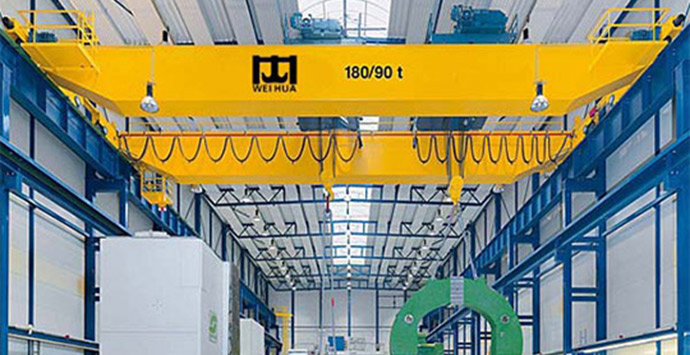
Последние комментарии