
Menu de navegação

UM guindaste de portal (também conhecido como guindaste de lança de portal portuário) é montado em trilho, guindaste giratório de círculo completo projetado exclusivamente para operações portuárias e à beira-mar. Possui uma base de portal proeminente (estrutura de portal de quatro pernas) que se estende por trilhos ferroviários costeiros ou passagens de caminhões, permitindo que veículos de transporte terrestre passem diretamente abaixo do guindaste sem obstáculos.
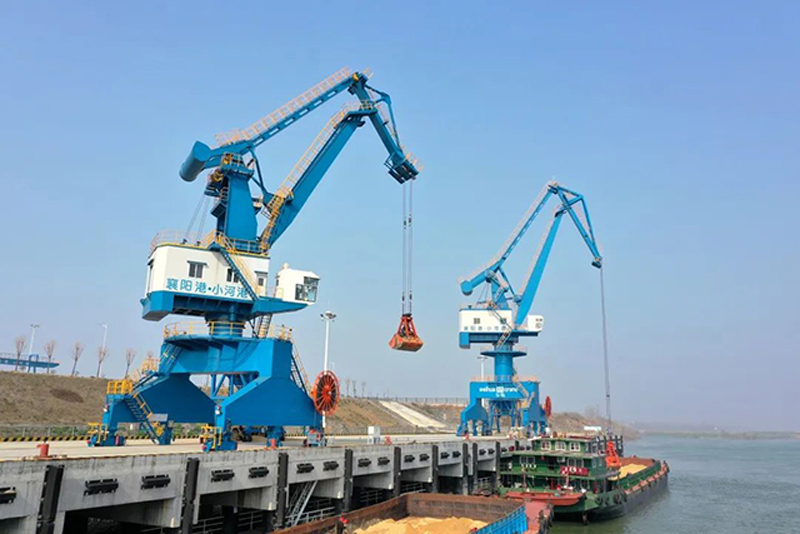
Diferente dos guindastes de pórtico (que se movem horizontalmente com uma viga reta) e guindastes de pórtico para contêineres, a característica mais típica de um guindaste de portal é seu mecanismo de lança rotacional. Sua estrutura de elevação superior pode girar 360 graus livremente, correspondendo às necessidades de carga e descarga dos navios atracados. É usado principalmente para levantar cargas a granel, mantimentos gerais, e pequenos contentores entre navios e terminais em terra, e é o guindaste mais clássico e amplamente utilizado em portos interiores e costeiros.
A estrutura completa de um guindaste de portal é dividida em um mecanismo de deslocamento do portal inferior e um mecanismo de elevação giratório superior. Cada componente principal realiza um trabalho independente e colaborativo para garantir um manuseio de carga eficiente e seguro:
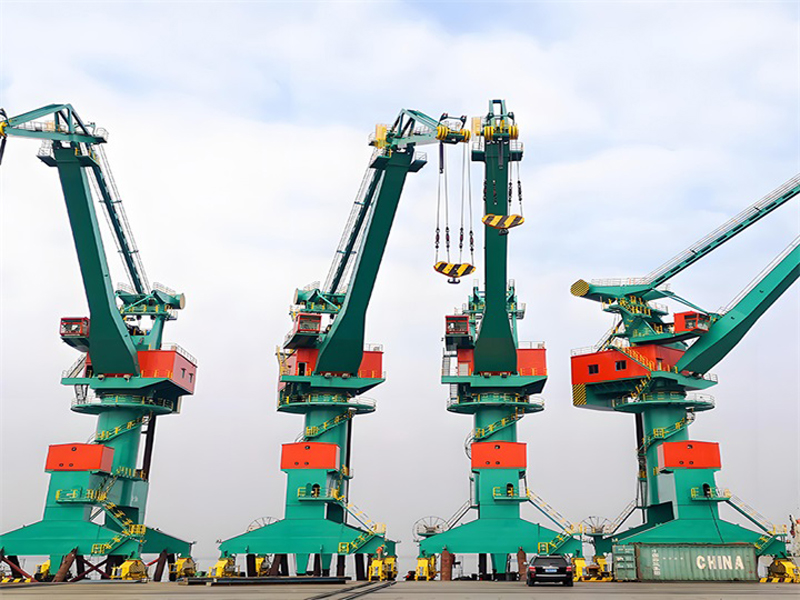
Os guindastes de portal contam com três ações colaborativas principais para concluir o carregamento e descarregamento de carga em terra, com um fluxo de trabalho altamente maduro e eficiente. Primeiro, de acordo com a posição de atracação do navio e a distribuição da carga, o guindaste se desloca ao longo dos trilhos da doca para travar a posição de trabalho ideal. Segundo, a plataforma superior gira e a lança oscila para ajustar o raio de trabalho, apontando o gancho de içamento para a carga alvo no navio.
Finalmente, o sistema de elevação levanta a carga de forma estável, e as estruturas rotativas e oscilantes cooperam para transferir a carga do convés do navio para o veículo de transporte em terra, ou concluir o trabalho de carregamento reverso. A combinação de caminhar, rotação, orçar e levantar permite que o guindaste de pórtico cubra áreas de trabalho retangulares e em forma de leque ao longo do cais, adaptando-se perfeitamente à distribuição irregular de carga dos navios atracados.
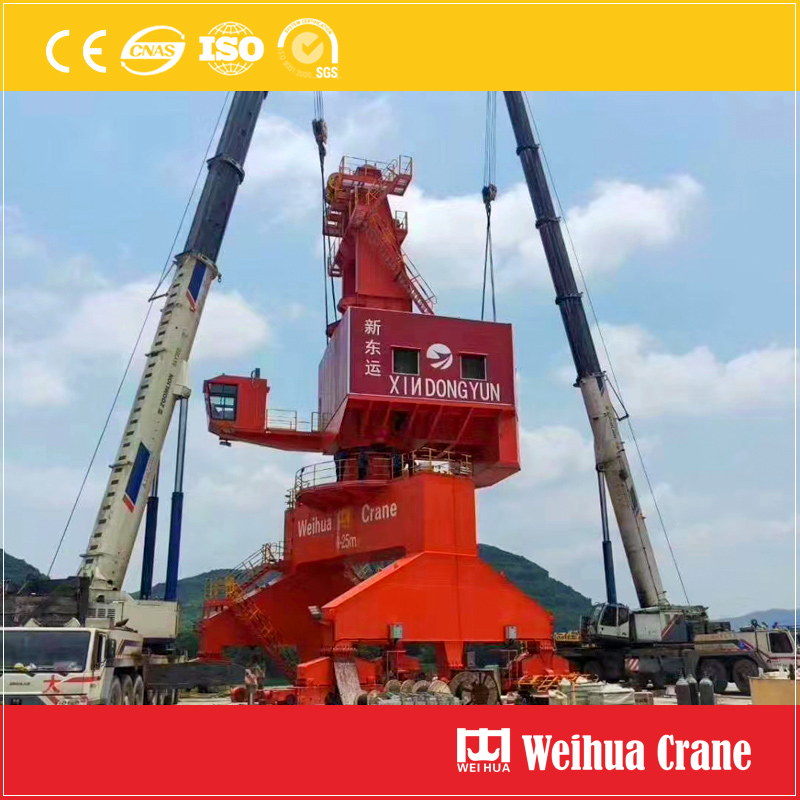
Os guindastes de portal são classificados principalmente pela forma estrutural e desempenho de trabalho, e os principais tipos do mercado são os seguintes:
1. Guindastes de portal fixo
Este tipo de guindaste é fixado na fundação da doca sem função de deslocamento. Tem uma estrutura simples, baixo custo e desempenho estável, e é adequado para pequenos terminais fixos, berços de carga únicos e docas de águas rasas em rios interiores com faixas de trabalho fixas.
2. Guindastes de portal móveis montados em trilhos
O guindaste de portal padrão mais utilizado. Ele pode se mover livremente ao longo dos trilhos da doca, com uma grande faixa de trabalho ajustável e forte flexibilidade. É adequado para portos de médio e grande porte com atracações frequentes de navios e diversos tipos de carga, e pode lidar com carga a granel, mantimentos e mercadorias em contêineres leves com eficiência.
3. Jib Único & Guindastes de portal de lança dupla
Os guindastes de pórtico de lança única são leves e flexíveis, adequado para movimentação de cargas de pequena tonelagem. Os modelos de lança dupla apresentam maior eficiência de elevação e maior capacidade de carga, que pode realizar operação alternativa de ganchos duplos, e são usados principalmente para grandes portos costeiros com alta movimentação de carga.
Como equipamento de elevação especial específico para porto, guindastes de portal são altamente direcionados em cenários de aplicação, com foco em operações de manuseio de navios à beira-mar:
1º trimestre: Qual é a maior diferença entre um guindaste de pórtico e um guindaste de pórtico?
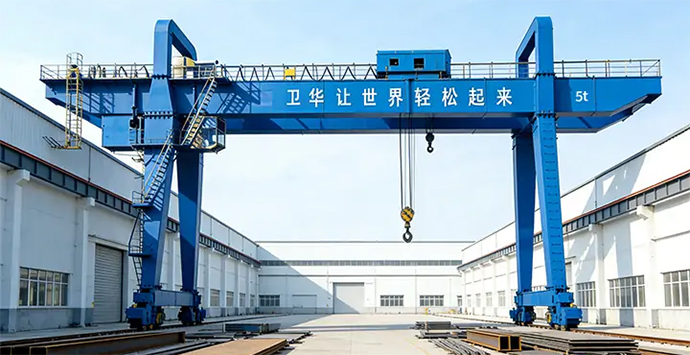
A1: Este é o ponto mais confuso para a maioria das pessoas. Os guindastes de portal são guindastes de lança rotativa para movimentação portuária-navio-costa, com funções rotativas e oscilantes de 360°, especialmente para carga de navio de doca. Os guindastes de pórtico são guindastes móveis lineares de viga reta, usado principalmente para oficinas de fábrica, empilhamento em pátio e movimentação de carga interna, sem função de rotação de grande alcance. Seus princípios de trabalho, estruturas e cenários de aplicação são completamente diferentes.
2º trimestre: Qual é a tonelagem de elevação normal de um guindaste de pórtico?
A2: Os guindastes pórticos convencionais para uso geral portuário têm uma capacidade de elevação de 5 toneladas para 50 toneladas, que atende às necessidades de manuseio da maioria das cargas a granel e mantimentos. Modelos personalizados de grande tonelagem para operações portuárias pesadas podem atingir de 80 a 100 toneladas, usado para equipamentos superpesados e manuseio de grandes componentes de aço.
3º trimestre: Os guindastes de portal podem ser usados dentro de casa?
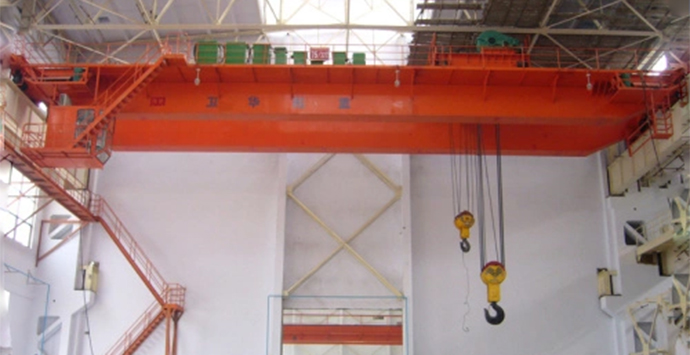
A3: Raramente. Os guindastes de portal são equipamentos portuários profissionais externos de grande escala com fuselagem alta, grande faixa de trabalho rotativa e design estrutural resistente ao vento e à corrosão, que é completamente adaptado para ambientes de doca ao ar livre. As oficinas internas usam principalmente pontes rolantes e pequenos pórticos em vez de guindastes de portal.
4º trimestre: Quais são as principais limitações de funcionamento dos pórticos?
A4: Os guindastes de portal são adequados apenas para cenários de atracação de navios à beira-mar e não podem ser usados para empilhamento em pátios de grandes áreas no interior. Além disso, eles precisam parar de trabalhar em condições climáticas extremas, como ventos fortes acima do nível 6, chuvas fortes e tufões para evitar acidentes com inclinação de equipamentos e queda de carga.
Q5: Como fazer a manutenção regular de um guindaste de portal?
A5: A manutenção diária inclui a verificação do aperto dos fios de aço, a flexibilidade dos mecanismos de rotação e oscilação, e a sensibilidade dos dispositivos de limite de segurança. É necessário tratamento anticorrosivo regular para que a estrutura de aço resista à erosão da água do mar. A inspeção geral profissional e a lubrificação das peças da transmissão devem ser realizadas a cada 6 meses para garantir uma operação estável.
Q6: Por que os guindastes de pórtico ainda são amplamente utilizados, apesar dos guindastes para contêineres?
A6: Os guindastes de contêineres são adequados apenas para movimentação de contêineres padrão, enquanto os guindastes de portal têm maior versatilidade. Eles podem lidar com carga a granel, mantimentos, produtos de aço e de formatos especiais aos quais os guindastes de contêineres não conseguem se adaptar, e são o equipamento essencial para portos de carga mista e terminais fluviais interiores.
Como máquina portuária profissional e clássica, guindastes de portal ocupam posição insubstituível na movimentação de cargas à beira-mar. Sua estrutura oscilante rotativa exclusiva e modo de trabalho compatível com navio-costa tornam-no o equipamento preferido para transporte de carga a granel e geral em vários portos ao redor do mundo. Compreender suas características estruturais e cenários de aplicação pode nos ajudar a reconhecer melhor a lógica de operação eficiente dos modernos sistemas logísticos portuários.
Valorizamos seu feedback! Preencha o formulário abaixo para que possamos adaptar nossos serviços às suas necessidades específicas.


Clique no botão para obter informações e citações do produto no WhatsApp.
Obtenha cotação
Últimos comentários