Guindaste de pórtico ou guindaste de lança para oficina
2026-09-10
O manuseio de materiais na oficina exige flexibilidade, eficiente, e soluções de elevação que economizam espaço para agilizar a produção, manutenção de equipamentos, e transporte de peças. Guindastes de pórtico e guindastes de lança são dois dos equipamentos de elevação aérea mais utilizados para oficinas industriais, adaptado para diferentes faixas de trabalho, capacidades de carga, e cenários operacionais. Este artigo fornece uma visão geral detalhada do produto, recursos principais, vantagens técnicas, e cenários de aplicação de guindastes de pórtico e guindastes de lança, ajudando os proprietários de oficinas a selecionar o equipamento de elevação ideal para operações diárias.
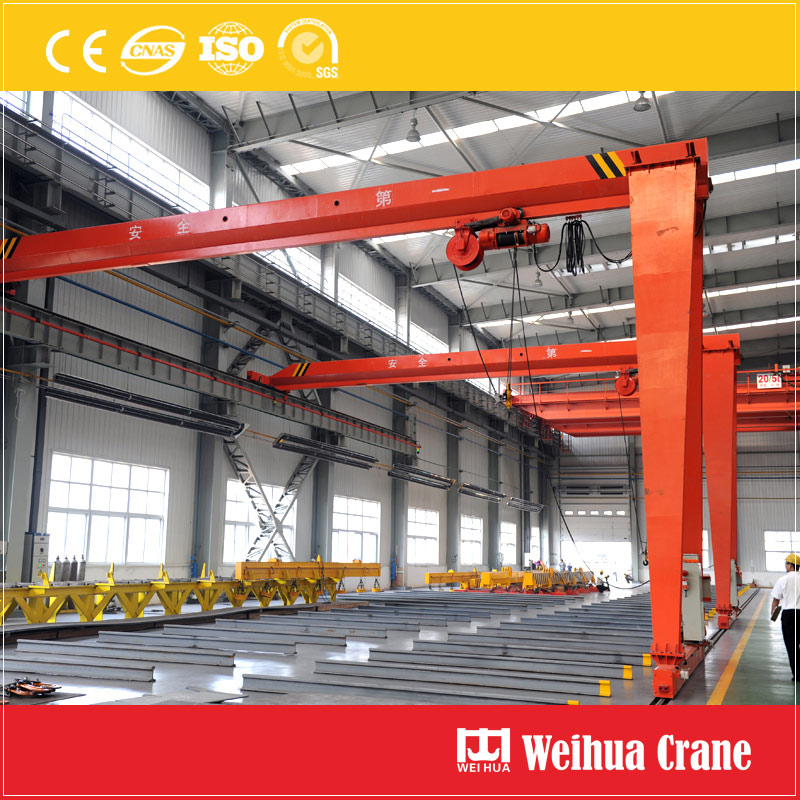
Guindaste de pórtico para oficina
Guindaste de pórtico de oficina: Solução de elevação flexível com cobertura total
Visão geral do produto
Um guindaste de pórtico, também conhecido como guindaste de portal, é um sistema de elevação independente composto por duas pernas de suporte verticais, uma viga principal horizontal, talha elétrica, mecanismo de viagem, e sistema de controle. Diferente das pontes rolantes fixas, guindastes de pórtico dependem de suporte de piso em vez de estruturas de teto de oficina, tornando-os aplicáveis a oficinas sem estruturas de telhado resistentes. A maioria dos pórticos de oficina são projetados com estruturas portáteis ou montadas em trilhos, incluindo mini guindastes de pórtico leves, guindastes de pórtico de viga única, e guindastes de pórtico para oficinas pesadas, cobrindo a luz, médio, e requisitos de manuseio de carga pesada.
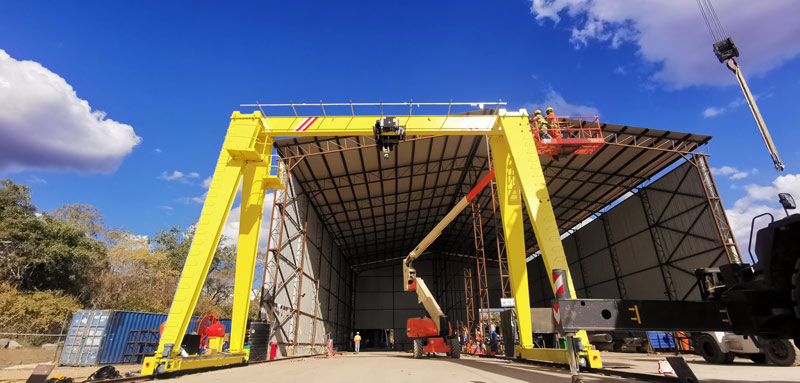
Guindaste de pórtico para oficina
Núcleo Estrutural & Recursos de desempenho
- ◆ Estrutura Independente Independente: Não é necessária instalação no teto ou reforço na parede. A estrutura do pórtico integrada garante um desempenho estável de suporte de carga, evitando danos estruturais nos edifícios das oficinas e adaptando-se a vários espaços de oficinas antigos e novos.
- ◆ Cobertura de trabalho omnidirecional: A talha elétrica viaja livremente ao longo da viga principal, e todo o guindaste pode se mover longitudinalmente sobre trilhos fixos ou rodízios universais. Realiza elevação de área completa e transporte de material em toda a oficina, quebrando as limitações espaciais da operação em ponto fixo.
- ◆ Ampla faixa de capacidade de carga: Mini guindastes de pórtico leves suportam elevação de 0,5 a 5 toneladas para peças pequenas e manuseio de moldes; modelos de serviço médio e pesado podem suportar cargas de 5 a 50 toneladas, adequado para montagem de peças grandes, manuseio de equipamentos mecânicos, e trabalhos pesados de manutenção em oficinas.
- ◆ Alta Mobilidade & Reutilização: Os pórticos portáteis estão equipados com rodas universais bloqueáveis, permitindo a livre circulação entre diferentes áreas da oficina. A estrutura destacável permite uma desmontagem conveniente, transporte, e reinstalação, ideal para tarefas de elevação temporária e uso compartilhado em múltiplas estações.
- ◆ Seguro & Operação estável: Equipado com proteção contra sobrecarga, interruptores de limite de viagem, dispositivos de parada de emergência, e sistemas de travamento antiderrapantes. A estrutura de aço rígida reduz efetivamente a oscilação da carga, garantindo posicionamento preciso e operações de elevação seguras.
Tipos principais & Aplicações para oficinas
- ◆ Mini guindaste portátil: Leve e fácil de mover, perfeito para pequenas oficinas, manutenção de garagem, substituição de molde, e manuseio de peças de pequenos lotes. É a escolha ideal para trabalhos de elevação temporários e flexíveis com baixo investimento e alta praticidade.
- ◆ Guindaste de pórtico montado em trilho fixo: Fixado em trilhos de piso de oficina com maior estabilidade e capacidade de carga, adequado para linhas de produção fixas, transporte de materiais de longa distância, e manuseio repetido de peças pesadas em oficinas de processamento de médio e grande porte.
- ◆ Guindaste de pórtico de oficina de viga única: Estrutura simples, baixo consumo de energia, e econômico, amplamente utilizado no processamento de máquinas, oficinas de soldagem, e fabricação de ferragens para operações convencionais de elevação de carga média.
Guindaste de lança de oficina: Equipamento de elevação de ponto fixo de alta eficiência
Visão geral do produto
Um guindaste de lança é um dispositivo compacto de elevação localizado projetado para movimentação de materiais em uma única estação de trabalho. Consiste em uma coluna fixa ou suporte de parede, uma lança de lança horizontal rotativa, talha elétrica, e sistema de acionamento rotativo. Com uma pequena área ocupada e desempenho de rotação flexível, foi especialmente desenvolvido para posições de trabalho fixas que exigem elevação frequente em curtas distâncias e posicionamento preciso, tornando-se um dispositivo de suporte padrão para estações de processamento de oficinas, estações de montagem, e estações de manutenção.
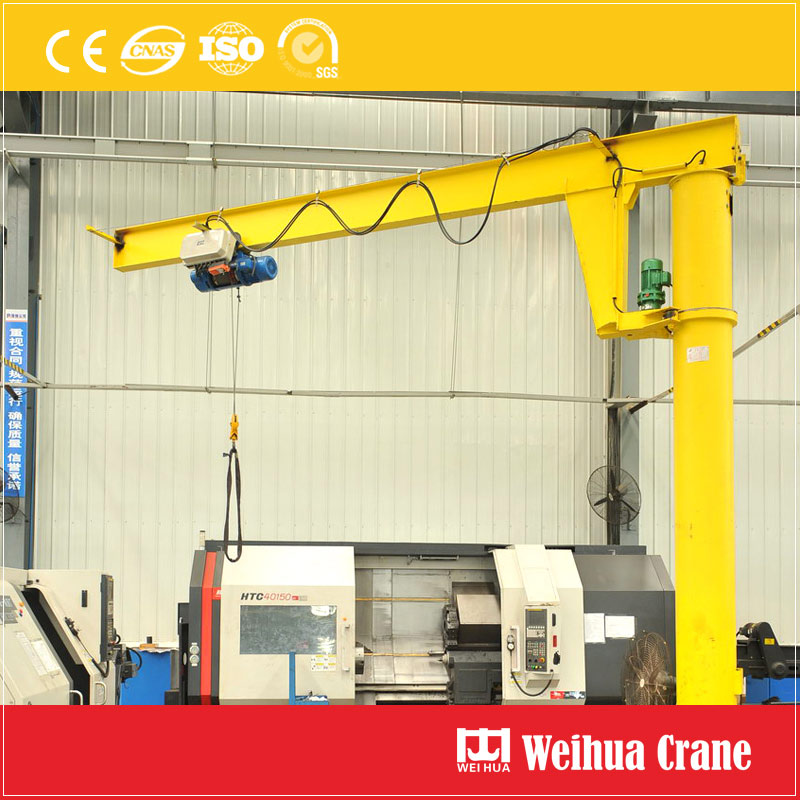
Guindaste de lança para oficina
Núcleo Estrutural & Recursos de desempenho
- ◆ Design compacto que economiza espaço: Dois modos de instalação principais estão disponíveis: tipo pilar montado no chão e tipo montado na parede. O guindaste giratório montado na parede não requer ocupação do piso, utilizando totalmente o espaço de oficina vertical; o tipo pilar ocupa apenas uma pequena área fixa, economizando efetivamente o valioso espaço operacional da oficina.
- ◆ Rotação Flexível & Posicionamento preciso: Guindastes de lança montados na parede suportam rotação de 180°-200°, enquanto os guindastes de pilar montados no piso realizam uma rotação completa de 360°. A talha se move suavemente ao longo do jib boom, permitindo elevação flexível, tradução, e colocação de materiais dentro do raio de trabalho com alta precisão de posicionamento.
- ◆ Alta Eficiência Operacional: Operação simples sem necessidade de depuração complexa. Responde rapidamente a tarefas de elevação frequentes em estações de trabalho fixas, reduzindo significativamente a intensidade do manuseio manual e melhorando a eficiência da produção de estações únicas de processamento e montagem.
- ◆ Baixo Custo & Manutenção fácil: Estrutura mecânica simples, baixo custo de fabricação e instalação, e taxa de falha mínima. A manutenção diária requer apenas lubrificação regular e inspeção dos parafusos, com baixos custos de operação em estágio posterior.
- ◆ Estável & Seguro: Adota lança de aço de alta resistência e design estrutural anti-inclinação, combinado com dispositivos anti-sobrecarga e de proteção de limite, garantindo uma operação estável sem oscilação da carga durante içamentos frequentes de curta distância.
Tipos principais & Aplicações para oficinas
- ◆ Guindaste de lança montado na parede: Instalado em paredes reforçadas de oficina ou colunas de fábrica, com faixa de rotação de 180°. É amplamente utilizado para carga e descarga de máquinas-ferramenta, manuseio de peças, e montagem de peças pequenas em áreas de oficina estreitas e layouts de estação densos.
- ◆ Guindaste de pilar de piso: Fixado de forma independente no chão da oficina com rotação livre de 360° e maior raio de trabalho e capacidade de carga. Adequado para estações de trabalho de oficina central, estações de soldagem, áreas de manutenção de equipamentos, e estações de montagem independentes.
Guindaste de pórtico vs guindaste de lança: Guia de seleção de workshops
| Item de comparação |
Guindaste de pórtico |
Guindaste de lança |
|---|
| Faixa de trabalho |
Cobertura completa do workshop, móvel em todas as direções, adequado para operações em grandes áreas e entre estações |
Raio de trabalho circular fixo, apenas para estação de trabalho fixa única |
| Capacidade de carga |
Ampla gama (0.5t-50t), suporta movimentação de cargas leves a pesadas |
Principalmente para cargas leves e médias (0.25t-10t) |
| Mobilidade |
Altamente móvel, modelos portáteis podem ser movidos arbitrariamente |
Instalação fixa, nenhum movimento geral |
| Ocupação Espacial |
Ocupa determinado espaço, sem exigência de teto |
Pegada ultrapequena, tipo montado na parede economiza espaço completamente |
| Cenários Aplicáveis |
Manuseio de múltiplas estações, transporte de peças grandes, elevação temporária, operações de oficina aberta |
Elevação frequente da estação de trabalho fixa, posicionamento preciso da peça, operação em espaço estreito |
| Custo |
Custo médio a alto, alta taxa de utilização abrangente |
Baixo custo, econômico para atualização de estação única |
Conclusão
Tanto os guindastes de pórtico como os guindastes de lança são soluções de elevação eficientes indispensáveis para oficinas modernas, com suas vantagens exclusivas de aplicação. Os guindastes de pórtico são a escolha preferida para oficinas que buscam flexibilidade geral, grande cobertura de trabalho, e capacidade de movimentação de cargas pesadas, adaptando-se às necessidades diversificadas e variáveis de manuseio de materiais. Guindastes de lança se destacam em ponto fixo, alta frequência, e trabalho de elevação preciso, ajudando oficinas a otimizar a eficiência da produção de estação única com baixo investimento e altos retornos. As empresas podem escolher equipamentos de elevação correspondentes de acordo com o layout do espaço da oficina, demanda de carga, faixa de trabalho, e frequência de produção para maximizar a eficiência da operação da oficina.
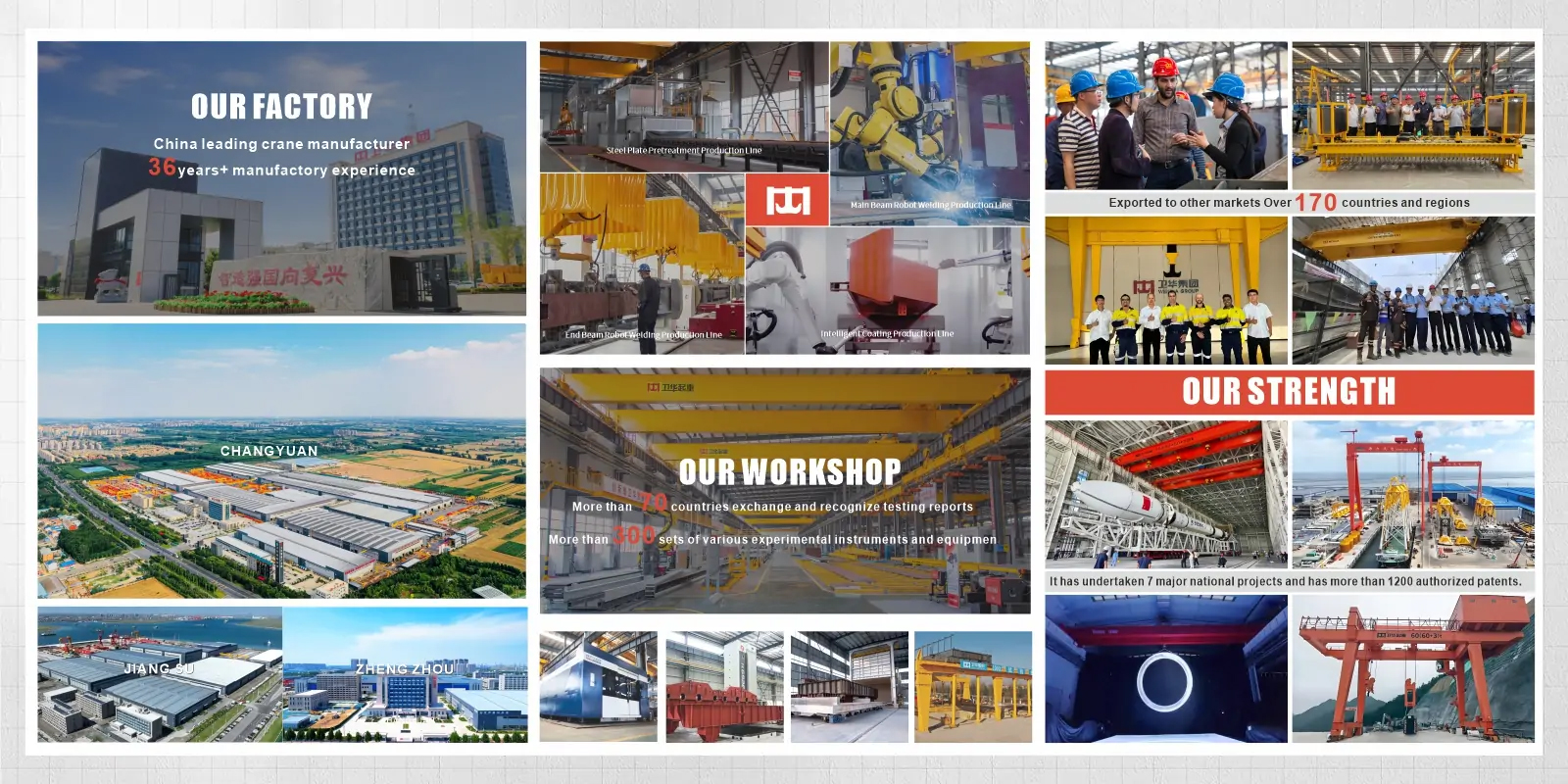
Fábrica Weihua




Últimos comentários