
Navigation Menu

A portal crane (also known as a port portal jib crane) is a rail-mounted, full-circle rotating jib crane exclusively designed for port and waterfront operations. It features a prominent portal base (four-leg portal frame) that spans over shore railway tracks or truck passages, allowing land transport vehicles to pass directly beneath the crane without hindrance.
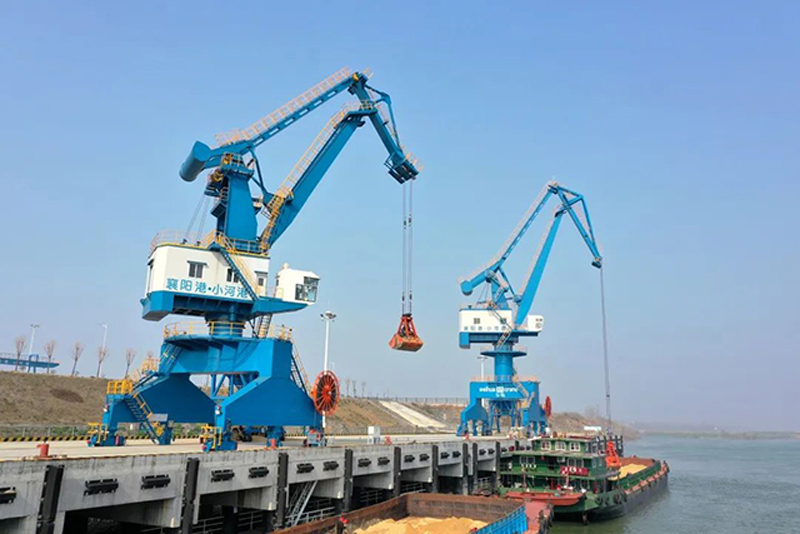
Different from gantry cranes (which move horizontally with a straight girder) and container gantry cranes, the most typical feature of a portal crane is its rotational jib mechanism. Its upper lifting structure can rotate 360 degrees freely, matching the loading and unloading needs of docked ships. It is mainly used for lifting bulk cargo, general groceries, and small containers between ships and shore terminals, and is the most classic and widely used crane in inland and coastal ports.
The complete structure of a portal crane is divided into a lower portal traveling mechanism and an upper rotating lifting mechanism. Each core component undertakes independent and collaborative work to ensure efficient and safe cargo handling:
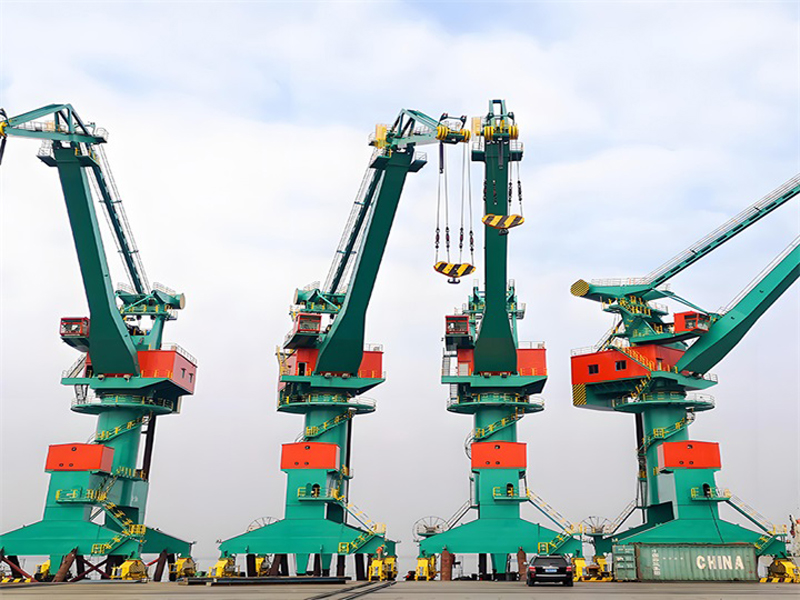
Portal cranes rely on three core collaborative actions to complete ship-shore cargo loading and unloading, with a highly mature and efficient working flow. First, according to the berthing position of the ship and the distribution of cargo, the crane travels along the dock rails to lock the optimal working position. Second, the upper platform rotates and the jib luffs to adjust the working radius, aiming the lifting hook at the target cargo on the ship.
Finally, the hoist system lifts the cargo stably, and the rotary and luffing structures cooperate to transfer the cargo from the ship deck to the shore transport vehicle, or complete reverse loading work. The combination of walking, rotation, luffing and lifting enables the portal crane to cover fan-shaped and rectangular working areas along the wharf, perfectly adapting to the irregular cargo distribution of docked ships.
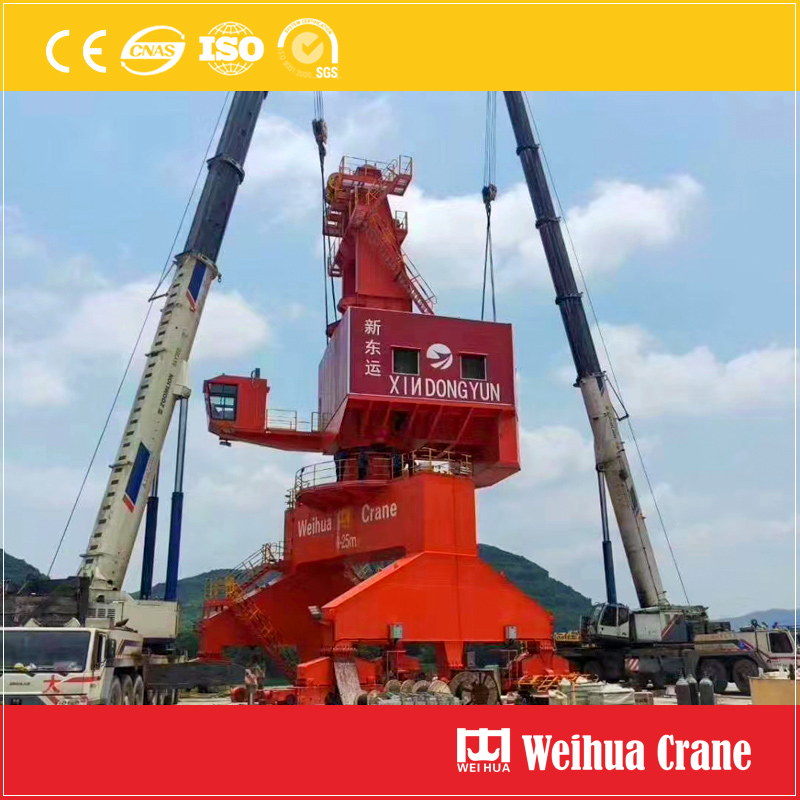
Portal cranes are mainly classified by structural form and working performance, and the mainstream types in the market are as follows:
1. Fixed Portal Cranes
This type of crane is fixed on the dock foundation without a traveling function. It has a simple structure, low cost and stable performance, and is suitable for small fixed terminals, single cargo berths and inland river shallow-water docks with fixed working ranges.
2. Mobile Rail-Mounted Portal Cranes
The most widely used standard portal crane. It can move freely along the dock rails, with a large adjustable working range and strong flexibility. It is suitable for medium and large ports with frequent ship berthing and diverse cargo types, and can handle bulk cargo, groceries and light container goods efficiently.
3. Single-Jib & Double-Jib Portal Cranes
Single-jib portal cranes are lightweight and flexible, suitable for small-tonnage cargo handling. Double-jib models have higher lifting efficiency and larger load capacity, which can realize alternate operation of double hooks, and are mostly used for large coastal ports with high cargo throughput.
As special port-specific lifting equipment, portal cranes are highly targeted in application scenarios, focusing on waterfront ship-shore handling operations:
Q1: What is the biggest difference between a portal crane and a gantry crane?
A1: This is the most confusing point for most people. Portal cranes are rotating jib cranes for port ship-shore handling, with 360° rotary and luffing functions, specially for dock ship cargo. Gantry cranes are straight-beam linear moving cranes, mainly used for factory workshops, yard stacking and inland cargo handling, without large-range rotation function. Their working principles, structures and application scenarios are completely different.
Q2: What is the usual lifting tonnage of a portal crane?
A2: Conventional portal cranes for general port use have a lifting capacity of 5 tons to 50 tons, which meets the handling needs of most bulk cargo and groceries. Customized large-tonnage models for heavy port operations can reach 80–100 tons, used for super-heavy equipment and large steel component handling.
Q3: Can portal cranes be used indoors?
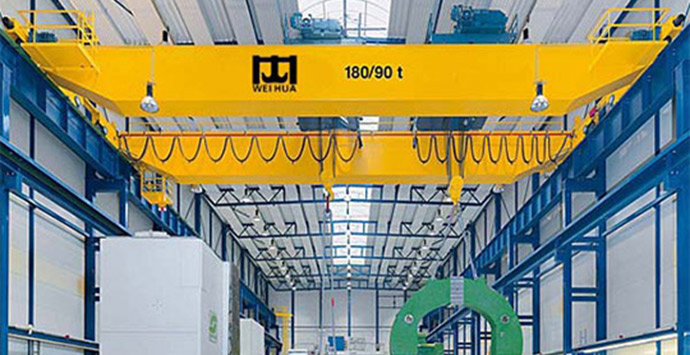
A3: Rarely. Portal cranes are large-scale outdoor professional port equipment with tall fuselage, large rotating working range and wind-resistant and corrosion-resistant structural design, which is completely tailored for open-air dock environments. Indoor workshops mostly use overhead cranes and small gantry cranes instead of portal cranes.
Q4: What are the main working limitations of portal cranes?
A4: Portal cranes are only suitable for waterfront ship-berthing scenarios and cannot be used for inland large-area yard stacking. In addition, they need to stop working in extreme weather such as strong winds above level 6, heavy rain and typhoons to prevent equipment tilting and cargo falling accidents.
Q5: How to maintain a portal crane regularly?
A5: Daily maintenance includes checking the tightness of steel wires, the flexibility of rotation and luffing mechanisms, and the sensitivity of safety limit devices. Regular anti-corrosion treatment is required for the steel structure to resist seawater erosion. Professional overall inspection and lubrication of transmission parts shall be carried out every 6 months to ensure stable operation.
Q6: Why are portal cranes still widely used despite container cranes?
A6: Container cranes are only suitable for standard container handling, while portal cranes have stronger versatility. They can handle bulk cargo, groceries, steel and special-shaped goods that container cranes cannot adapt to, and are the essential core equipment for mixed cargo ports and inland river terminals.
As a professional and classic port machinery, portal cranes occupy an irreplaceable position in waterfront cargo handling. Its unique rotary luffing structure and ship-shore matching working mode make it the preferred equipment for bulk and general cargo transportation in various ports around the world. Understanding its structural characteristics and application scenarios can help us better recognize the efficient operation logic of modern port logistics systems.
We value your feedback! Please complete the form below so that we can tailor our services to your specific needs.


Latest Comments