Navigation Menu

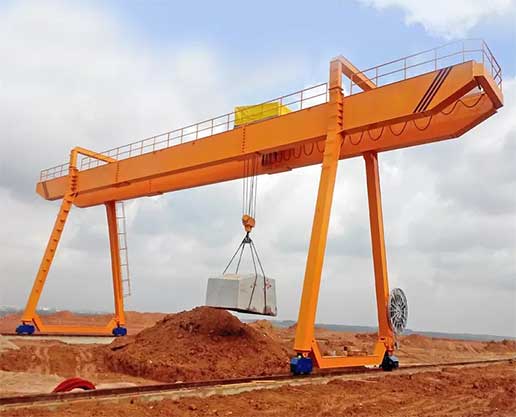
Precast concrete yards demand equipment that can withstand harsh outdoor conditions, frequent heavy lifting, and the need for precise positioning. Gantry cranes are engineered to meet these demands, with robust steel structures, weather-resistant components, and customizable features that adapt to the specific needs of precast production workflows.
Request for QuotationIn the modern precast concrete industry, where efficiency, precision, and safety are paramount, the gantry crane stands as an indispensable piece of equipment in precast concrete yards. As precast components—from wall panels and core slabs to concrete beams and rail sleepers—become increasingly large, heavy, and complex, the role of gantry cranes in streamlining operations, reducing risks, and ensuring consistent productivity has never been more critical. This article explores the core functions, types, key benefits, applications, and maintenance considerations of gantry cranes tailored for precast concrete yards, highlighting why they are the backbone of efficient precast production.
A gantry crane is a lifting device characterized by a bridge structure supported by two vertical legs, which move along ground-level tracks or, in some cases, rubber tires for enhanced mobility. Unlike overhead cranes that are fixed to building structures, gantry cranes are designed to operate in open, expansive spaces—making them ideal for precast concrete yards, which often span large outdoor areas and require flexible handling of heavy components. Equipped with advanced hoisting systems (such as electric or hydraulic winches), these cranes enable precise lifting, lowering, and horizontal movement of precast elements, addressing the unique challenges posed by the size, weight, and fragility of concrete components.
Precast concrete yards demand equipment that can withstand harsh outdoor conditions, frequent heavy lifting, and the need for precise positioning. Gantry cranes are engineered to meet these demands, with robust steel structures, weather-resistant components, and customizable features that adapt to the specific needs of precast production workflows.
Precast concrete yards require specialized gantry cranes tailored to their unique handling needs, with two primary types dominating the industry: track-mounted and rubber-tyred gantry cranes. Each type offers distinct advantages, making them suitable for different yard layouts and operational requirements.
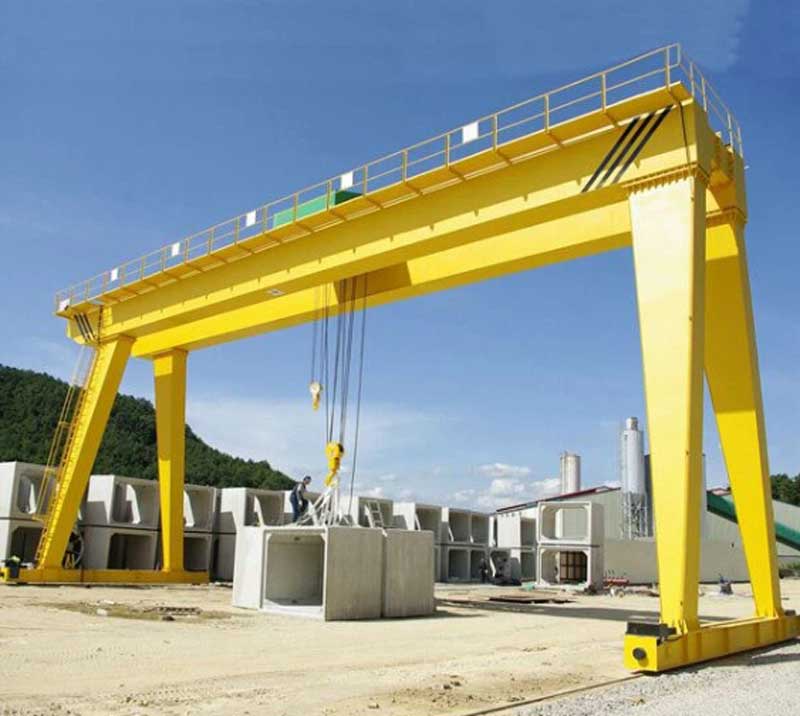
Track-Mounted Gantry Cranes
Track-mounted gantry cranes (also known as rail-mounted gantry cranes) are the most common type in precast yards. They operate along fixed rails embedded in the ground, providing stable and precise movement across the yard. These cranes are available in two main configurations:
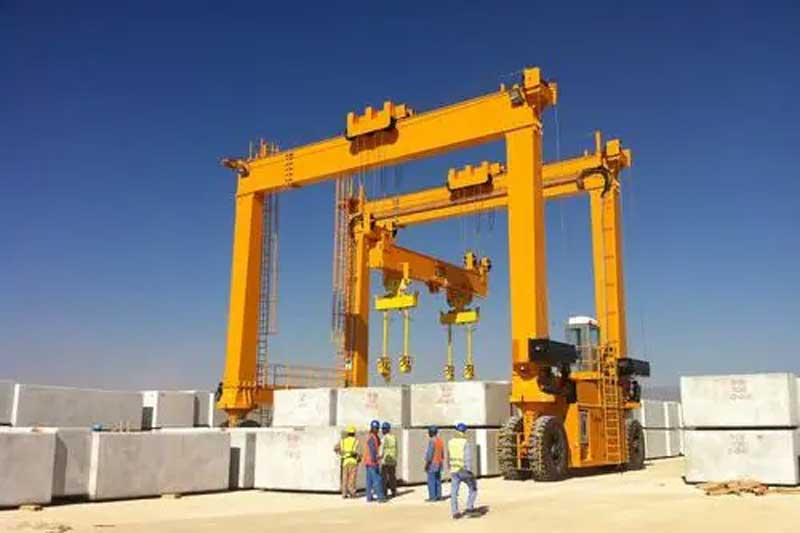
Rubber-Tyred Gantry Cranes (RTGs)
Rubber-tyred gantry cranes are a mobile alternative to track-mounted models, featuring rubber tires that allow them to move freely across the yard without the need for fixed rails. These cranes offer exceptional flexibility, making them ideal for precast yards with irregular layouts or those that require frequent reconfiguration. Key advantages of RTGs include strong load-bearing capacity, fast movement speeds, and adaptability to various ground types—they distribute weight evenly via rubber tires, reducing ground pressure and minimizing damage to yard surfaces. RTGs are often used in yards where mobility is prioritized, such as those handling diverse precast components or operating in temporary construction sites.
Precast concrete production is a systematic process that requires seamless coordination across multiple stages, and gantry cranes play a critical role in each step—from raw material handling to finished product storage and transportation. Their ability to handle heavy, fragile components with precision ensures that production workflows remain efficient, safe, and cost-effective.
1. Raw Material and Mold Handling
The precast production process begins with the preparation of raw materials (cement, aggregates, reinforcement steel) and molds. Gantry cranes lift and position heavy reinforcement cages into molds, ensuring proper alignment and reducing manual labor. They also handle large, custom molds—moving them between storage areas and casting platforms with precision to avoid damage. This stage is critical for maintaining quality control, as accurate positioning of molds and reinforcement ensures the final precast components meet strength and durability standards.
2. Casting and Curing Support
After concrete is poured into molds, gantry cranes move the filled molds to curing areas, where the concrete is allowed to set and gain strength. Once curing is complete, cranes carefully lift the demolded precast components—such as wall panels or beams—from the molds, minimizing the risk of cracking or damage. Their precision lifting capabilities ensure that delicate precast elements are handled gently, preserving their structural integrity.
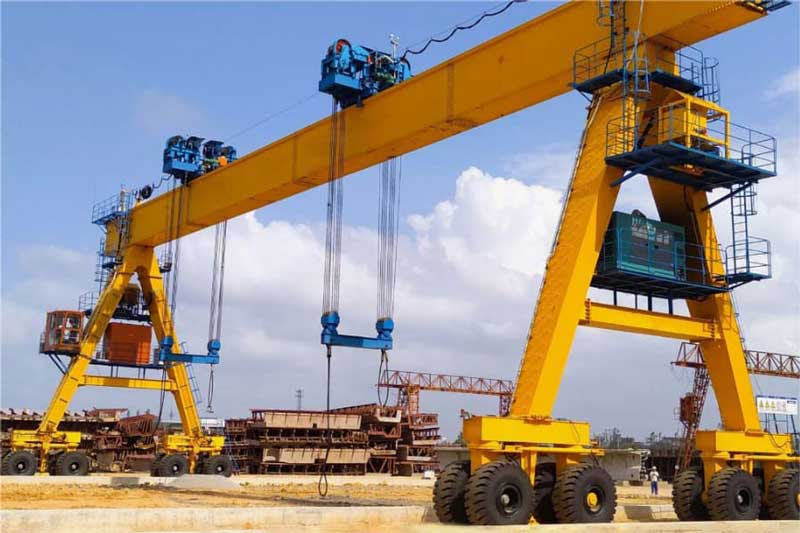
Gantry crane for precast concrete yard
3. Storage and Stacking
Precast yards often need to store large volumes of finished components, and gantry cranes enable efficient stacking and organization. Track-mounted cranes, with their fixed rails, are ideal for systematic stacking in designated storage areas, maximizing yard space utilization. Rubber-tyred cranes, meanwhile, can access hard-to-reach storage spots, ensuring that components are stored safely and retrieved quickly when needed. This organized storage reduces the risk of component damage and streamlines the loading process for transportation to construction sites.
4. Loading and Transportation
When precast components are ready for delivery, gantry cranes lift and load them onto trucks or railcars with precision. This step requires careful handling to avoid damage during transit, and gantry cranes’ adjustable lifting speeds and precise positioning capabilities ensure that components are secured safely. For large components like concrete beams, gantry cranes can be used in pairs (or equipped with double spreaders) to lift and position the load evenly, further reducing the risk of damage.
The adoption of gantry cranes in precast concrete yards delivers a range of benefits that directly impact productivity, safety, and cost-effectiveness—making them a worthwhile investment for precast manufacturers.
1. Enhanced Efficiency and Productivity
Gantry cranes eliminate the need for manual lifting and reduce reliance on multiple pieces of equipment, streamlining production workflows. Their ability to move heavy components quickly and precisely reduces downtime between production stages, increasing overall output. For example, a double girder gantry crane can move a large concrete beam from the casting platform to the storage area in a fraction of the time it would take with manual labor or smaller lifting equipment. This efficiency is particularly critical for large-scale precast projects, where speed and reliability are essential.
2. Improved Safety
Precast components can weigh several tons, posing significant safety risks if handled improperly. Gantry cranes are equipped with advanced safety features—such as overload limiters, stroke limiter (travel limiters), wind-resistant anchors, and emergency stop systems—that minimize the risk of accidents, injuries, and component damage. Operators undergo specialized training to handle these cranes, ensuring that lifting operations are performed safely and in compliance with industry standards. Additionally, gantry cranes reduce manual labor, lowering the risk of musculoskeletal injuries and human error.
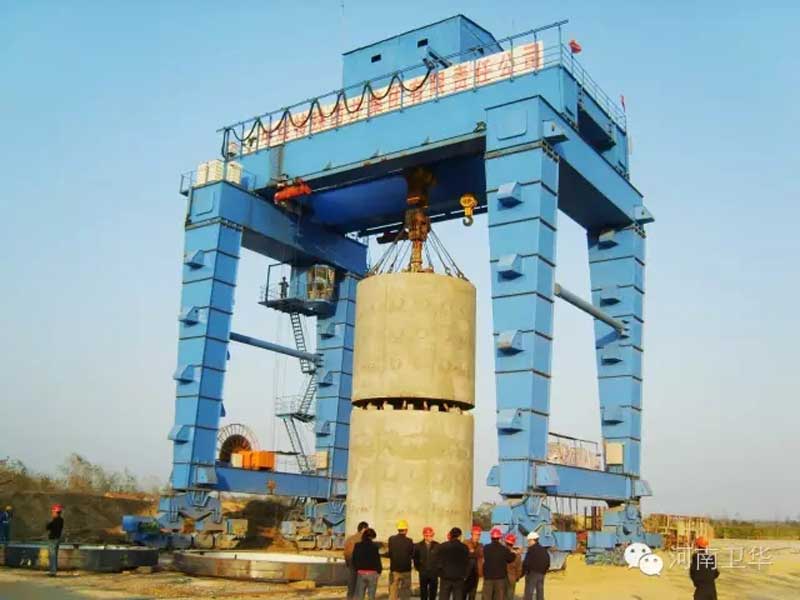
3. Precision and Quality Control
Precast components require precise positioning during casting, demolding, and storage to ensure they meet design specifications. Gantry cranes offer exceptional precision, allowing operators to position components with millimeter accuracy. This precision reduces the risk of component damage and ensures that precast elements fit together seamlessly during on-site installation. By maintaining consistent handling standards, gantry cranes contribute to the overall quality of precast products, which is critical for meeting industry regulations and client expectations.
4. Cost-Effectiveness
While the initial investment in a gantry crane may be significant, the long-term cost savings are substantial. Gantry cranes reduce labor costs by minimizing the need for manual labor, and their efficiency reduces production downtime. They also reduce the risk of component damage, which can be costly to repair or replace. Additionally, many gantry cranes are customizable and modular, allowing precast yards to adapt the equipment to changing production needs without significant additional investment. For example, engineering truss girder gantry cranes offer a cost-effective solution for yards with moderate lifting needs, while double girder cranes provide long-term value for heavy-duty operations.
5. Adaptability to Harsh Environments
Precast concrete yards are often located outdoors, exposing equipment to harsh weather conditions—including rain, wind, and extreme temperatures. Gantry cranes are engineered to withstand these conditions, with weather-resistant coatings, sealed electrical systems, and wind-resistant designs. Outdoor gantry cranes are also equipped with rail clamps, anchor devices, and anemometers to ensure stability during high winds, further enhancing their reliability in challenging environments.
To ensure the long-term performance and safety of gantry cranes in precast concrete yards, regular maintenance and strict safety protocols are essential. Precast yards present unique maintenance challenges—including dust accumulation, concrete slurry corrosion, and frequent heavy lifting—that can accelerate equipment wear if not addressed promptly.
Safety is a top priority in precast yards, and gantry crane operations must adhere to strict protocols:
As the precast concrete industry continues to evolve, gantry cranes are becoming more advanced, with technological innovations aimed at improving efficiency, safety, and sustainability. Key trends include:
Gantry cranes are the backbone of efficient, safe, and high-quality precast concrete production. Their ability to handle heavy, fragile components with precision, adapt to harsh outdoor environments, and streamline production workflows makes them indispensable in precast concrete yards. Whether track-mounted or rubber-tyred, single or double girder, gantry cranes are tailored to meet the unique needs of precast manufacturers, delivering significant benefits in terms of productivity, safety, and cost-effectiveness.
We value your feedback! Please complete the form below so that we can tailor our services to your specific needs.